Security Window Film for DMV Businesses: Protection, Cost, and What the Film Actually Does
Security window film is the most cost-effective glass security upgrade available for most DMV businesses — it adds meaningful protection to existing glass at a fraction of the cost of glass replacement. Here is what it actually does, what it does not do, and when glass replacement is the better investment.
Mike Reynolds
Lead Glass Technician & Owner
In This Article
What Security Window Film Is and How It Works
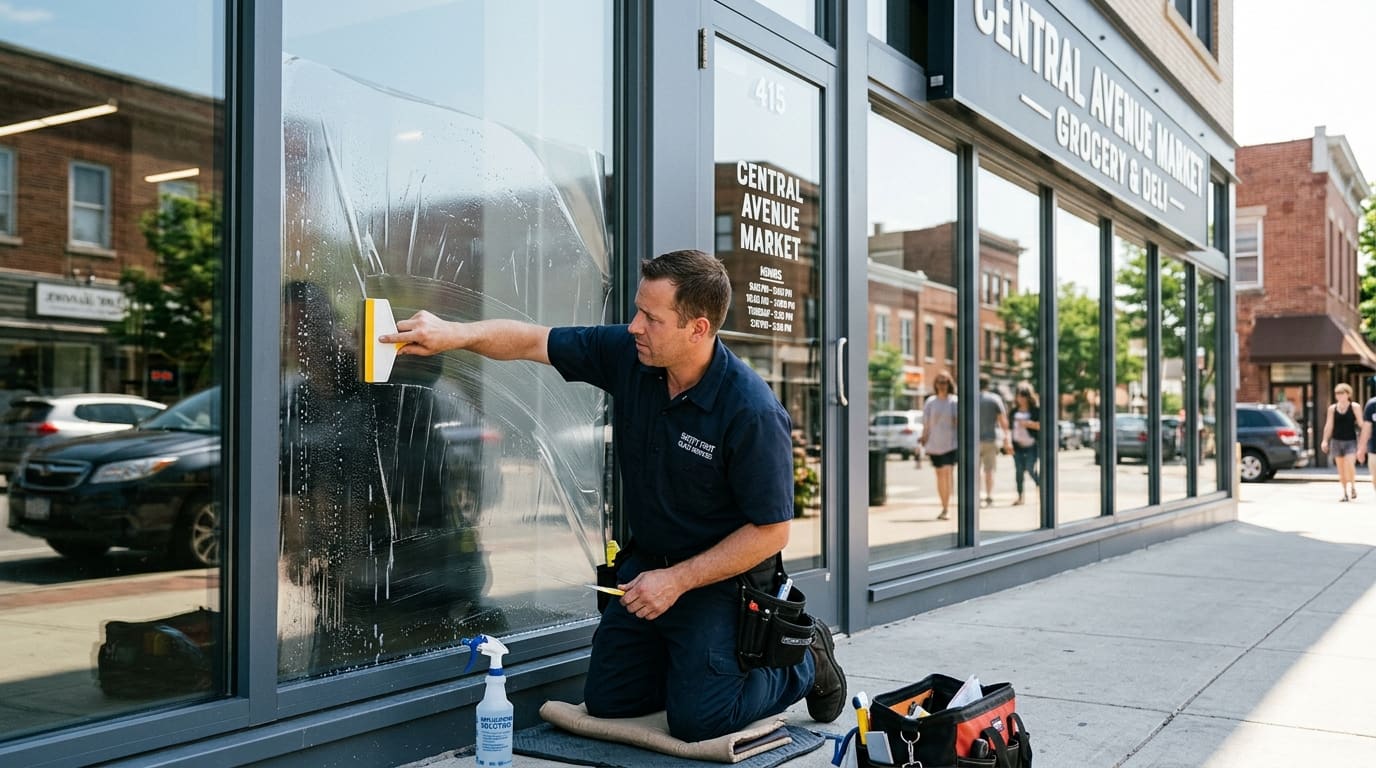
Security window film is a thick polyester film — ranging from 4 mil (0.004 inches) to 14 mil or more in the heaviest anti-intrusion grades — applied to the interior surface of existing glass. Unlike tinted solar films that primarily address heat and glare, security film is engineered for one primary purpose: keeping glass fragments together and in the frame when the glass is impacted or broken.
When glass with security film is struck with a blunt object, the glass breaks — but the film holds the broken fragments together as a single unit, keeping the broken glass in the frame and preventing the opening from becoming accessible. An intruder who breaks through standard glass clears the opening in one or two strikes. The same intruder attacking glass with heavy security film must continue striking the glass repeatedly to open a large enough hole to pass through, taking significantly more time and generating significantly more noise in the process.
The physics are straightforward: the film is a strong, tear-resistant membrane that absorbs energy from the impact and distributes it across the film surface rather than allowing the energy to shatter the glass into fragments that fall out. Heavier film (12 to 14 mil) provides more fragment retention and more resistance to penetration than lighter film (4 to 8 mil). The adhesive system that bonds the film to the glass is engineered to maintain the bond under impact, and quality installations include an anchor system — an additional perimeter tape or channel — that attaches the film edge directly to the window frame, preventing the film from peeling away from the frame on impact.
Protection Levels: What Each Film Thickness Provides
Not all security film provides the same level of protection, and understanding what you are actually getting for each thickness level helps in making a cost-effective decision for your specific business situation.
Four-mil film is the minimum thickness generally called "security film." It provides basic shatter retention — glass fragments stay mostly in place — but offers limited resistance to sustained attack. It is appropriate for applications where the primary concern is accidental breakage and injury reduction rather than forced entry resistance: interior glass partitions, display case glass, or retail environments where the risk profile is low but glass safety is a concern.
Eight-mil film provides meaningful forced entry delay. Tested under the ASTM F1233 standard for window film performance, 8-mil quality film requires multiple impacts over 30 to 60 seconds to create a passable opening in a standard commercial window. For most retail environments in the DMV, this level of protection significantly increases the risk exposure for would-be burglars and smash-and-grab perpetrators.
Twelve-mil and 14-mil film, combined with frame anchor systems, can achieve attack resistance ratings that take over 90 seconds of sustained impact to breach. These heavy-gauge films are used in high-value retail environments — jewelry stores, electronics retailers, cannabis dispensaries, luxury goods — and in commercial buildings with blast mitigation requirements. The blast mitigation application is particularly relevant in the DC metro area, given the concentration of federal buildings, embassies, and defense contractors that operate in and near areas of potential threat concern.
Blast Mitigation: A DMV-Specific Consideration
Washington DC and the inner suburbs have a higher concentration of federal and quasi-governmental facilities than anywhere else in the United States. The blast mitigation properties of security film — its ability to contain glass fragments in a blast event and reduce the injury caused by flying glass shards — are directly relevant to businesses operating near or within government buildings, embassy corridors, and facilities that may be near potential blast sources.
GSA-rated anti-shatter film is specified in many federal building applications and is available for commercial use. The rating system measures both fragment retention performance and the energy absorption of the film-to-frame system during a blast event. For DMV businesses near high-profile government facilities or in areas that may be subject to higher security requirements, blast-rated security film is worth discussing with your security advisor as part of a comprehensive window security program.
UV Blocking: The Secondary Benefit
Most quality security films block 99 percent or more of ultraviolet radiation as a baseline characteristic of the polyester film substrate. This UV-blocking benefit is significant for retail environments where merchandise, flooring, and furnishings are exposed to direct sun through storefront glass. The same UV radiation that causes residential fading of hardwood floors and area rugs causes visible fading of merchandise, display fixtures, and interior finishes in commercial spaces — sometimes noticeably within a single retail season.
For DMV retail businesses with south or west-facing storefront glass, the combination of security film with solar control tinting provides security protection, UV blocking, and solar heat reduction in a single product. Several film manufacturers offer multi-function products that combine security film thickness with solar control coatings, providing a comprehensive window film solution for retail environments where both security and solar management are priorities.
Security Film vs Glass Replacement: When Each Makes Sense
Security film applied to existing glass provides meaningful protection at significantly lower cost than replacing the glass with laminated security glass — often one-quarter to one-third of the cost of a full glass replacement. For DMV businesses with large glass areas or multiple storefront panels, this cost differential makes film the practical choice for achieving a baseline level of security improvement across the entire glass envelope.
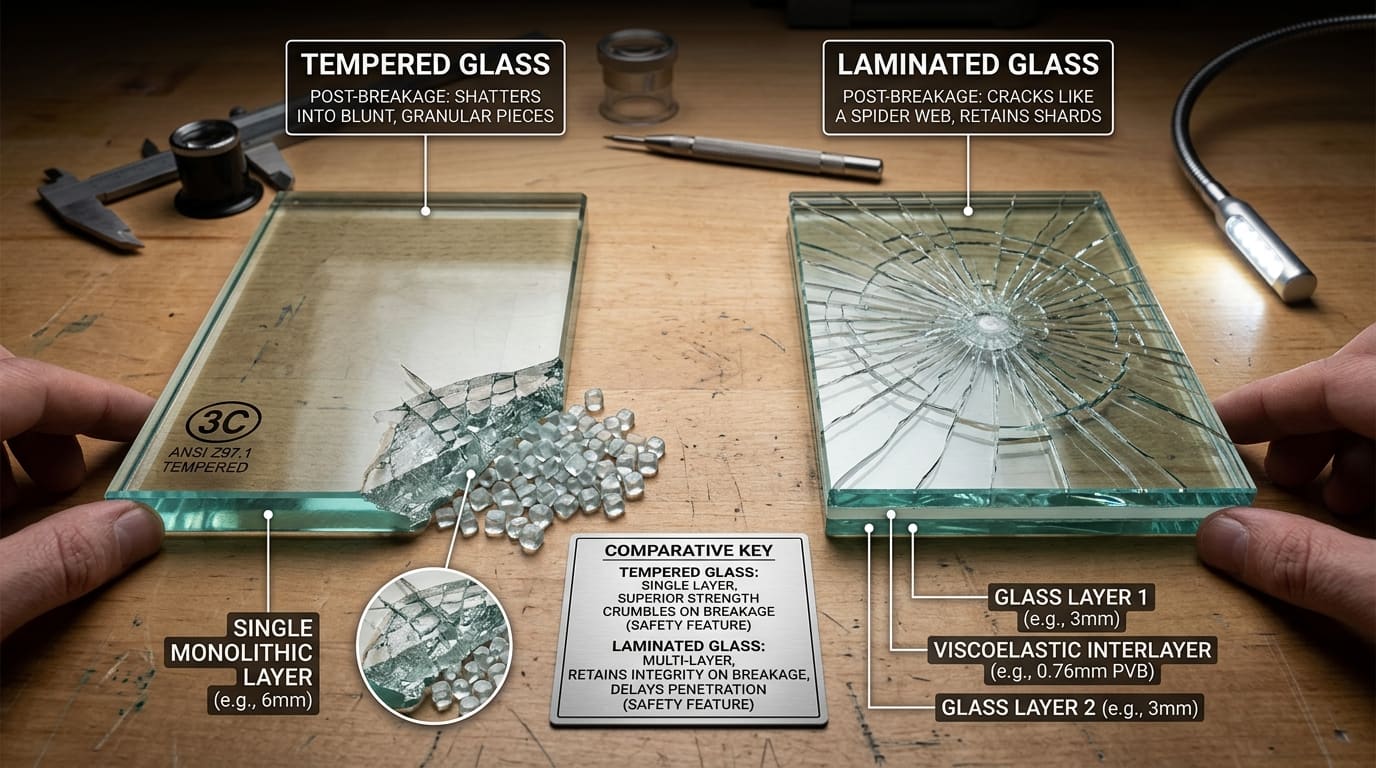
However, security film has limitations that laminated security glass does not. Film degrades over time — UV exposure and cleaning wear the film surface, and quality films have service lives of 7 to 15 years before replacement is needed. Film is visible on close inspection and can affect the appearance of the glass, particularly as it ages. And very determined attacks with sharp tools can cut film rather than needing to punch through it, a vulnerability that laminated glass is better engineered to resist.
For DMV businesses with the highest security requirements — jewelry stores, cannabis dispensaries, high-value electronics retailers — laminated security glass replacement is the superior long-term investment. For most commercial properties where the security risk profile is moderate and cost is a significant consideration, quality security film on existing glass provides a substantial improvement over unprotected glass at a practical price point. Virginia Glass Windows provides both security film application and laminated glass replacement for commercial properties throughout DC, Maryland, and Virginia. Contact us at (703) 470-7867 to discuss which approach is right for your specific business and risk profile.
About the Author
Mike Reynolds
Lead Glass Technician & Owner
With over 15 years of experience in window and glass repair across the DC, Maryland, and Virginia area, Mike shares practical expertise to help homeowners and businesses make informed decisions about their glass repair and replacement needs.
Need Help With Your Glass?
Our experts are ready to help with any window or glass issue. Free estimates, same-day service available across DC, MD & VA.
Related Articles
Continue reading about commercial
More Commercial
View All
Explore More Resources
Common Problems
24/7 Emergency
Board-Up & Glass
Licensed & Insured
DC, MD & VA
300+ Areas
DMV Coverage
Same-Day Service
When You Need It
Ready to Get Started?
Get a free estimate for any window or glass service across the DMV area.