UV Protection Through Glass: Protecting Furniture, Art & Flooring in DMV Homes
UV-blocking glass and window film to protect furniture, artwork, and flooring from sun damage. Types, coatings, and film options for DMV homes. Virginia Glass Windows.
Sun Damage Is Happening in Your Home Right Now
The fading and deterioration of furnishings, artwork, and flooring from solar exposure is one of those slow-motion disasters that DMV homeowners often do not notice until the damage is significant. A hardwood floor in a Bethesda colonial with south-facing bay windows will show visible fade lines after a few years — where the rugs were versus where the sun hit the bare floor. A mid-century modern sofa in an Alexandria sunroom can lose its original upholstery color within two years of direct sun exposure through unprotected glass. Original artwork in a Georgetown home can suffer irreversible chemical degradation from ultraviolet exposure through standard glass.
What most people do not realize is that standard window glass provides very little UV protection. Clear float glass transmits roughly 75 to 90 percent of UVA radiation (wavelengths 320 to 380 nm) and blocks most UVB (280 to 320 nm). UVA radiation is the primary driver of photodegradation in textiles, dyes, pigments, wood, and paper. The glass may look clear and benign, but it is passing a significant fraction of the UV energy that causes fading and material degradation.
This guide explains how different types of glass and window coatings affect UV transmission, what the practical implications are for protecting your home's interior, and what upgrade options are available for DMV homes with UV damage concerns. The good news is that effective UV protection does not require replacing all your windows — targeted glass or film upgrades in the highest-exposure locations can dramatically reduce UV-related damage.
How Glass and UV Interact: The Basics
UV radiation is categorized by wavelength: UVC (100 to 280 nm) is filtered by the atmosphere and is not relevant to window glass performance. UVB (280 to 320 nm) is almost entirely blocked by standard glass. UVA (320 to 380 nm) is the problematic range — it causes the most photodegradation, it is the least effectively blocked by standard glass, and it penetrates on overcast days as well as sunny days. When we talk about UV protection from glass, we are primarily talking about UVA transmission.
The UV transmission of a glass unit is affected by the glass composition, any coatings applied, and the number of glass plies. Standard clear float glass transmits roughly 65 to 75 percent of incident UVA. Standard low-E coated insulated glass (the type required by current energy codes) transmits roughly 40 to 60 percent of UVA depending on the specific low-E coating. Laminated glass with a PVB interlayer transmits less than 1 percent of UVA — the PVB interlayer absorbs UV very effectively. This last point is critical: if your windows are already laminated glass, you already have very good UV protection.
The Skin Cancer Foundation and conservation organizations like the American Institute for Conservation both recognize that UV-blocking glass provides meaningful protection. UV transmission below 1 percent (achievable with laminated glass or high-performance UV-blocking film) is the target for museum and archive applications. For residential applications where complete UV blocking is not necessary, reducing UV transmission to 20 to 30 percent or below provides meaningful protection against the most rapid fading while accepting some ongoing slow degradation.
Low-E Coatings and UV Protection
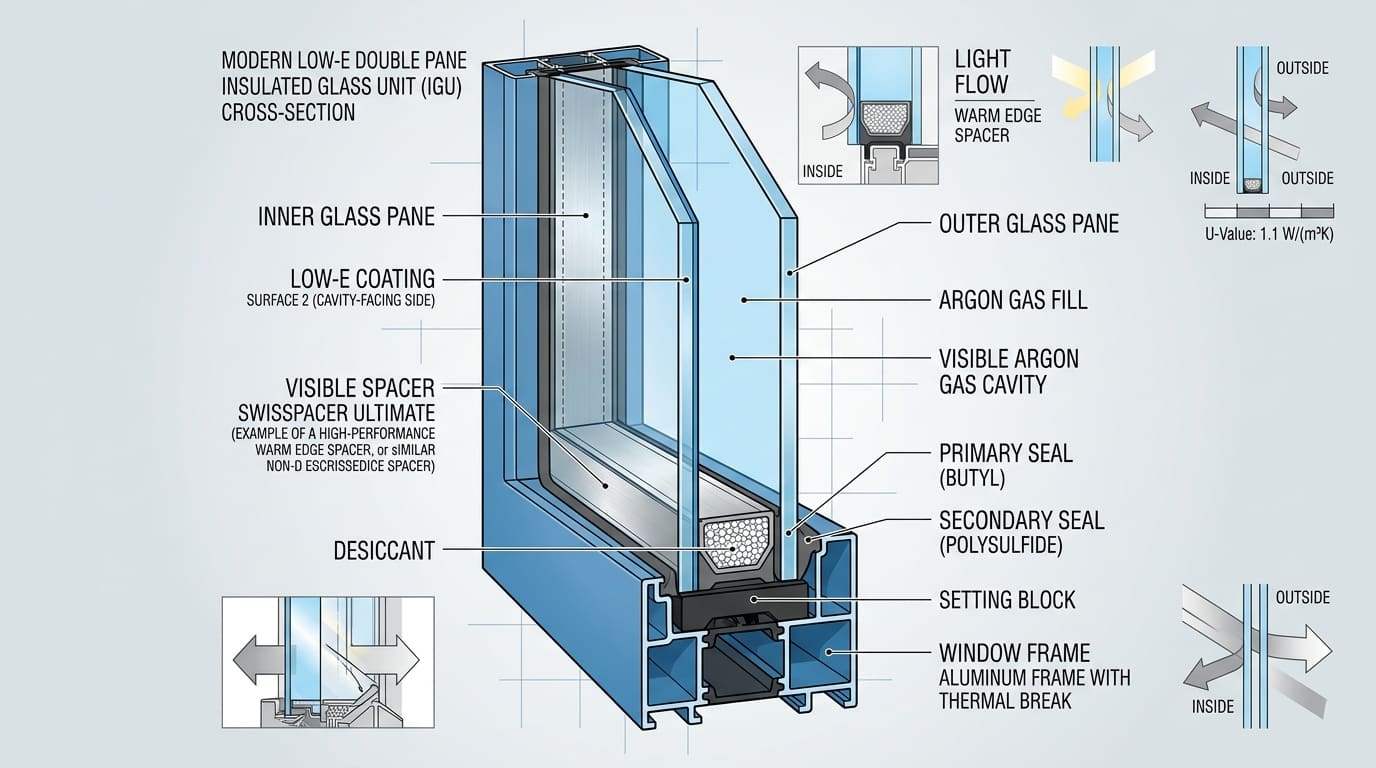
Low-E (low-emissivity) coatings are on most new insulated glass units, and they do provide some UV reduction — but this is incidental to their primary purpose. Low-E coatings are designed to reflect far-infrared radiation (radiated heat from warm surfaces) to improve thermal performance. They also reflect some solar spectrum energy including near-UV wavelengths, but they are not optimized for UV blocking. The UV transmission of a low-E coated double-pane unit is typically 30 to 50 percent, depending on the specific product.
For DMV homeowners whose windows already have modern low-E insulated glass, that glass is providing better UV protection than older single-pane or uncoated double-pane windows. If you replaced your windows in the past 10 to 15 years and specified code-compliant insulated glass, you are already receiving some UV protection benefit. However, for spaces with valuable art, antique furnishings, or significant hardwood flooring exposure, the UV transmission of a standard low-E unit may still be enough to cause meaningful long-term damage.
High-solar-gain low-E coatings used on north-facing windows and in passive-solar design have less UV rejection than solar-control low-E products. If your home was designed with a passive-solar strategy and the south-facing glazing uses high-solar-gain low-E to maximize winter heat gain, those windows may be passing more UV than you realize. We have encountered several situations in Montgomery County homes designed with passive-solar principles where the south-facing glass was causing significant floor fading because the high-solar-gain low-E specification was appropriate for energy performance but inadequate for UV protection of the interior.
Laminated Glass: The Best UV Protection Available
If UV protection is a priority for your DMV home, laminated glass is the most effective solution available. PVB (polyvinyl butyral) interlayers in laminated glass absorb UV radiation extremely effectively, blocking 99 percent or more of UVA transmission. This makes laminated glass the choice for museum glazing, for protecting original artwork, and for spaces where flooring and furnishing protection is a high priority.
We have done a number of glass replacement projects specifically for UV protection in DMV homes with valuable contents. A collector in McLean with an important print collection replaced the standard double-pane units in the room where the collection was displayed with laminated low-E insulated glass units. A Chevy Chase homeowner with Brazilian cherry hardwood floors throughout the main level replaced the glazing in the south-facing sunroom with laminated glass — the floor fading in that room, which had been progressing for years, essentially stopped after the glass replacement. These are real outcomes from real projects in our market.
The practical appeal of upgrading to laminated glass for UV protection is that you get the UV protection benefit plus the safety glazing benefit (laminated glass does not shatter on impact) plus modestly improved acoustic performance — all in a single glass specification. For spaces where UV protection is a driving concern, we typically recommend a laminated outer ply in the insulated glass unit combined with a solar control low-E coating. This combination achieves excellent UV blocking, good energy performance, and appropriate safety glazing in a single unit.
Window Film: The Cost-Effective Alternative
For homeowners who want UV protection without replacing glass units, high-quality UV-blocking window film is the most practical and cost-effective alternative. The best spectrally selective window films achieve UV transmission well below 1 percent while maintaining visible light transmission of 60 to 80 percent. The room remains bright and pleasant; UV-driven fading essentially stops.
Window film quality varies widely, and the difference matters for both performance and longevity. Cheaper films yellow within a few years, develop bubbles, and may interfere with low-E coatings on existing insulated glass units. High-quality ceramic or carbon-based UV films maintain clarity for 10 to 15 years or more and are compatible with low-E coated glass. In the DMV market, we specify film from manufacturers with substantial warranties and verifiable performance data — not the roll from a big-box store.
The limitation of film versus glass replacement is that film is a surface treatment, not a structural component. Film can be scratched, damaged, or peeled. For exterior-facing windows, film is not typically recommended — UV and weather exposure degrades exterior films far faster than interior films. Interior film on the inside surface of existing glass is the standard application. For DMV homeowners with large amounts of at-risk glass who do not want to replace all of it, a combination approach works well: replace the highest-priority units with laminated glass and apply premium UV film to the remaining units. Call (703) 470-7867 to discuss your specific situation.
Practical Priorities: Where UV Damage Is Happening in Your Home
Not all windows in a DMV home are equal UV risks. The exposure is driven by solar geometry, window orientation, and what is in the path of the solar beam inside the room. South-facing windows in winter deliver low-angle sun that penetrates deep into the room, often hitting flooring and furniture far from the window wall. West-facing windows in summer deliver afternoon sun at medium angles that hits upholstery, artwork on the opposite wall, and flooring at an angle. East-facing windows deliver morning sun that typically affects flooring directly in front of the window.
A systematic approach to UV protection starts by identifying the highest-value, most-at-risk items and the windows responsible for their UV exposure. A valuable oil painting on the wall opposite a south-facing window is at far greater risk than a hardwood floor under a north-facing window. We recommend starting with the spaces where UV-sensitive items are present and the windows that directly illuminate those items, rather than a whole-house glass replacement approach.
Virginia Glass Windows offers free consultations for UV protection glass projects. We walk through the home, assess window orientations, examine existing glass specifications, and identify the specific windows where a glass or film upgrade will have the most protective impact. We bring samples of laminated glass and premium film products so you can see the difference in visible light quality. This is a service we provide because UV protection is genuinely important to the longevity of your home's interior, and we want to help you make smart decisions about where to invest. Call (703) 470-7867 or submit a free photo estimate to get started.
Need Help With Your Glass?
Send us a photo of your window or glass issue and get a free estimate within hours. Our experts serve all of DC, Maryland, and Virginia.
Common Questions
Frequently Asked Questions
Answers to common questions about this topic from our DMV glass experts.
Keep Reading
Related Guides
Explore More Resources
Related Articles
Common Problems
Related Pages
Our Services
Ready to Get Started?
Get a free estimate from our glass experts. Same-day service available across DC, MD & VA.