How to Measure Window Glass for Replacement
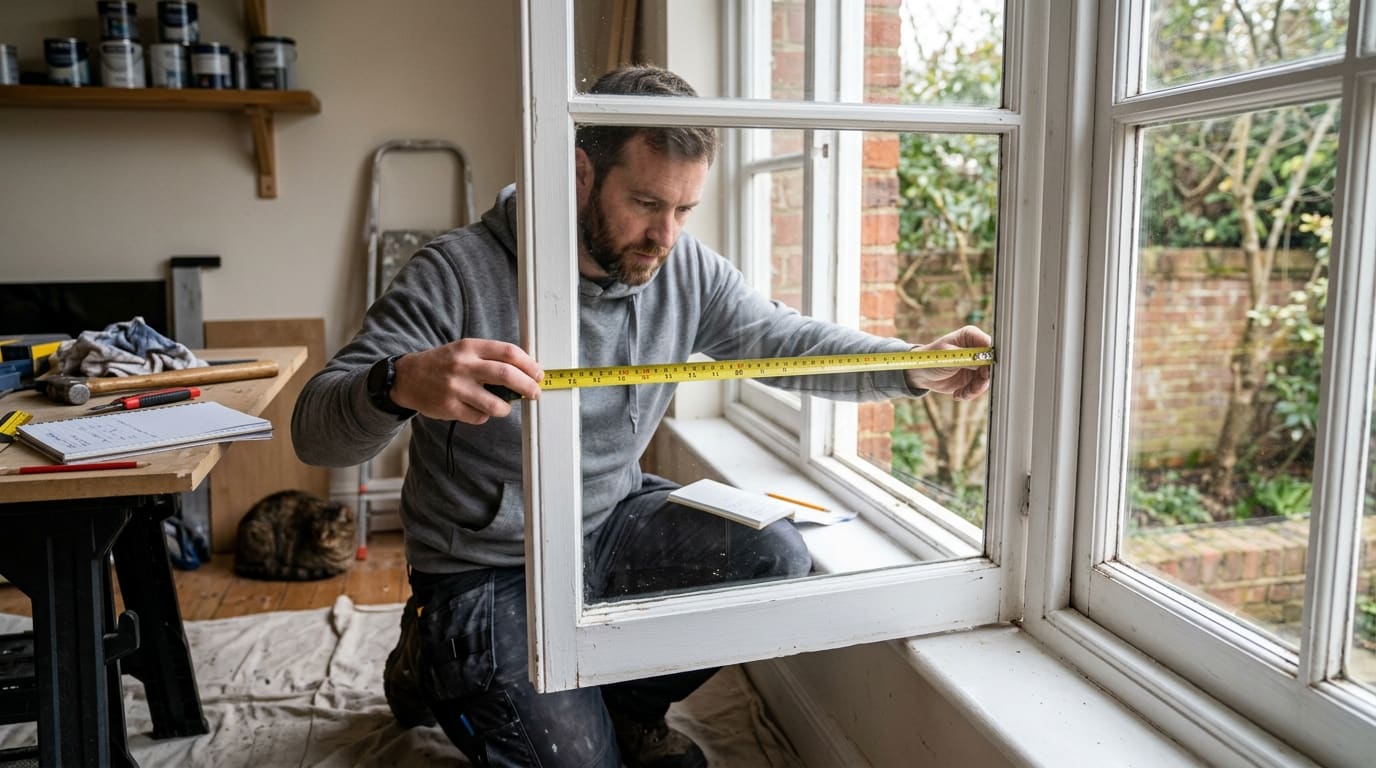
Accurate measurement is essential for window glass replacement. Virginia Glass Windows walks DMV homeowners through the measurement process for single-pane, IGU, and specialty glass.
Why Accurate Measurement Matters
Window glass is custom cut to fit your specific opening. Unlike off-the-shelf products, glass cannot be trimmed after cutting without risking breakage. An inaccurate measurement means a glass panel that either does not fit or is too small to be properly sealed.
Professional glass technicians always measure twice and use precision metal tape measures. For replacement IGUs (insulated glass units), the measurement must include not just the overall panel size but also the glass thickness and spacer width.
Measuring Single-Pane Window Glass
For single-pane windows (common in older DMV homes and historic buildings), measure the daylight opening — the clear glass area visible from inside — and add the appropriate overlap for the glazing rabbet. Standard overlap is 3/8 inch per side.
Measure width first, then height. Always measure in multiple places (top, middle, bottom for width; left, middle, right for height) since openings are rarely perfectly square. Use the smallest measurement to ensure the glass fits.
For example, if your opening measures 23 7/8 inches wide and 35 3/4 inches tall, the glass should be cut to approximately 24 5/8 inches wide by 36 1/2 inches tall (adding 3/8 inch overlap on each side).
Measuring Double-Pane IGUs
IGU measurement requires three dimensions: overall width, overall height, and unit thickness. The unit thickness includes both glass panes and the spacer between them. Common residential IGU thicknesses are 5/8 inch (standard) and 3/4 inch (for enhanced performance).
To measure an existing IGU, carefully remove the glass stops and measure the overall glass unit dimensions. Do not measure the daylight opening — measure the actual glass unit including the spacer frame that runs around the perimeter.
The spacer width (the metal or foam edge around the perimeter) is also specified. Common widths are 1/2 inch, 5/8 inch, and 3/4 inch. This affects the appearance of the edge and the unit's thermal performance.
Tools and Techniques
Use a steel tape measure, not a cloth tape. Read measurements to the nearest 1/16 inch. For IGU work, a digital caliper is useful for measuring spacer thickness precisely.
Document measurements with a sketch showing width, height, and any special features such as grille patterns, tinted glass, or obscure (frosted) areas.
For door glass and any glass in safety hazard locations (areas within 18 inches of a floor, in doors, around tubs and showers), note that safety glazing (tempered or laminated) is required by code in DC, Maryland, and Virginia.
Need Help With Your Glass?
Send us a photo of your window or glass issue and get a free estimate within hours. Our experts serve all of DC, Maryland, and Virginia.
Common Questions
Frequently Asked Questions
Answers to common questions about this topic from our DMV glass experts.
Keep Reading
Related Guides
Explore More Resources
Related Articles
Common Problems
Related Pages
Our Services
Ready to Get Started?
Get a free estimate from our glass experts. Same-day service available across DC, MD & VA.