Understanding R-Value, U-Factor & SHGC for Window Glass
Learn what R-value, U-factor, and SHGC mean for window glass performance. Virginia Glass Windows explains how these ratings affect energy efficiency in DMV homes.
What Is R-Value for Window Glass?
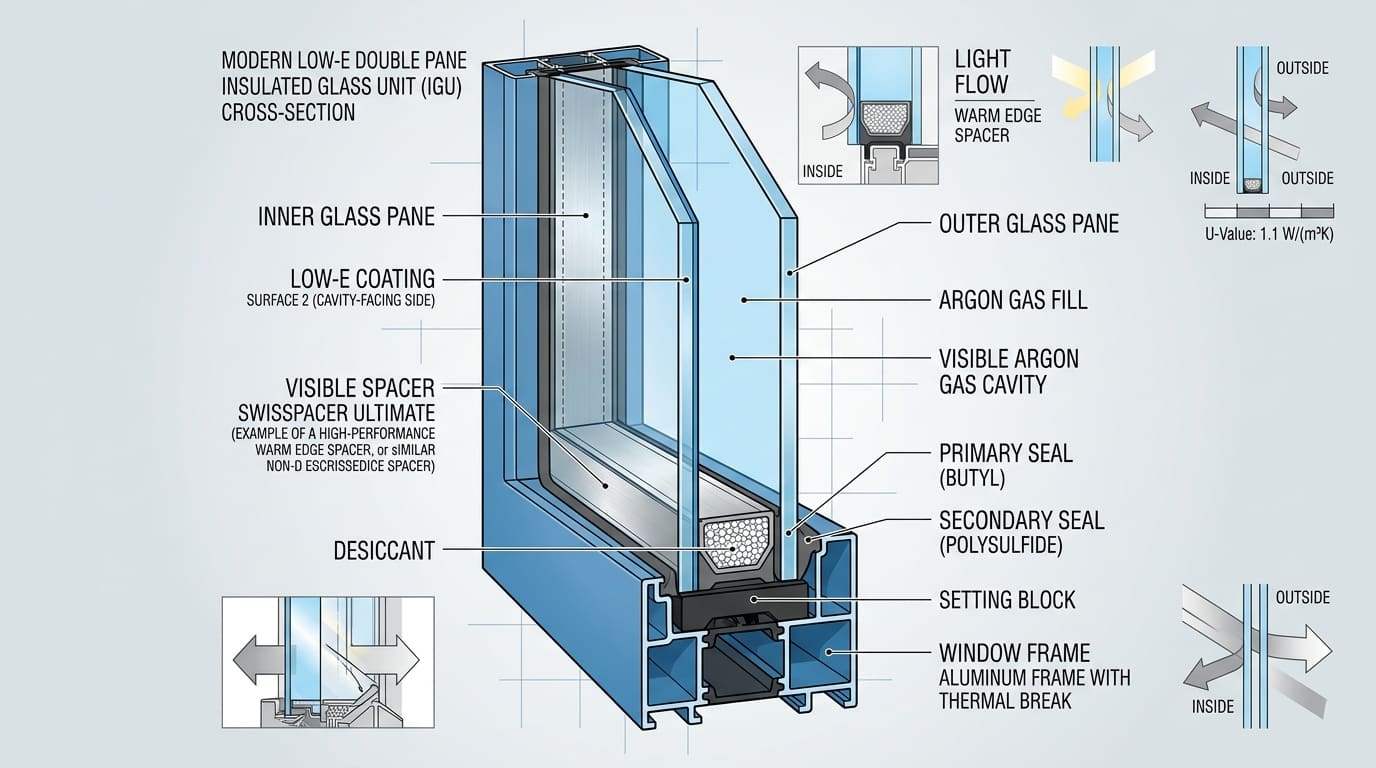
R-value measures thermal resistance — how well a material resists heat flow. Higher R-values mean better insulation. For window glass, R-values range from 0.9 for single pane glass to 5-8 for triple pane units with Low-E coatings and gas fill.
R-value matters most for DMV homeowners because the region experiences both extreme summer heat and cold winters. Windows with low R-values allow heat to transfer freely, forcing your HVAC system to work harder. Upgrading from single pane (R-0.9) to double pane Low-E (R-3 to R-4) can reduce window-related energy loss by 60 to 75 percent.
Common glass R-values: Single pane (R-0.9), Double pane clear (R-2.0), Double pane Low-E with argon (R-3.0 to R-3.7), Triple pane Low-E with argon (R-5.0 to R-7.0), Triple pane Low-E with krypton (R-7.0 to R-8.0).
What Is U-Factor?
U-factor is the inverse of R-value — it measures how much heat passes through a window assembly (not just the glass, but the entire window including the frame). Lower U-factors mean better insulation. U-factor is the rating used on ENERGY STAR labels and NFRC window stickers.
For DMV homes, ENERGY STAR recommends windows with a U-factor of 0.30 or lower. Standard double pane windows typically have U-factors of 0.35 to 0.50, while high-performance triple pane windows achieve U-factors of 0.15 to 0.25.
U-factor is measured for the entire window, so frame material affects the rating. Vinyl and fiberglass frames generally achieve lower (better) U-factors than aluminum frames because metal conducts heat more readily.
What Is SHGC (Solar Heat Gain Coefficient)?
SHGC measures how much solar radiation passes through a window as heat. Values range from 0 to 1, where lower numbers mean less solar heat gain. In the DMV area with hot summers, a lower SHGC on south- and west-facing windows reduces cooling costs.
For DMV homes, ENERGY STAR recommends an SHGC of 0.25 or lower. Clear glass has an SHGC of about 0.86, while Low-E coated glass reduces SHGC to 0.25 to 0.40. Tinted glass with Low-E coating can achieve SHGC as low as 0.15.
Balancing SHGC with visible transmittance (VT) is important. You want to block unwanted heat without making rooms too dark. Modern spectrally selective Low-E coatings block infrared heat while allowing visible light through, achieving low SHGC without sacrificing natural light.
How These Ratings Work Together
The ideal window glass for DMV homes combines a low U-factor (good insulation), low SHGC (blocks summer heat), and high VT (allows natural light). This combination is achieved with spectrally selective Low-E coatings applied to insulated glass units filled with argon or krypton gas.
For south-facing windows that get intense afternoon sun, prioritize low SHGC to reduce cooling costs. For north-facing windows that never get direct sun, prioritize low U-factor to prevent heat loss in winter. East and west windows benefit from both.
When consulting with your glass company, ask about these specific ratings for any replacement glass. A knowledgeable technician can recommend the optimal glass specification for each window orientation in your home.
Argon vs Krypton Gas Fill
Insulated glass units are filled with inert gas between the panes to reduce heat transfer. Argon is the standard fill gas, improving insulation by about 15 percent over air. Krypton is denser and more effective, improving insulation by about 25 percent over air, but costs significantly more.
For most DMV homeowners, argon-filled IGUs provide the best balance of performance and cost. Krypton is recommended for triple pane windows where the gap between panes is narrower, and for homeowners seeking maximum energy performance regardless of cost.
Gas fill effectiveness decreases over time as small amounts of gas slowly escape through the seals. Quality IGUs with dual-seal construction retain their gas fill for 15 to 25 years. If you notice foggy windows, the gas has already escaped along with the seal failure.
Need Help With Your Glass?
Send us a photo of your window or glass issue and get a free estimate within hours. Our experts serve all of DC, Maryland, and Virginia.
Common Questions
Frequently Asked Questions
Answers to common questions about this topic from our DMV glass experts.
Keep Reading
Related Guides
Explore More Resources
Common Problems
Ready to Get Started?
Get a free estimate from our glass experts. Same-day service available across DC, MD & VA.