Skylight Glass Guide: Types, Replacement, and Leak Repair in the DMV
Everything DMV homeowners need to know about skylight glass — types, replacement options, leak repair, and maintenance. Expert advice from Virginia Glass Windows.
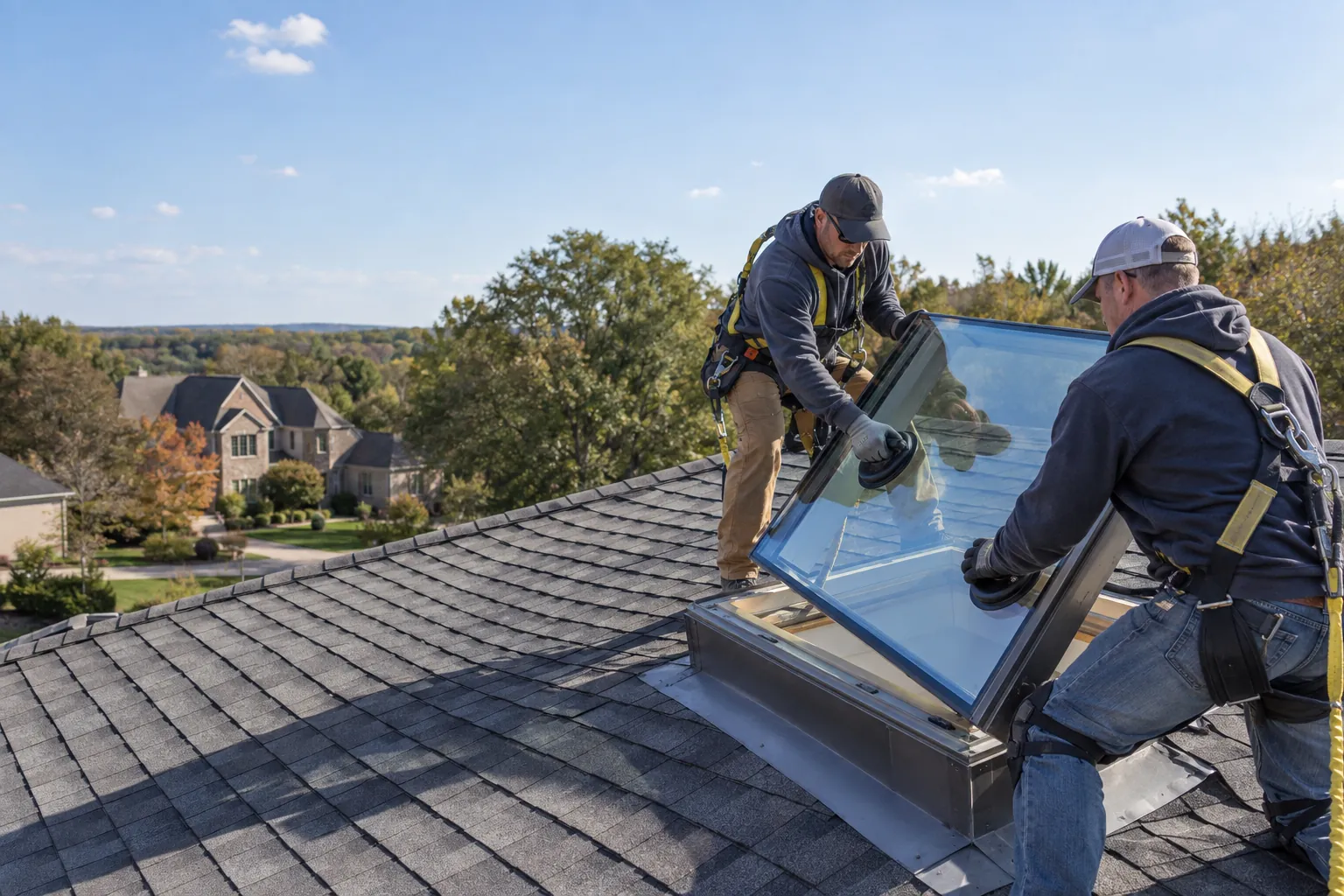
Skylight Glass Types: What Is Actually in Your Roof
Skylights are one of the most misunderstood glass assemblies in residential construction, partly because most homeowners never see the glass up close and partly because the terminology varies between manufacturers. Understanding what type of glazing is in your skylight is the starting point for any repair or replacement decision.
The majority of residential skylights installed in DMV homes from the 1990s onward use either tempered glass or laminated glass. Tempered glass is the more common of the two and is the minimum safety requirement for overhead glazing under most building codes. However, the current International Building Code and the Virginia, Maryland, and DC building codes require laminated glass — not just tempered — for overhead glazing applications, because laminated glass stays in place when broken while tempered glass, when it fails, releases fragments downward. Many older skylights with tempered-only glass were installed before this requirement was updated, and they are technically out of compliance with current code.
Insulated skylight glazing — double-pane or triple-pane units — is standard in quality skylights sold today. The insulated unit reduces heat gain in summer, reduces heat loss in winter, and eliminates the condensation on the inside face of the glass that plagues single-pane skylights during cold DMV winters. Low-E coatings on insulated skylight glazing reduce solar heat gain, which is particularly important for skylights facing south or west. In the DMV summer, an uncoated single-pane skylight over a living space can raise room temperature substantially and add significantly to cooling loads.
Acrylic or polycarbonate dome skylights are common in older DMV construction and in commercial applications. These plastic glazing materials are less expensive than glass but degrade over time — they yellow, craze, and become brittle after years of UV exposure. By the time a plastic dome skylight is 15 to 20 years old, it typically needs replacement. We can replace plastic dome skylights with glass units in most cases, upgrading to insulated, laminated, low-E glass for significantly better performance.
Skylight Leaks: Glass Versus Flashing
When a skylight leaks, the first question is whether the leak is through the glass or around the skylight frame. This distinction matters enormously because the repair approach is completely different. The majority of skylight leaks in the DMV are not glass failures — they are flashing failures. The flashing is the metal system that seals the joint between the skylight frame and the roof surface. When flashing deteriorates, lifts, or is improperly installed, water gets under it and into the roof assembly.
Signs that the leak is a flashing failure rather than a glass failure: water appears at the perimeter of the skylight frame on the ceiling, not directly below the glass; the leak is worse at the uphill edge of the skylight; the leak started after a roof replacement or after the roof was walked on; water stains are on the drywall around the skylight curb rather than directly under the glass. Flashing repairs are roofing work, and we coordinate with roofing contractors on combined skylight repair projects.
Glass failures in skylights are less common but do occur. Failed IGU seals causing fog between the panes are the most common glass-specific failure, and they present as visible haze or condensation inside the glass unit regardless of weather conditions outside. A cracked skylight lite from impact (tree limb, hail) is another glass-specific failure. Both require glass-only replacement rather than flashing work.
In the DMV area, winter ice dam formation on roofs can damage skylight flashing. Ice dams form at the eaves and in roof valleys when snowmelt refreezes, but they can also form at skylight curbs on the downhill side where meltwater pools and freezes. If you have had repeated skylight leaks following winter storms, ice dam management may be part of the long-term solution in addition to flashing repair. Call (703) 470-7867 for a skylight assessment that evaluates both the glass and the flashing system.
Replacing Skylight Glass: What the Job Involves
Skylight glass replacement is an overhead glazing job that requires proper safety precautions, appropriate access equipment, and experience handling glass on a pitched roof surface. We handle skylight glass replacement throughout the DMV — from simple single-pane skylight lite replacements in Rockville split-levels to complex insulated unit replacements in custom skylights on Bethesda estates and Reston townhomes.
The process starts with an accurate measurement of the existing glass opening. Skylight glass is custom-made to the exact dimensions of the frame opening; there are no standard stock sizes that fit all skylights. We measure the existing glass unit or the frame opening, determine the glass specification (thickness, type, coatings, and number of panes), and order the replacement unit from our fabrication network.
Installation requires working on the roof surface with the skylight open and the glass unit being set from above. For standard pitched-roof residential skylights, the installation is typically completed in a half-day once the glass arrives. For flat-roof or low-slope skylights, the work is more accessible from the roof surface but still requires proper waterproofing of the frame perimeter after glass installation.
We strongly recommend upgrading to insulated, laminated, low-E glass whenever a skylight glass replacement is being done. The incremental cost difference between a single-pane clear replacement and an insulated laminated low-E replacement is significant, but so is the performance difference — better energy performance, code-compliant overhead glazing, UV protection, and condensation-free interior performance. If you are going to the effort and cost of a skylight glass replacement, it is worth doing the upgrade. Visit /photo-estimate to submit photos of your skylight for a free custom quote.
Condensation and Fogging: What It Means for Your Skylight
Condensation on the interior face of a skylight glass pane is one of the most common complaints we hear from DMV homeowners during fall and winter. It is important to distinguish between two different types of condensation, because they have completely different causes and solutions.
Surface condensation — moisture forming on the interior face of the glass — is a function of the temperature difference between the glass surface and the indoor air. When warm, humid indoor air contacts a cold glass surface, moisture condenses on the glass. This is the same reason a cold glass of water forms condensation in summer. Single-pane skylights are most prone to this because the glass surface is very cold in winter. The solution is upgrading to insulated glass, which keeps the interior glass surface warmer. Improving bathroom or kitchen ventilation to reduce indoor humidity also helps. Surface condensation is not a seal failure — it is a thermodynamic phenomenon.
Interstitial condensation — fog or haze visible between the two panes of a double-pane skylight — is a seal failure. Once you can see fog inside the insulated unit, the unit must be replaced. There is no way to dry out or repair a failed IGU; the desiccant inside the spacer bar has been exhausted and moisture is permanently trapped between the panes. This is a glass replacement job.
In the DMV area, skylight IGU seal failures are accelerated by the combination of intense summer UV exposure and the wide temperature swings the glass experiences — from well above 100 degrees Fahrenheit in direct summer sun to single digits in a January cold snap. This thermal cycling fatigues the seal at the glass edge over time. Quality skylights from reputable manufacturers have IGU life expectancies of 15 to 25 years. Older or lower-quality units may fail earlier. If your skylight IGU is showing fog or haze, call (703) 470-7867 to schedule a replacement.
Skylight Maintenance: Extending Glass Life in the DMV Climate
Skylights require periodic maintenance to achieve their full service life, and the DMV climate is particularly demanding. Hot summers with intense UV and high humidity, followed by cold winters with freeze-thaw cycling, create a challenging environment for both the glass unit and the frame and flashing system.
Annual inspection is the most important maintenance step. Walk the roof or use binoculars from the ground to check the flashing condition — look for lifted edges, missing caulk, or displaced flashing at the skylight curb. Check the skylight frame for signs of moisture damage or deteriorating seals. From inside, inspect the glass unit for any signs of inter-pane fogging. Address any issues found early, before they become larger and more expensive repairs.
Cleaning skylight glass requires appropriate safety measures — do not walk on a roof without proper footwear and safety equipment. For accessible skylights, use a mild soap solution and a soft cloth or sponge. Avoid abrasive cleaners that can scratch glass coatings, and avoid pressure washing skylight glass which can damage seals and flashing. Interior cleaning of skylight glass can be done from inside with a standard glass cleaner.
Keeping the skylight frame and surrounding roof surface free of debris is important. Leaves and organic debris that accumulate around the skylight curb hold moisture and accelerate deterioration of the flashing and frame. A skylight surrounded by clean, well-maintained roofing lasts significantly longer than one embedded in debris. For skylight glass questions, inspection, or replacement anywhere in the DC, Maryland, and Virginia area, contact Virginia Glass Windows at (703) 470-7867.
Need Help With Your Glass?
Send us a photo of your window or glass issue and get a free estimate within hours. Our experts serve all of DC, Maryland, and Virginia.
Common Questions
Frequently Asked Questions
Answers to common questions about this topic from our DMV glass experts.
Keep Reading
Related Guides
Explore More Resources
Related Articles
Common Problems
Our Services
Ready to Get Started?
Get a free estimate from our glass experts. Same-day service available across DC, MD & VA.