Smart Glass & Switchable Glass: A Complete Guide for DMV Homes and Offices
Electrochromic, PDLC, and thermochromic smart glass explained. Applications for DC, Maryland, and Virginia homes and offices. Expert installation from Virginia Glass Windows.
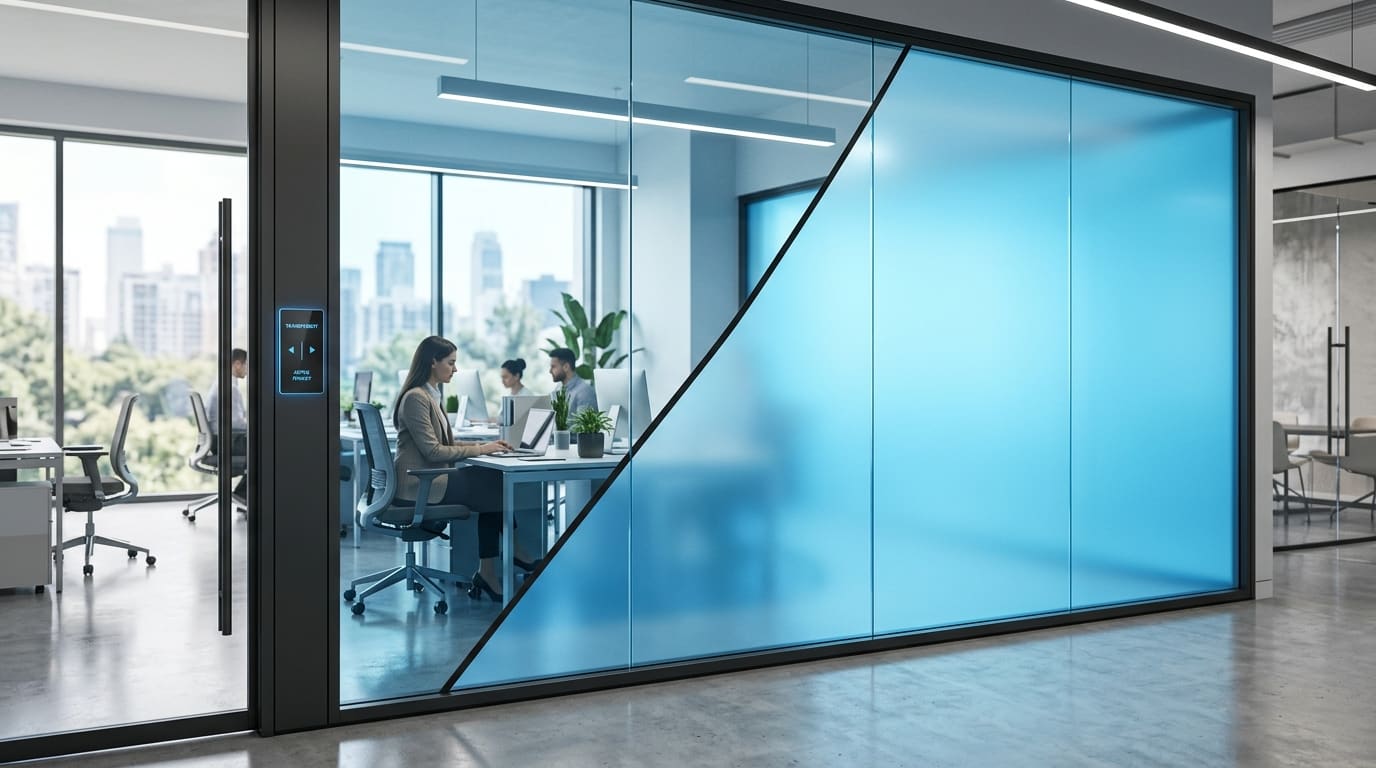
What Is Smart Glass and Why It Matters in the DMV
Smart glass — also called switchable glass, dynamic glass, or privacy glass — is a category of glazing that changes its optical properties on demand or in response to environmental conditions. Instead of pulling blinds or drawing curtains, smart glass lets you control light, heat gain, and privacy at the touch of a button, a phone app, or automatically based on temperature or sunlight intensity. In the DMV, where summer solar heat gain drives up cooling bills and where open-concept offices are grappling with privacy demands, smart glass is moving from a luxury novelty to a serious performance product.
We have been seeing smart glass inquiries come in regularly from Bethesda condos, Tysons office towers, and Georgetown row houses over the past couple of years. The technology has matured significantly — early electrochromic products had slow switching times and limited color range, but current-generation products switch in seconds and stay optically clear. If you have been curious whether smart glass makes sense for your space, this guide walks through every major technology and its practical applications in our market.
Virginia Glass Windows works with several smart glass suppliers to bring these products to residential and commercial clients across the region. We handle measurement, specification, installation, and integration with building automation systems. Call us at (703) 470-7867 or submit a free photo estimate to start a conversation about what smart glass can do for your specific situation.
Electrochromic Glass: The Gold Standard for Solar Control
Electrochromic (EC) glass uses a thin multi-layer coating applied to the glass surface that changes color when a low-voltage electrical current is applied. The glass transitions from clear to a deep blue-gray tint and can hold any state in between. The tinting happens gradually — typically in 1 to 3 minutes for a full transition — and requires only a brief pulse of electricity to initiate a state change. Once tinted, it holds that state without ongoing power draw.
The solar heat gain coefficient (SHGC) of electrochromic glass shifts dramatically between clear and fully tinted states — typically from around 0.40 in the clear state to under 0.10 when fully tinted. For south- and west-facing windows in a Bethesda or McLean home, that difference translates directly to cooling load reduction during the brutal DMV summer afternoons. Some systems integrate with weather data to tint proactively ahead of incoming solar exposure.
The primary brands in this space — View, Kinestral Halio, and Saint-Gobain SageGlass — all offer building management system (BMS) integration for commercial applications. For a Reston office tower or a DC law firm with floor-to-ceiling glazing, BMS-integrated electrochromic glass can automate glare and heat management across an entire facade. Residential systems typically use a simple wall switch, remote, or smartphone app. The main limitation of EC glass is cost — it remains a premium product — and lead time, since units are typically custom-fabricated.
PDLC Glass: Instant Privacy on Demand
Polymer-dispersed liquid crystal (PDLC) glass works differently from electrochromic glass. In its unpowered state, PDLC glass is opaque white — the liquid crystals are randomly oriented and scatter light. When voltage is applied, the crystals align and the glass becomes clear. This is the opposite of what most people expect, and it is worth emphasizing: PDLC glass is private when the power is off, transparent when the power is on. That means a power failure defaults to privacy, which many clients in conference rooms and medical offices consider a feature rather than a bug.
The transition in PDLC glass is nearly instantaneous — fractions of a second — which makes it ideal for applications where you need immediate privacy control. Conference rooms in Tysons and Arlington office parks are among the most common applications we see. The partitions go from fully transparent to fully private the moment a meeting starts, eliminating the need for roller shades or frosted film. We have also installed PDLC glass in residential master bath windows in Potomac and Great Falls homes where homeowners wanted natural light without compromising privacy from neighboring properties.
PDLC glass does consume power continuously to maintain the clear state, which is a meaningful distinction from electrochromic glass. For large installations, the ongoing energy consumption is worth factoring into the total cost of ownership. PDLC glass can also be applied as a retrofit film to existing glass surfaces, which significantly reduces installation cost compared to replacing full glass units. The film version is not quite as optically clear as purpose-built PDLC glass, but it is a practical option for existing installations.
Thermochromic Glass: Passive, Automatic Solar Control
Thermochromic glass changes its tint based on temperature rather than electrical signals. As the glass surface heats up from solar radiation, the coating progressively tints to reduce heat gain — no wiring, no controls, no user intervention required. When the glass cools, it clears again. This passive operation makes thermochromic glass appealing for projects where the simplicity of no controls is a priority, or for remote locations where running electrical wiring would be complex.
The practical challenge with thermochromic glass in the DMV is calibration. The tinting threshold needs to match your specific climate and orientation. In a north-facing DC row house window, thermochromic glass may rarely trigger because the glass surface temperature never gets high enough. On a south-facing skylight in a Fairfax home, the same glass might tint aggressively. The response curve of thermochromic glass is fixed at the manufacturing stage, so choosing the right product for your specific application requires careful analysis.
Several European manufacturers produce high-quality thermochromic glass products, and we source these for clients where the application makes sense. They are particularly popular for skylights and roof glazing in conservatories and sunrooms, where passive heat management is critical and running control wiring through a roof structure would be complicated. For standard vertical windows where active control is desired, electrochromic or PDLC glass typically offers better user experience.
Applications for DMV Homes and Offices
In DMV residential applications, the most compelling use cases for smart glass are south- and west-facing bedroom or living room windows, skylights in kitchens and great rooms, master bathroom windows overlooking neighboring properties, and glass partitions in open-concept homes. We have seen homeowners in Silver Spring and Chevy Chase eliminate living room curtains entirely after installing electrochromic windows — the solar control is handled by the glass itself, and the clean, unobstructed view they paid for is actually visible year-round.
Commercial applications in the DMV are driven primarily by office fitout trends and energy codes. DC and Maryland have adopted increasingly stringent energy codes that favor dynamic glazing over static high-performance glass because dynamic glass can deliver better annual energy performance than any static alternative. Conference rooms, executive offices, lobby facades, and healthcare examination rooms are all strong use cases. We work with commercial interior designers and general contractors to specify and supply smart glass for office renovations throughout NoVA and downtown DC.
Two applications that come up repeatedly in our DMV market deserve specific mention. First, condo owners in high-rise buildings along the 14th Street corridor, H Street NE, and in the Rosslyn-Ballston corridor frequently ask about privacy glass for glass-heavy units where neighboring buildings are very close. PDLC retrofit film offers an economical option for these situations. Second, healthcare providers in the DC suburbs — particularly medical offices and dental practices in Rockville, Tysons, and Alexandria — are adopting PDLC glass partitions to create flexible, ADA-compliant private consultation spaces.
Cost, Installation, and What to Expect
Smart glass is a premium product category, and we want to be straightforward about that. Electrochromic insulated glass units are significantly more expensive than standard high-performance insulated glass. PDLC glass is moderately more expensive than standard glass, and retrofit PDLC film is the most economical entry point into the smart glass category. The cost premium is justified for applications where the performance benefit is high — south-facing windows in full sun, privacy-critical spaces, or commercial facades where energy performance affects operating costs across thousands of square feet.
Installation requires coordination between the glazing work and the electrical rough-in. Electrochromic and PDLC systems need a low-voltage power source run to each glass unit. For new construction or major renovation this is straightforward to plan. For retrofit into existing windows, the electrical work adds complexity and cost. Virginia Glass Windows works with licensed electricians to coordinate the full installation, or we can work alongside your existing electrician if you have one on the project.
We strongly recommend starting with a free site assessment before committing to smart glass. Orientation, shading from neighboring buildings or trees, the specific performance goals, and integration requirements all affect which technology is the right fit. Every smart glass job we do starts with an honest conversation about whether the technology actually solves the problem in front of us — or whether a high-performance static glass unit would achieve 80 percent of the benefit at a fraction of the cost. Call (703) 470-7867 or use our free photo estimate to get that conversation started.
Need Help With Your Glass?
Send us a photo of your window or glass issue and get a free estimate within hours. Our experts serve all of DC, Maryland, and Virginia.
Common Questions
Frequently Asked Questions
Answers to common questions about this topic from our DMV glass experts.
Keep Reading
Related Guides
Explore More Resources
Related Articles
Common Problems
Related Pages
Our Services
Ready to Get Started?
Get a free estimate from our glass experts. Same-day service available across DC, MD & VA.