Window Glass Types Explained: A Complete Guide
There are many types of window glass — from clear to tinted, single to triple pane, annealed to tempered. Virginia Glass Windows explains all the options for DMV homeowners.
Annealed (Standard Float) Glass
Annealed glass is the base product of the float glass manufacturing process. It is relatively soft, can be cut easily, and breaks into large sharp shards. It is the least expensive glass option but has limited applications where safety glazing is required.
Annealed glass is acceptable for interior non-hazard locations: cabinet glass, picture frames, tabletop inserts not used as walking surfaces, and some interior partition applications.
It is NOT suitable for doors, showers, skylights, or any application within 18 inches of a floor per DC, Maryland, and Virginia building codes.
Heat Strengthened Glass
Heat strengthened glass is partially tempered — it is heated and cooled rapidly, but less severely than fully tempered glass. It is approximately twice as strong as annealed glass and has improved thermal resistance.
When heat strengthened glass breaks, it produces larger fragments than fully tempered glass — larger than annealed but smaller than tempered fragments. It is often used in commercial spandrel (non-vision) glass and architectural applications where both strength and predictable breakage are important.
Heat strengthened glass is NOT a safety glazing product and does not satisfy safety glazing code requirements. Do not confuse it with tempered glass.
Wire Glass and Security Glazing
Wire glass contains an embedded wire mesh that holds fragments together after breakage. It was historically used in fire-rated applications due to its ability to remain in the opening longer during a fire.
Modern fire-rated glazing has largely replaced wire glass with superior products. Wire glass is still found in older DMV commercial buildings and schools and should be replaced when damaged.
Security glazing is a broad category including polycarbonate, multi-layer laminated products, and specialized glass-clad polycarbonate. It is used in high-security applications including courthouses, banks, and embassy buildings — common needs in the Washington DC metro area.
Specialty Glass Types
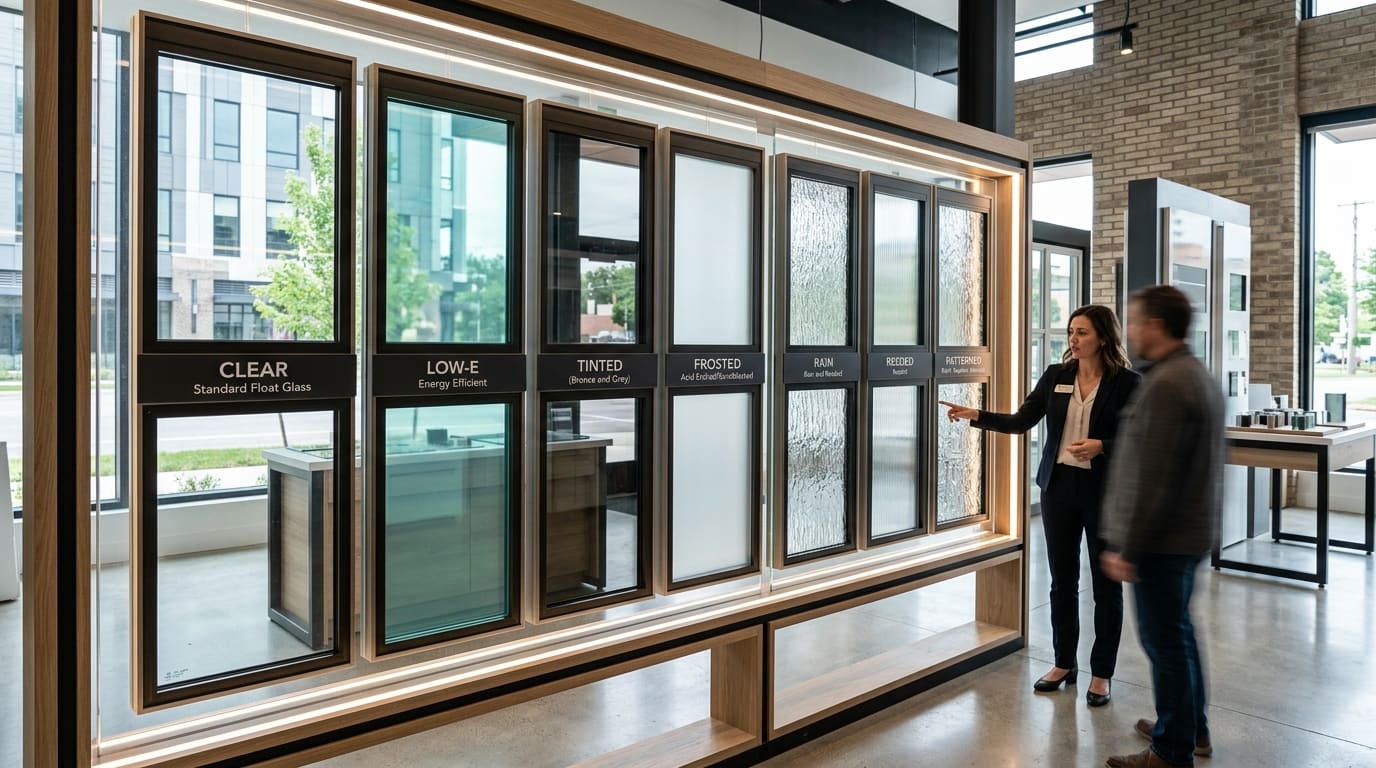
Low-iron glass (also called ultra-clear or starfire glass) has reduced iron content, eliminating the green tint of standard glass. It provides superior clarity and color accuracy, ideal for premium shower doors, display cases, and high-end architectural applications.
Obscure glass includes frosted, seeded, textured, and patterned glass that provides privacy while transmitting light. Available in dozens of patterns from architectural suppliers. Commonly used in bathroom windows, entry sidelights, and decorative applications.
Tinted glass (bronze, gray, green, blue) absorbs solar energy and reduces glare. Common in commercial applications and some residential settings. Tinted glass increases heat absorption and may be warmer to the touch — ensure adequate edge clearance and frame thermal performance when specifying.
Need Help With Your Glass?
Send us a photo of your window or glass issue and get a free estimate within hours. Our experts serve all of DC, Maryland, and Virginia.
Common Questions
Frequently Asked Questions
Answers to common questions about this topic from our DMV glass experts.
Keep Reading
Related Guides
Explore More Resources
Related Articles
Common Problems
Related Pages
Our Services
Ready to Get Started?
Get a free estimate from our glass experts. Same-day service available across DC, MD & VA.