Wine Cellar Glass Guide: Doors, Walls & Temperature Control
Guide to wine cellar glass walls and doors. Thermal insulation requirements, UV protection, humidity management, and custom design options for DMV wine cellars from Virginia Glass Windows.
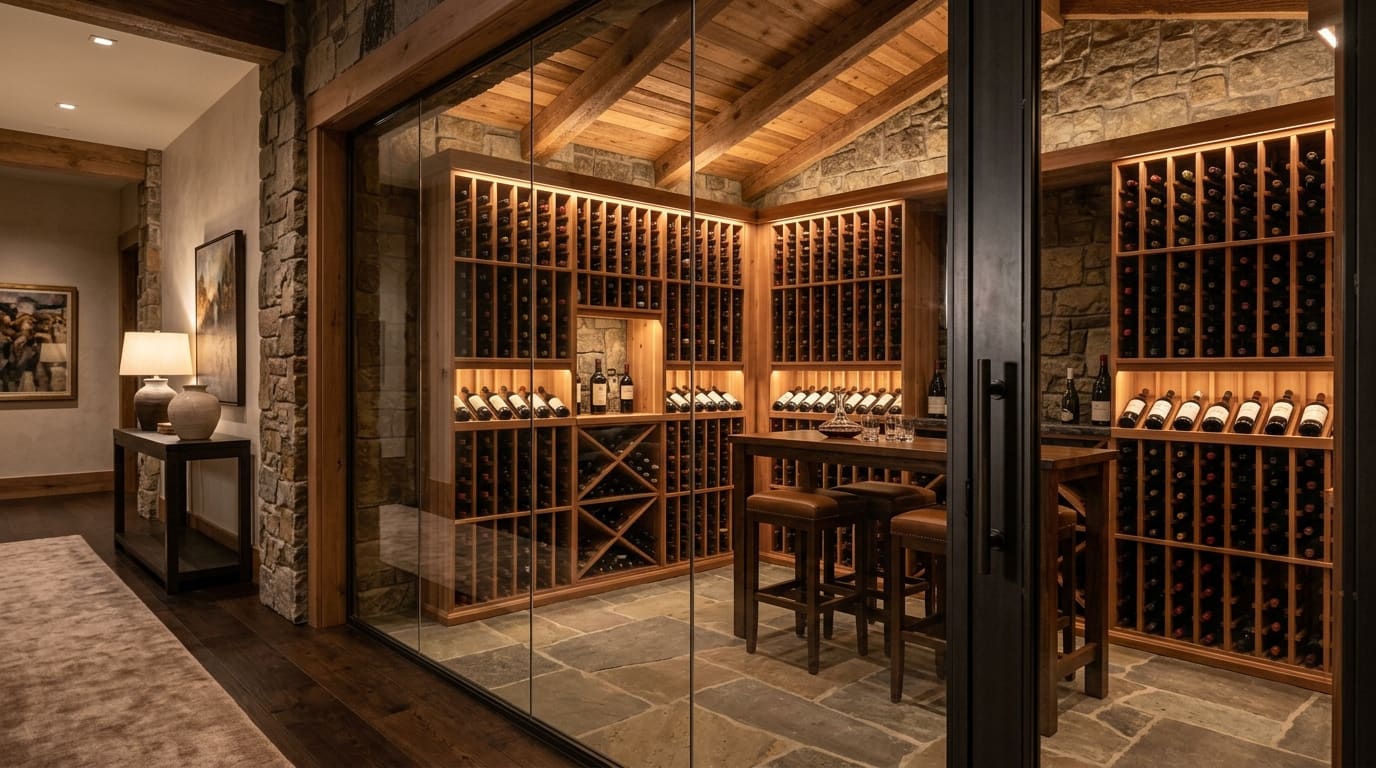
The Appeal of Glass Wine Cellars
Glass wine cellars transform wine storage from a hidden utility space into a stunning architectural feature. In DMV luxury homes — from Great Falls estates to Georgetown townhouses, from Potomac mansions to custom builds in McLean and Bethesda — glass-enclosed wine cellars have become one of the most sought-after home features. They showcase your wine collection as living art while maintaining the precise temperature and humidity conditions that fine wines demand.
The engineering challenge of a glass wine cellar is significant. Wine requires storage at 55 to 58 degrees Fahrenheit with 60 to 70 percent relative humidity — conditions vastly different from the adjacent living spaces. Glass walls and doors must provide sufficient thermal insulation to maintain this temperature differential without excessive energy consumption, prevent condensation on glass surfaces, and block UV light that degrades wine.
Virginia Glass Windows has designed and installed glass wine cellars for luxury homes throughout the Washington DC metropolitan area — balancing glass technology, climate control engineering, and aesthetic design to make each cellar both functional and spectacular.
Thermal Insulation Requirements
The primary engineering challenge in wine cellar glass is thermal performance. With the wine cellar interior maintained at 55 degrees and the adjacent room at 72 degrees or higher, the glass wall must resist significant heat transfer. Inadequate insulation forces the cooling system to work continuously, wasting energy and risking temperature fluctuations that damage wine.
Standard insulated glass units (IGUs) with air fill provide a U-factor of approximately 0.47 — inadequate for wine cellar applications. Wine cellar glass requires high-performance IGUs with argon or krypton gas fill, low-E coatings on multiple surfaces, and warm-edge spacers to achieve U-factors of 0.25 or better. Triple-pane configurations with two gas-filled cavities provide the best thermal performance for wine cellar walls.
Virginia Glass Windows specifies wine cellar glass based on the specific temperature differential, cellar size, cooling system capacity, and desired glass area. We work with your wine cellar cooling contractor to ensure that the glass specification is compatible with the cooling system design. Every wine cellar glass installation includes thermal performance calculations to guarantee adequate insulation.
UV Protection for Wine Preservation
Ultraviolet light is one of the greatest enemies of wine. UV radiation triggers chemical reactions that break down tannins and other organic compounds, causing premature aging, off-flavors, and color changes — a condition known as "lightstrike." Even brief exposure to direct sunlight or fluorescent light can damage sensitive wines. Glass wine cellar walls must block UV while transmitting visible light for display purposes.
Standard glass blocks some UV, but specialized UV-filtering glass or laminated glass with UV-absorbing interlayers is essential for wine cellar applications. Quality wine cellar glass blocks 99 percent or more of UV radiation while maintaining excellent visible light clarity. Low-E coatings designed for wine cellars prioritize UV blocking over solar heat gain control, a different optimization than standard architectural low-E.
Virginia Glass Windows specifies UV-filtering glass for every wine cellar installation. We also advise on interior lighting choices — LED lighting produces virtually no UV compared to incandescent or fluorescent alternatives — and can incorporate dimming controls to minimize light exposure when the cellar is not being viewed. The combination of UV-filtering glass and proper lighting protects your wine collection for decades.
Humidity Management and Condensation Control
Wine cellars maintain 60 to 70 percent relative humidity to prevent cork drying and wine oxidation. When this humid, cool air meets the interior glass surface, condensation can form — particularly on warm summer days in the DMV when the temperature differential between the cellar and living space is greatest. Condensation obscures the glass, creates water damage at the base, and can promote mold growth.
Preventing condensation requires maintaining the interior glass surface temperature above the cellar air dew point. This is achieved through high-performance insulated glass (which keeps the interior glass surface closer to the cellar air temperature rather than the warm room temperature) and proper air circulation within the cellar. Warm-edge spacers are critical because the glass edge is where condensation forms first.
Virginia Glass Windows designs wine cellar glass systems to prevent condensation under worst-case DMV summer conditions. We calculate the dew point based on your cellar temperature and humidity setpoints and specify glass with sufficient insulation value to keep the surface temperature above that threshold. For extremely large glass walls, we may recommend heated glass elements at the base to eliminate any condensation risk.
Custom Design Options
Wine cellar glass offers extensive design customization. Frameless glass walls with minimal hardware create the most dramatic visual impact — floor-to-ceiling glass with nearly invisible structural connections showcases your collection as if suspended in space. Framed systems with aluminum or steel profiles offer more design flexibility and easier future modifications.
Door options include frameless glass pivot doors, hinged glass doors with minimal frames, and sliding glass barn-door style configurations. For larger wine cellars, double doors or sliding systems provide wide openings for furniture, display changes, and entertaining access. All door hardware must maintain the thermal seal — standard door hardware without thermal breaks creates condensation points and cold bridges.
Virginia Glass Windows creates custom wine cellar glass installations tailored to your space, collection size, and design vision. We offer clear, low-iron (ultra-clear), tinted, and back-painted glass options. Etched glass with custom patterns, logos, or decorative elements adds personal character. We work directly with your interior designer and wine cellar builder to ensure seamless integration. Contact us for a free wine cellar glass consultation.
Structural and Safety Considerations
Wine cellar glass walls must be structurally engineered to support their own weight, resist any lateral loads, and meet building code safety requirements. Full-height glass walls (commonly 8 to 10 feet in luxury DMV homes) require careful structural analysis to determine glass thickness, mounting method, and support spacing.
All glass in wine cellar walls and doors must be tempered or laminated safety glass meeting CPSC 16 CFR 1201, as wine cellar glass is typically in a hazardous location (adjacent to walking areas, in a wall that could be mistaken for an opening). Laminated glass is often preferred because it provides both safety compliance and superior UV blocking through the PVB interlayer.
Virginia Glass Windows engineers every wine cellar glass installation for structural adequacy and safety compliance. We provide stamped engineering drawings when required by permit authorities and coordinate with your general contractor for proper structural support at the glass mounting points. Your wine cellar glass will be safe, beautiful, and built to last. Contact us at (703) 470-7867 to discuss your wine cellar project.
Need Help With Your Glass?
Send us a photo of your window or glass issue and get a free estimate within hours. Our experts serve all of DC, Maryland, and Virginia.
Common Questions
Frequently Asked Questions
Answers to common questions about this topic from our DMV glass experts.
Keep Reading
Related Guides
Explore More Resources
Related Articles
Common Problems
Our Services
Ready to Get Started?
Get a free estimate from our glass experts. Same-day service available across DC, MD & VA.