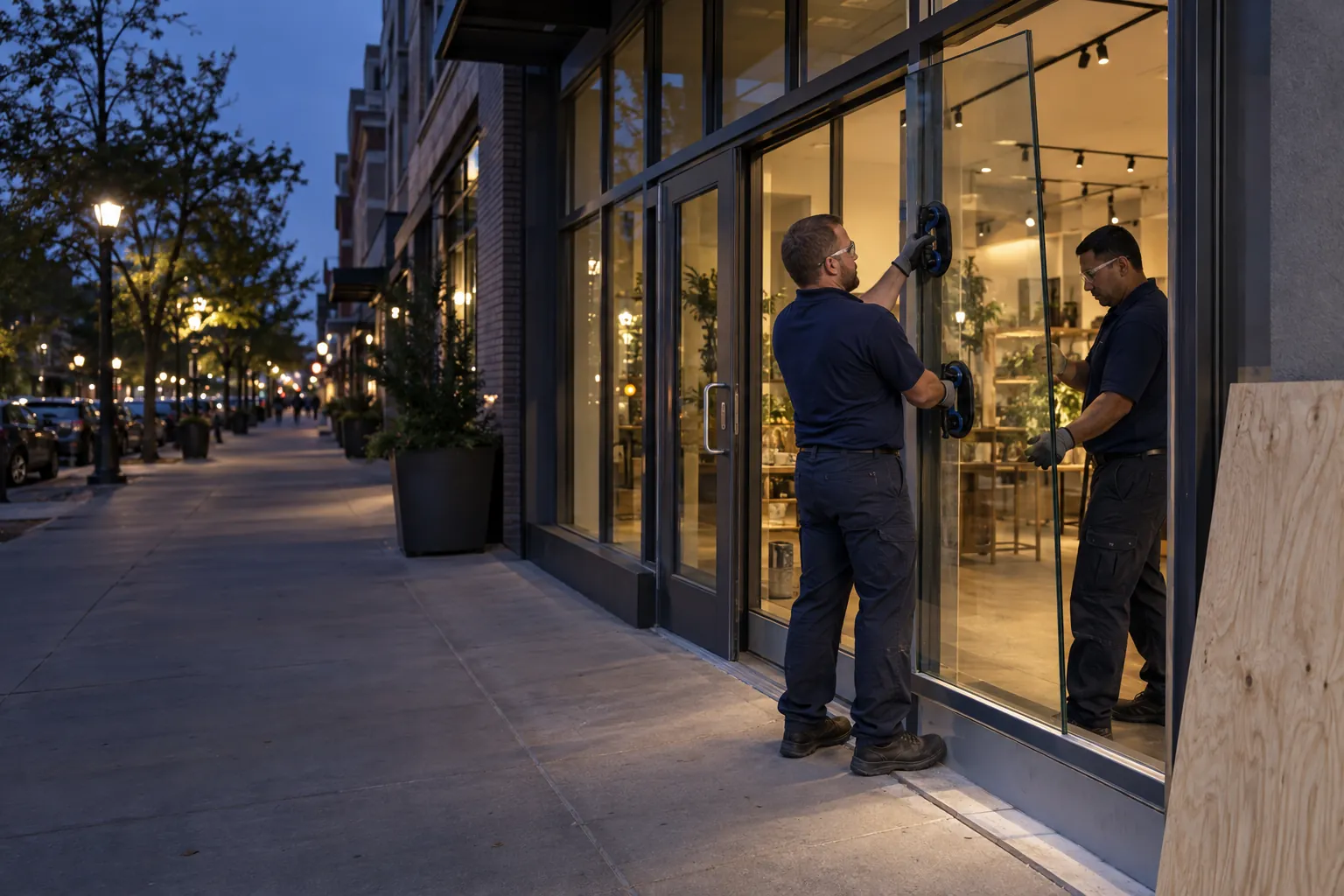
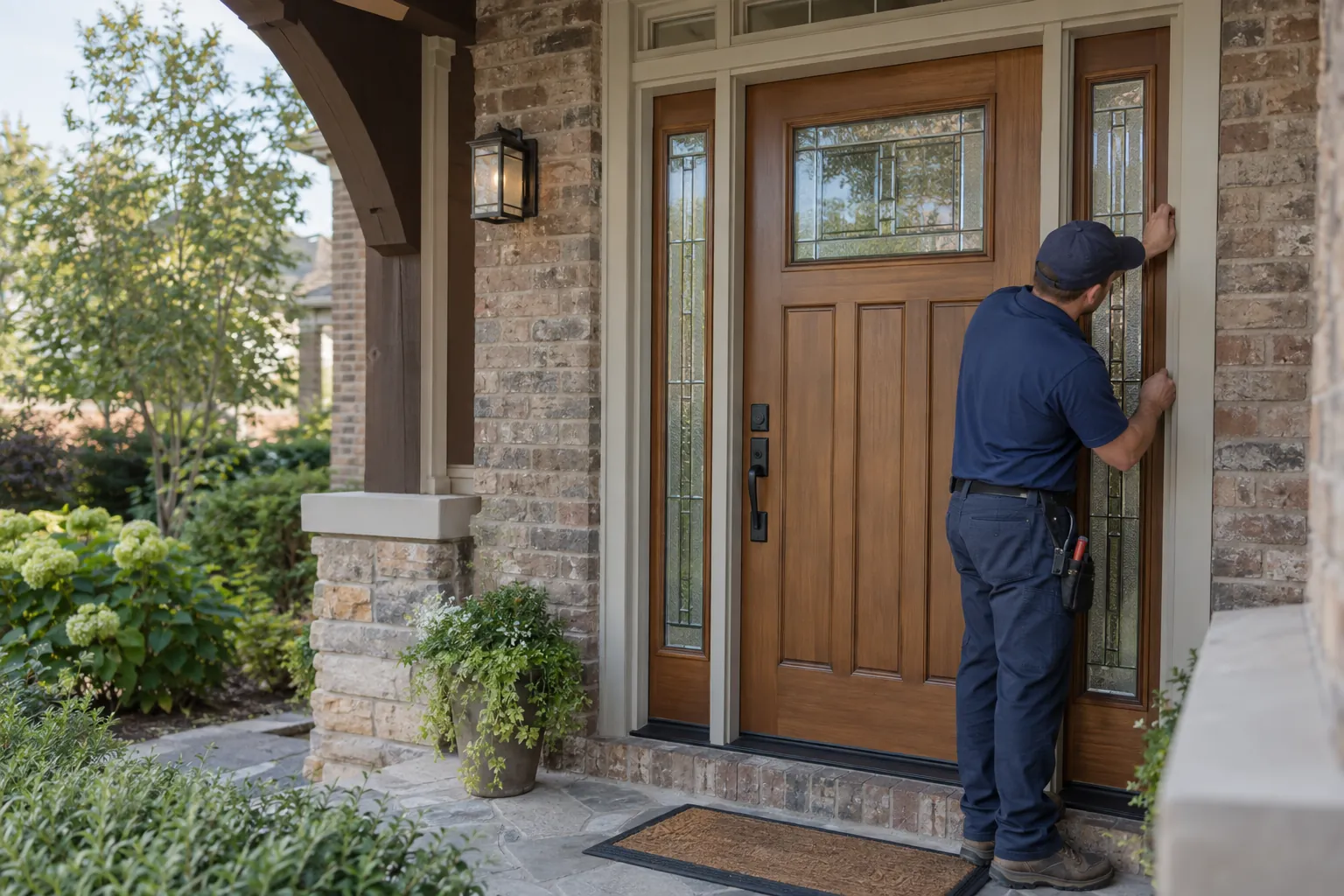
Specialty glass Templated to your opening, square or curved

Transom Glass Replacementin DC, MD & VA

The lite above a door or window head is its own frame, its own glass and often its own shape. We re-glaze fixed and operable transoms, cut curved heads to a radius or to a template, and match what goes back in to the door beneath it. Homes, rowhouses and storefronts across DC, Maryland and Virginia.

  • 24/7 Emergency Service
  • DC · Maryland · Virginia
  • Free photo estimates

Bonded & Insured

Residential and commercial

24/7 Emergency

Seven days a week

Free Estimates

No obligation

Locally Owned

Residential and commercial

Upfront Pricing

Never an overtime charge

Arched

Or square, cut to template

Templated

To your exact opening

Tempered

Safety glazing to code

DC/MD/VA

All three jurisdictions

Types we handle

Transom Glass Replacement: what we work on

Each of these is a different assembly with its own hardware, tolerances and code path. Drawings, not stock photos.

Transom lite over a door head, elevationVision glass above an intermediate rail with a solid bulkhead panel below, in the same aluminium perimeter frame.

Rectangular Door Transoms

The square lite sitting on the transom bar above an entry or interior door. Fixed or operable, single lite or divided by bars, and glazed independently of the leaf beneath — which is why a broken transom does not mean a new door.

Entry door with sidelites and transom, elevationA half-lite entry leaf between two narrow sidelites, under a transom, all glazed with safety glass.

Arched and Half-Round Heads

Half-round fanlights, shallow segmental heads and true ellipses. A single-radius head can be cut from a span and a rise; an ellipse has no single radius and is templated in card off the opening itself. Radiating bars are matched to the original spacing.

Thermal stress crack, elevationA crack that leaves the edge at right angles and then curves gently into the field — the signature of uneven heating rather than impact.

Window Transoms

The upper lite over a window head, common in rowhouses and older DMV apartment stock, often carrying leaded or textured glass. Replaced in its own frame with the sash beneath left alone.

Half-lite storefront, elevationVision glass above an intermediate rail with a solid bulkhead panel below, in the same aluminium perimeter frame.

Operable Transoms

Hinged at the head or the sill and worked by a chain or a rod — the original ventilation strategy in pre-war houses and corridors. We re-glaze the sash, free and refit the operator, or glaze the opening fixed where the sash is beyond saving.

Insulated glass unit, section through the edgeTwo lites of glass separated by an argon-filled cavity. The low-emissivity coating sits on surface two, the room side of the outboard lite. A warm-edge spacer holding desiccant is bedded on a primary seal, with a secondary seal closing the edge.1234LOW-E #2ARGONSPACERSEAL

Insulated Transom Units

A sealed unit rather than a single lite: two panes, a warm-edge spacer, an argon fill and a low-emissivity coating on surface two. Transoms face straight up at the sky-facing part of an elevation, so the coating specification matters more here than it does lower down.

Failed sealed unit, section through the edgeA breach in the perimeter seal lets the gas fill escape and moist air in. Once the desiccant saturates, that moisture condenses on the cavity faces and the unit fogs.FOGGINGBREACH

Fogged and Failed Transoms

Haze between the panes means the perimeter seal has gone and the cavity is breathing. Transoms are often the first units in a building to fail, because they sit high, they get the most sun, and nobody looks at them until the view is already spoiled.

Every hour costs you more

Why you need transom glass replacement now

Delaying repair doesn't save money — it multiplies the damage.

01

It is the lite nobody looks at until it is ruined

Transoms sit above eye level, take more direct sun than anything else in the opening, and get inspected roughly never. A seal that failed two winters ago is usually noticed only once the haze has become a permanent white bloom and the original glass is beyond saving.

02

A broken transom leaves an opening you cannot reach

Glass falling from above a door lands where people walk in and out, and the hole left behind is high, awkward to board and open to weather. It also usually sits over a lock, which makes it a security question as much as a glazing one.

03

The wrong shape is worse than no shape

A curved head cut to the wrong radius, or an ellipse cut as if it were an arc, will not sit in the rebate and cannot be adjusted on site. Getting the geometry right before anything is cut is the whole job on a curved transom, and it is where most curved-head work goes wrong.

What You Get

Transom Glass Replacement Benefits

Every service comes with our commitment to quality, speed, and transparency.

01

Curved heads cut properly

Segmental and half-round heads are set out from span and rise; ellipses and irregular heads are templated in card off your opening. Nothing is guessed at from a photograph alone.

02

Your frame stays

The transom is glazed into its own frame, on the bar above the door. The leaf, the lockset, the casing and the paintwork are untouched.

03

Matched to the assembly

Obscurity, tint, coating, bar pattern and bar width matched to the door and any sidelites, so the whole opening reads as one thing rather than as a repair.

04

Operable transoms kept operable

We re-glaze the sash and free or refit the chain and rod hardware rather than defaulting to glazing the opening shut.

05

Safety glazing where it applies

We check the opening against R308.4.2, R308.4.3 and, for sloped or overhead work, R308.6 — and specify tempered or laminated on that basis rather than by habit.

06

Access sorted

Transoms are high work over an entrance. We arrive set up for it, and we protect the doorway and the floor beneath rather than closing the entrance for a day.

Transom Glass Replacement on a job site in the DMV
Insulated glass unit, section through the edgeTwo lites of glass separated by an argon-filled cavity. The low-emissivity coating sits on surface two, the room side of the outboard lite. A warm-edge spacer holding desiccant is bedded on a primary seal, with a secondary seal closing the edge.1234EXTERIORINTERIORLOW-E COATING — SURFACE 2ARGON-FILLED CAVITYWARM-EDGE SPACER + DESICCANTSECONDARY SEAL
Sealed unit — edge section
The detail behind it

Specified before it is ordered

Every transom glass replacement job starts with the assembly, not the pane. What the frame is, how the glass is captured, which code applies to that opening — those decide the specification, and the specification decides whether the repair lasts.

  • Safety glazing specified to the code for the opening
  • Same-day service for most jobs
  • Free photo estimates with no obligation
  • Bonded and insured, residential and commercial

Get a Free Transom Glass Replacement Estimate

Upload photos of the glass and we will come back with an itemized estimate. No home visit needed, no obligation.

Upload Photos Now
Our Process

How Transom Glass Replacement Works

A simple, transparent process from first contact to completed job.

01

Photograph it square-on

One picture of the whole opening taken level and straight on, and a close-up of the head. If the head is curved, a tape held across the springline in the shot tells us most of what we need.

02

Set out or template

A single-radius head is set out from the span and rise we measure on site. An ellipse or an irregular head is templated in card off the opening itself and the template goes to the bench.

03

Specify the make-up

Sealed unit or single lite, tempered or laminated, coating, obscurity and bar pattern — settled against the code for that opening and against the door beneath it.

04

Glaze and seal

Beads off, unit bedded on setting blocks, beads back, perimeter sealed and the head checked for line against the door. Access equipment out, doorway clean.

The Transformation

Before & After Transom Glass Replacement

Before

Damaged, inefficient glass compromising safety and comfort.

After

Crystal-clear, professionally installed glass restoring beauty and performance.

Warning Signs

Signs You Need Transom Glass Replacement

Haze, milkiness or a white tide line between the panes of the transom.
A crack across the lite above the door head.
Condensation forming inside the transom glass rather than on it.
Putty or glazing bead cracked, shrunken or missing around the transom.
Daylight or a draught at the transom perimeter with the door shut.
An operable transom painted shut, or one that drops instead of holding position.
A chain or rod operator that is broken, seized or missing entirely.
A transom that has been boarded, plastered or panelled over at some point.
Water staining on the head casing or on the wall directly below the transom.
A curved head where the glass no longer follows the frame line.
Leaded or decorative panels bowing, rattling or with cracked cames.
A transom that reads a different colour to the door glass below it in low sun.

What a transom is, and why it is replaced on its own

A transom is a glazed lite sitting above the head of a door or a window, separated from it by a horizontal member called the transom bar. It is a separate frame carrying separate glass, which is the single most useful fact about it: a broken or fogged transom is re-glazed in place without the door, the leaf hardware, the casing or the surrounding finish being touched at all. Historically the transom over an interior door was operable, hinged at the head or the sill and worked with a chain or a rod, because before mechanical ventilation it was how air moved through a house with the doors shut. Over an entrance the transom is almost always fixed and is there for daylight into a hall that has no other window, and to give the doorway the proportion the elevation was designed around.

Fixed and operable transoms

Operable transoms survive in enormous numbers across DC rowhouses, older Alexandria and Georgetown properties, pre-war apartment buildings and school and institutional corridors, and the overwhelming majority of them have been painted shut rather than removed. Freeing one is worth doing: the sash is usually sound, the chain or rod operator is usually repairable, and a working transom over an interior door still moves air exactly as well as it did a century ago. Where a sash has rotted or the operator hardware is unobtainable, the opening can be glazed fixed in a way that keeps the appearance of the original from the room. What we do not do is default to fixing it shut because that is quicker.

Setting out a curved head — span, rise and radius

This is where curved transom work is either right or wasted. A segmental or half-round head is an arc of a single circle, and the span across the springline together with the rise from the springline to the crown fixes that radius completely — two measurements taken on site and the glass can be cut to a dimension. A half-round is simply the case where the rise equals half the span. An ellipse is a different animal: its curvature changes continuously along its length, so it has no single radius, and no amount of measuring the span and rise will describe it. Elliptical and irregular heads are templated, physically, in card taken off the opening, and the template goes to the bench with the order. Trying to cut an ellipse as an arc produces a lite that will not enter the rebate and cannot be adjusted, which is the most wasteful mistake available on this kind of work.

The header, the transom bar, and why neither is your problem

Because a transom sits at the top of an opening, people assume that touching it means touching structure. It does not. The load over the opening is carried by the structural header or lintel above the whole rough opening, and everything below that — the transom frame, the transom bar, the door head jamb — is infill hanging inside it. That is why a transom can be re-glazed, and why a transom that a previous owner boarded or plastered over can usually be reopened, without any structural work at all. The exception is a masonry opening where a failed or missing lintel is the reason the head has moved and cracked the glass in the first place, and in that case the structural fault gets addressed before any new glass goes near it.

Where the safety glazing rules land on a transom

Two separate rules can catch a transom and it is worth knowing which. Section R308.4.2 of the International Residential Code, as adopted across DC, Maryland and Virginia, covers glazing adjacent to a door: it applies where the nearest vertical edge is within a 24-inch arc of either vertical edge of the door in its closed position AND the bottom exposed edge is less than 60 inches above the walking surface. A transom over a standard door head is well above that 60-inch line, so this clause usually does not catch it. Section R308.4.3 is the one that does: any individual lite with an exposed area greater than 9 square feet, a bottom edge less than 18 inches above the floor, a top edge more than 36 inches above the floor and a walking surface within 36 inches of it. Tall transom-and-window assemblies, and shop-front transom bars over full-height glazing, frequently satisfy every part of that. Commercial buildings are governed by the equivalent provisions in IBC 2406.


Sloped and overhead transoms

A transom set into a sloped wall, a barrel front, a canopy or the head of a conservatory is overhead glazing, and it is a different specification entirely. Under IRC R308.6, and IBC 2405 for commercial work, the inboard lite of a multiple-layer overhead unit must be laminated, so that if the glass fractures the interlayer holds the pieces rather than dropping them into the space below. The outboard lite is normally fully tempered to deal with hail and debris. This is not a judgement call to make on site or a place to take a view, and it is worth confirming what you actually have before ordering: a lite that looks like a transom from inside can be overhead glazing from the roof.

Historic transoms, leaded lights and decorative glass

A large share of the transom work in the DMV is on properties where the glass is part of what the building is: leaded fanlights in Georgetown and Capitol Hill, house numbers sandblasted into the lite over a rowhouse door, chipped and bevelled panels over shopfronts in Old Town Alexandria and Annapolis. Historic district review may have a say in what may go back on a street-facing elevation, including pattern, reflectivity and caming, and safety glazing requirements still apply in full alongside it — the two sets of rules have to be satisfied together rather than traded off. Original leaded panels can very often be repaired rather than replaced, and where a decorative panel is sound but thermally hopeless it can be encapsulated inside a modern sealed unit, so the original glass is protected in the cavity while the assembly performs like a current one.

For Every Property

Residential & Commercial Transom Glass Replacement

Residential transom glass replacement

Residential Transom Glass Replacement

Professional service for homes, condos, and townhomes across the DMV.

Commercial transom glass replacement

Commercial Transom Glass Replacement

Serving offices, retail, restaurants, and buildings of any scale.

Common Questions

Transom Glass Replacement FAQ

A transom is the glazed lite sitting above the head of a door or a window, separated from it by a horizontal member called the transom bar. It has its own frame and its own glass, which is why it can be re-glazed without the door beneath it being touched. Transoms are fixed or operable, rectangular or curved, and above an entrance they are usually there to get daylight into a hall that has no other window.

Work we stand behind

See the work, then judge it

Virginia Glass Windows is locally owned and has been doing residential and commercial glass across Northern Virginia, DC and Maryland for over a decade. Bonded and insured, on call around the clock.

Shop drawings

The lite above the head, drawn properly

Transoms are the part of an opening people describe least well and photograph worst. Four plates: the family, the head detail behind it, how a curved one is set out, and where the safety glazing rules actually land on it.

TR-01 · The family — elevation

Scale NTS

structural header — carries the wall above; none of the transoms below carry anythingspringline / transom barRectangularfixed liteHalf-roundradiating barsSegmentalshallow riseOperablechain operatorA transom is a separate lite in its own frame, sitting on the bar above a door or window head.Fixed or operable, square or curved, it is glazed and replaced independently of the leaf beneath it.

TR-02 · Head — vertical section

Scale NTS

EXTERIORINTERIORhead flashingstructural headershim spacetransom frame headsealed unit · Low-E on 2setting blockstransom bardoor head jambweatherstrip in the stopdoor leafThe header carries the load. The transom carries itself.Which is why a transom can be re-glazed, or a boarded-up one reopened, without touching structure.

TR-03 · Curved head — setting out

Scale NTS

SETTING OUT A CURVED HEADcentrerisespan — the chordradiusspringlineHEADS COMPAREDHalf-roundrise = half the spanSegmentalone radius, shallow riseEllipticalno single radiusSpan and rise fix the radius. Give us those two and a true arc can be cut from a dimension.An ellipse cannot: its curvature changes along its length, so it is templated in card off the opening.

TR-04 · Safety glazing — two cases

Scale Diagrammatic

A · TRANSOM OVER A DOOR HEAD60 in above the walking surfacebottom edge of thetransom glazingR308.4.2 not triggered by height.Both halves of that test have to be true, and this one fails the 60 in half.B · TALL TRANSOM AND WINDOW18 in60 inover 9 sq ftR308.4.3 — safety glazing required.Exposed area over 9 sq ft, bottom edge under 18 in, top edgeover 36 in, and a walking surface within 36 in of the glazing.Height is usually what decides a transom. Sloped and overhead transoms follow R308.6 instead, where theinboard lite is laminated. Commercial work: IBC 2406, and IBC 2405 for sloped glazing.

Four things worth knowing before you call

Two about the shape of the opening, two about what the code has to say about it.

Geometry

Give us span and rise, or give us the opening

A true segmental or half-round head is set out from a single radius, and span plus rise fixes that radius completely — two numbers and the arc can be cut. An elliptical head has no single radius, so it is templated in card off the actual opening. If you are not sure which you have, photograph the head square-on with a tape held across the springline and we will tell you.

Geometry

Fixed, or operable and still working

Older transoms over interior doors were operable for a reason — they moved air through a house before mechanical ventilation existed. Many have been painted shut rather than removed. We re-glaze operable transoms, free and refit chain and rod operators, and where a sash is beyond saving we can glaze the opening fixed and keep the appearance.

Code

Height usually decides it, but not always

A transom over a standard door head sits above the 60 inch line, which is why the clause covering glazing adjacent to a door does not usually catch it. Tall transom-and-window assemblies are a different matter: over 9 square feet, bottom edge under 18 inches, top edge over 36 inches and a walking surface within 36 inches, and safety glazing is required outright.

Code

Sloped and overhead transoms are their own case

A transom set into a sloped wall, a barrel roof or a canopy is overhead glazing, and the rules change: the inboard lite of the unit is laminated so that a fracture is held on the interlayer rather than dropping into the space below. That is R308.6 in the residential code and IBC 2405 commercially, and it is not something to work out on site.

Transoms rarely come alone

A transom over an entry usually sits above a leaf with sidelites either side, and all three have to agree on obscurity, tint and coating. If the rest of the assembly needs work too, doing it together is the only way the front elevation ends up reading as one thing.

Photograph it square-on, with a tape across the springline.

Span and rise tell us whether your curved head can be cut from a dimension or needs a template — and that is the first thing we need to know.

(703) 470-7867

Ready for Transom Glass Replacement?

Upload photos for a free estimate, or call for same-day service. Bonded and insured across DC, Maryland and Virginia.