Sunroom Glass: Insulated vs Single Pane, Four-Season Conversion, and Low-E for Year-Round Comfort
A sunroom that is comfortable in May but uninhabitable in January is not a four-season room — it is a three-season room with heating bills. Here is what the glass specification has to do with that.
Mike Reynolds
Lead Glass Technician & Owner
In This Article
The Three-Season to Four-Season Gap Is Mostly a Glass Problem
I talk to DMV homeowners regularly who describe their sunroom as "unusable in winter" or "an oven in summer," and in almost every case, the glass is the dominant cause. Sunrooms are glass-heavy structures — often 60 to 80 percent of the wall and roof area is glazed — which means the thermal performance of the glass has an outsized effect on interior temperature compared to a standard room where the glass area is a small fraction of the envelope. A sunroom with single-pane glass is essentially an outdoor space with weather protection; it will track exterior temperature with a few degrees of lag. A sunroom with high-performance insulated glass and appropriate Low-E coatings can be maintained within 10 to 15 degrees of the main house temperature with modest supplemental heating or cooling.
The DMV climate makes this a particularly pointed problem. In a climate with mild winters, single-pane sunrooms are merely cool — uncomfortable but manageable with a space heater. In the DC area, where January average lows are in the mid-20s and cold snaps below 10 degrees happen several times a year, a single-pane sunroom is genuinely unusable without extensive supplemental heat that becomes prohibitively expensive. And in summer, where DMV July averages are above 90 degrees with high humidity, an east or south facing single-pane sunroom becomes dangerously hot. The glass upgrade is not an optional aesthetic improvement; it is the functional prerequisite for the room to serve its intended purpose year-round.
Single Pane vs Double Pane: The Performance Reality
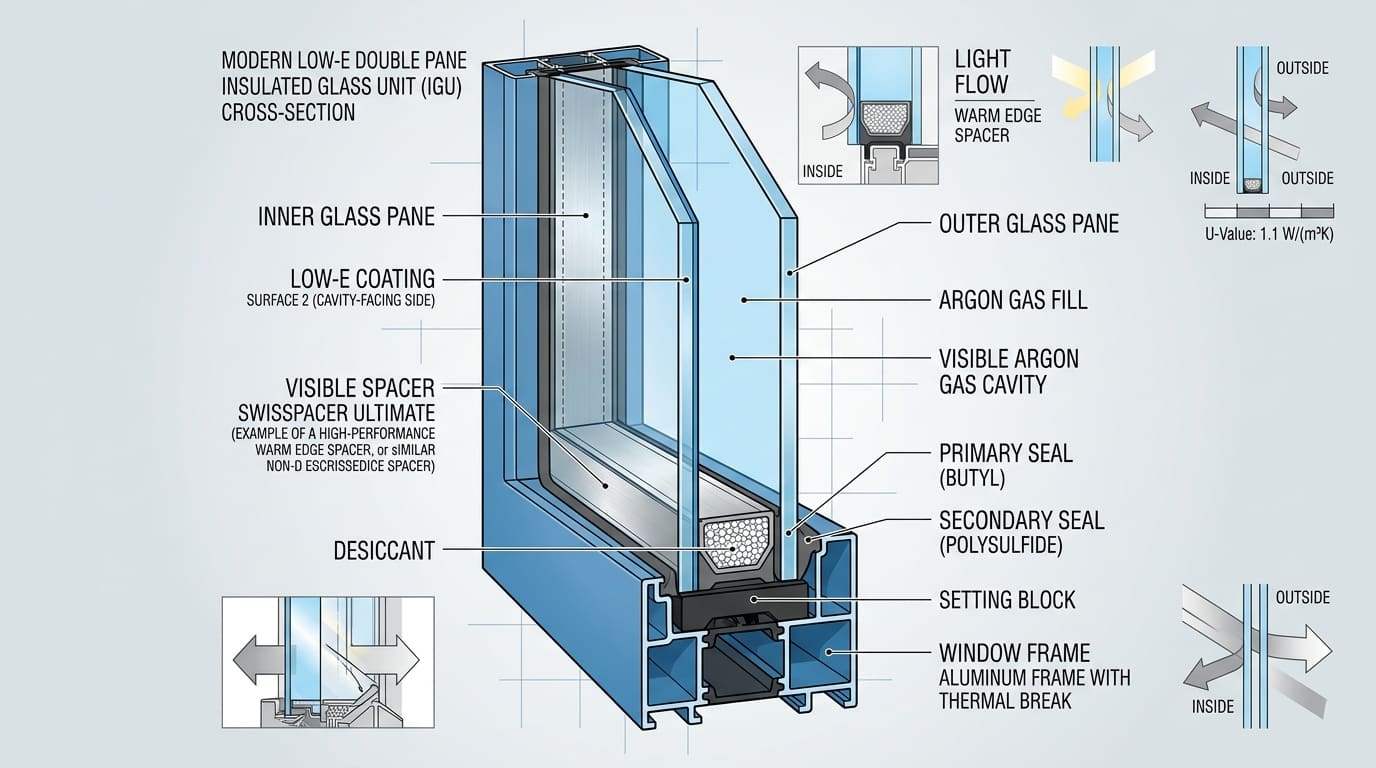
Single-pane glass has a U-factor of approximately 1.04 — essentially the same thermal resistance as a thin sheet of aluminum. A properly specified double-pane insulated glass unit with Low-E coating and argon fill achieves a center-of-glass U-factor of 0.25 to 0.30 — four times lower heat transmission. In a room that is predominantly glass, this is a dramatic difference. On a 20-degree January night, a single-pane sunroom wall is losing heat at four times the rate of a double-pane wall. The surface temperature of single-pane glass will be near outside temperature, creating uncomfortable radiant cold toward anyone sitting near it — the chilling effect you feel from cold glass even when the air temperature is acceptable.
For many older sunrooms and screened porches in DMV neighborhoods — the Craftsman-era addition in Silver Spring, the aluminum-framed addition in Rockville, the patio-room conversion in Fairfax — the existing glazing is indeed single-pane, and sometimes it is original aluminum-framed jalousie or slider glass from the 1970s. These systems lose heat at extraordinary rates and are simply not worth heating in winter. The replacement project that converts single-pane to double-pane insulated glass in these rooms is among the highest-return-on-investment glass upgrades a homeowner can make in terms of usable space per dollar spent.
Low-E for Sunrooms: Balancing Heat Gain and Loss
Low-E glass for sunrooms requires a different specification logic than Low-E for standard windows, and getting this wrong is common enough that it is worth spending time on. Standard house windows in the DMV climate typically use a low-solar-gain Low-E coating — a specification that minimizes solar heat gain in summer while maintaining good thermal resistance in winter. For a south-facing bedroom window, this is right: you do not want the room overheating in summer, and the winter solar gain contribution is modest.
A south or east-facing sunroom is different. In a cold climate like the DMV, passive solar heat gain through south-facing sunroom glass is a useful free heat source in winter — it can meaningfully offset heating costs on sunny winter days when the sun angle is low and solar penetration is high. Low-solar-gain Low-E, which blocks much of this useful solar gain, would sacrifice a real winter benefit. For sunrooms, the better specification in the DMV is often a moderate-solar-gain Low-E — a product like Cardinal 272 or similar — that maintains good U-factor while allowing more solar heat gain than low-solar-gain products. The tradeoff is more heat gain in summer, which may require attention to operable venting or shading.
For sunrooms with roof glass (polycarbonate or glass roofing panels), the Low-E specification for roof panels is different again: overhead glass receives much more direct sun than vertical glass, so solar heat gain through roof panels is a much larger thermal load in summer. Overhead glass in a sunroom typically benefits from a more aggressive low-solar-gain specification, or from structural shading like exterior overhangs timed to block summer sun while admitting winter sun.
Realistic Expectations for Four-Season Comfort
I want to be honest about what the glass upgrade alone achieves in a four-season conversion, because there is a tendency in this market for homeowners to invest in glass and expect fully conditioned space comfort without addressing the HVAC side. In the DMV climate, upgrading sunroom glass from single-pane to double-pane Low-E will make a dramatic difference in how the room feels and how much supplemental heat is required, but the room will still not maintain the same temperature as the main house without a dedicated heating and cooling source. A sunroom with excellent glass but no connection to the main house HVAC system will be warmer in winter and cooler in summer than it was, but it will still drift toward outside temperatures in extreme weather.
The four-season sunroom that is genuinely comfortable year-round requires both good glass and an adequate conditioning system — either an extension of the main house HVAC or a ductless mini-split that provides both heating and cooling in the space. The glass upgrade is the right first step because it dramatically reduces the load that the conditioning system must handle, allowing a smaller and more efficient system to maintain comfort. But plan for both investments if four-season usability is genuinely the goal. We do the glass work throughout the DC, Maryland, and Virginia suburbs — give us a call at (703) 470-7867 to discuss what your existing sunroom has and what is realistic for your situation.
The Conversion Process: What to Expect
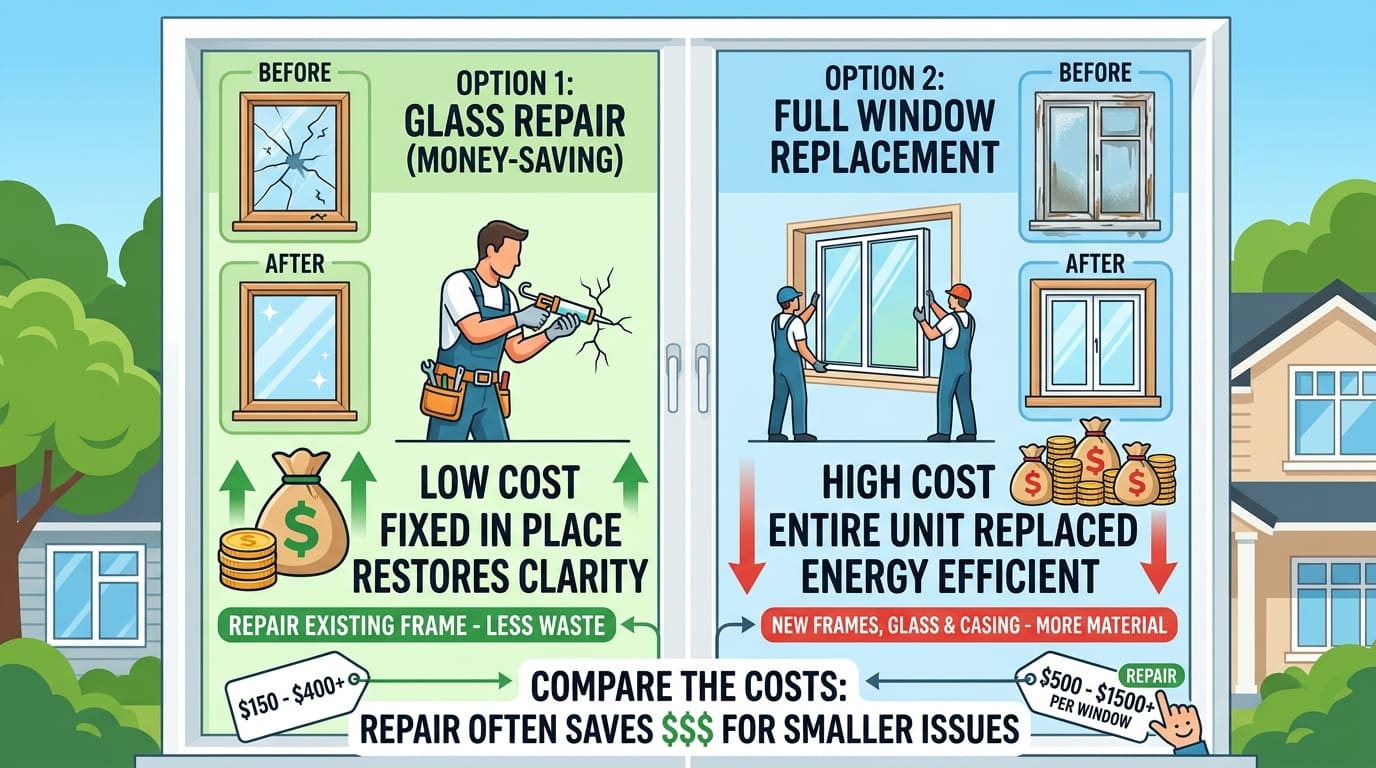
Converting an existing three-season sunroom from single-pane to insulated glass typically involves replacing the glass panels within existing frames if the frames are in good condition, or replacing entire wall sections if the frames are damaged or incompatible with double-pane thickness. Many aluminum-framed three-season rooms from the 1980s and 1990s were designed around single-pane glass thickness and cannot accommodate a standard double-pane IGU without frame modification. The practical path in these cases is often a full panel replacement rather than glass-only swap. In wood-framed or newer aluminum sunroom systems, glass-only replacement is usually feasible. We assess the existing framing before proposing a solution — a sunroom glass upgrade project in the DMV from assessment to completion typically takes two to four weeks depending on glass fabrication lead time and project scope.
About the Author
Mike Reynolds
Lead Glass Technician & Owner
With over 15 years of experience in window and glass repair across the DC, Maryland, and Virginia area, Mike shares practical expertise to help homeowners and businesses make informed decisions about their glass repair and replacement needs.
Need Help With Your Glass?
Our experts are ready to help with any window or glass issue. Free estimates, same-day service available across DC, MD & VA.
Related Articles
Continue reading about guides
 Energy Efficiency
Energy-Efficient Glass Upgrades for DMV Homes: Low-E, Argon & Beyond
 Guides
Window and Glass Warranties: What Is Actually Covered, What Voids Coverage, and What to Watch Out For
 Guides
How to Choose the Right Replacement Glass: A Decision Framework for DMV Homeowners
More Guides
View All
How to Tell If Your Window Glass Needs Repair or Replacement
8 min read
Stress Cracks in Windows: Causes, Prevention & Solutions for DMV Homeowners
7 min read
Foggy Windows: Why Double-Pane Seals Fail & What to Do About It
9 min read
Glass Replacement in Historic DMV Homes: Preservation Meets Performance
9 min readExplore More Resources
Helpful Guides
Common Problems
Related Pages
Our Services
24/7 Emergency
Board-Up & Glass
Licensed & Insured
DC, MD & VA
300+ Areas
DMV Coverage
Same-Day Service
When You Need It
Ready to Get Started?
Get a free estimate for any window or glass service across the DMV area.