Tempered vs Laminated Glass: Which Do You Need?
Tempered and laminated glass are both safety glazing options but work differently. Virginia Glass Windows explains when each is required or preferred in DC, MD & VA applications.
What Is Tempered Glass?
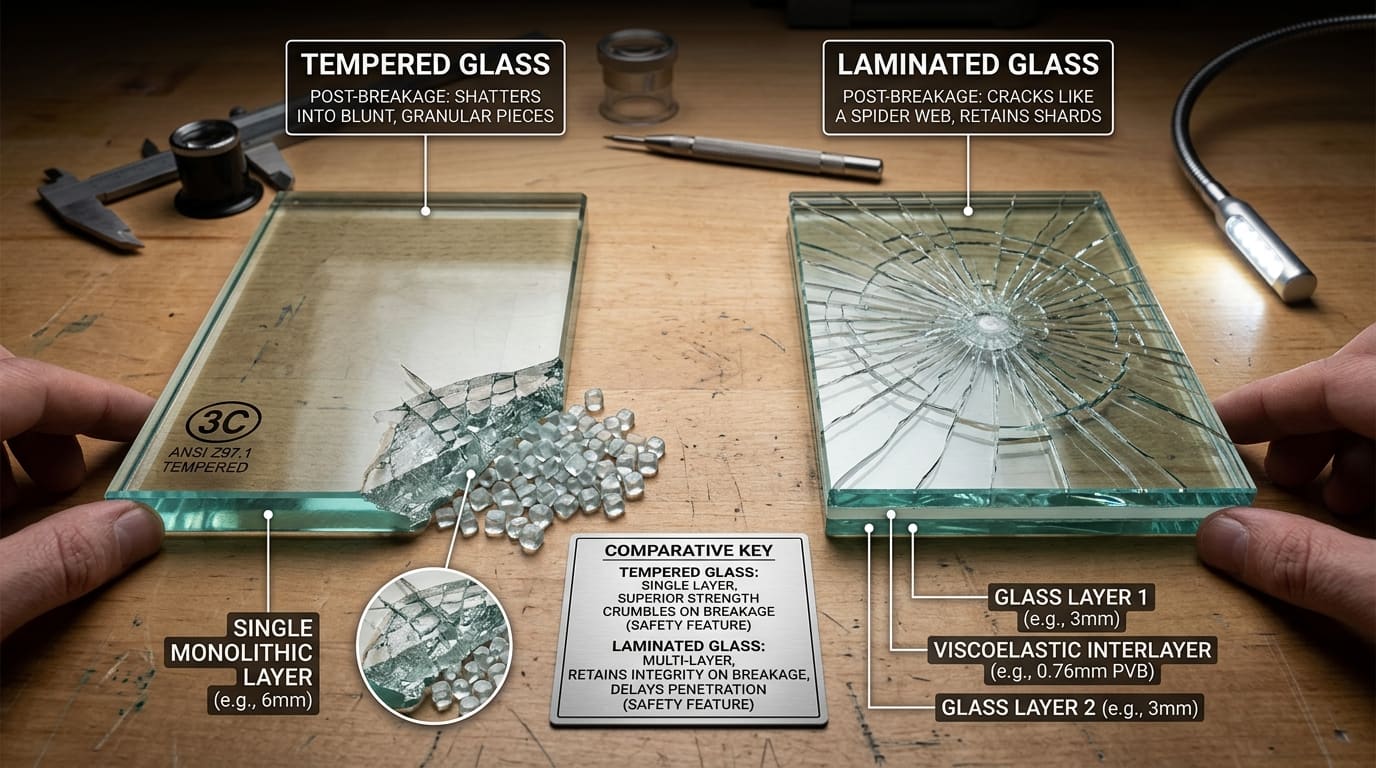
Tempered glass is standard glass that has been heat-treated to increase its strength by a factor of four to five. When it breaks, it shatters into small, relatively blunt pebbles rather than sharp shards, dramatically reducing injury risk.
Tempered glass must be manufactured to its final size before tempering — it cannot be cut after the process. This means replacement tempered glass must be fabricated to exact specifications at the glass shop.
Tempered glass is required by code in all doors, sidelights, shower enclosures, skylights, and glass within 18 inches of a floor in DC, Maryland, and Virginia.
What Is Laminated Glass?
Laminated glass consists of two or more glass layers bonded together with a plastic interlayer (typically PVB or EVA). When it breaks, the interlayer holds the fragments together, preventing them from falling or being dislodged.
Laminated glass provides additional benefits beyond basic safety: superior sound reduction, UV blocking (up to 99 percent in some products), forced-entry resistance, and storm resistance.
The most common residential laminated glass is the standard windshield-type used in skylights and some patio doors. Structural laminated glass with thicker interlayers is used in commercial applications, hurricane-rated windows, and security glazing.
When Each Is Required
Tempered glass is required for: shower and tub enclosures, all doors and sidelights, glass within 18 inches of a walking surface, skylights (unless laminated is specified), glass in stair guards and railings.
Laminated glass is required for: overhead glazing in commercial applications, hurricane-rated windows in coastal areas, security applications, and some historic preservation contexts where glass must be contained after breakage.
Either tempered or laminated may satisfy the safety glazing requirement in most residential applications. The choice between them depends on performance goals, budget, and specific code requirements for the installation location.
Which Is Better for DMV Applications?
For most residential glass door and window applications in DC, Maryland, and Northern Virginia, tempered glass is the standard choice — it is widely available, cost-effective, and meets all code requirements.
Laminated glass is the better choice when: noise reduction is important (laminated provides 25 to 35 dB reduction vs. 20 to 25 dB for standard tempered), UV protection is needed (great for south-facing windows with valuable art or flooring), or break-in resistance is a priority.
For skylights, laminated is strongly recommended regardless of code minimum requirements — it ensures that broken glass remains in the frame rather than falling onto occupants below.
Need Help With Your Glass?
Send us a photo of your window or glass issue and get a free estimate within hours. Our experts serve all of DC, Maryland, and Virginia.
Common Questions
Frequently Asked Questions
Answers to common questions about this topic from our DMV glass experts.
Keep Reading
Related Guides
Explore More Resources
Related Articles
Common Problems
Related Pages
Our Services
Ready to Get Started?
Get a free estimate from our glass experts. Same-day service available across DC, MD & VA.