How to Fix a Sliding Glass Door: Troubleshooting & Repair Guide
A sliding glass door that sticks, wobbles, or lets in drafts is more than an annoyance — it is a security risk and an energy drain. This guide walks you through the most common sliding door problems and how to fix them.
Mike Reynolds
Lead Glass Technician & Owner
In This Article
Diagnosing the Problem: Why Your Sliding Door Is Not Working Right
Sliding glass doors are one of the hardest-working components in DMV homes — opened and closed dozens of times daily during warmer months for patio, deck, and backyard access. Over time, the track accumulates debris, the rollers wear down, the weatherstripping compresses, and the lock mechanism loosens. Before attempting any repair, identify the specific symptom: Is the door hard to slide? Does it wobble or jump off the track? Is it drafty around the edges? Does the lock fail to engage? Each symptom points to a different root cause and a different repair approach.
Start by examining the bottom track from both inside and outside. Look for accumulated dirt, small stones, dried leaves, pet hair, and corroded or bent sections. Then check the rollers by looking at the bottom edge of the door panel — you should see two roller assemblies, one near each end. Finally, inspect the weatherstripping along both sides and the top of the door, and test the lock engagement with the door fully closed.
Cleaning and Restoring the Track
A dirty or obstructed track is the number one cause of hard-to-open sliding doors. The bottom track of a sliding patio door sits at floor level and collects everything that blows in or gets tracked in on shoes — dirt, sand, pet hair, food crumbs, small pebbles, and leaves. In DMV homes near wooded areas or with pets, the accumulation can be significant after just one season. Vacuum the track thoroughly using a crevice attachment, then scrub with a stiff brush and a solution of dish soap and warm water. For stubborn grime and oxidation, use a non-abrasive cleaner like Bar Keepers Friend on aluminum tracks.
After cleaning, inspect the track for bends, dents, or raised areas that could obstruct the rollers. Minor bends can be straightened with pliers. For tracks with significant damage — deep dents, corrosion holes, or sections that are bent beyond straightening — the track may need professional replacement. Lubricate the clean track with a silicone-based spray (never WD-40 or oil-based lubricants, which attract more dirt). A clean, lubricated track makes a dramatic difference in door operation and is the first thing to try before any other repair.
Replacing Worn Rollers
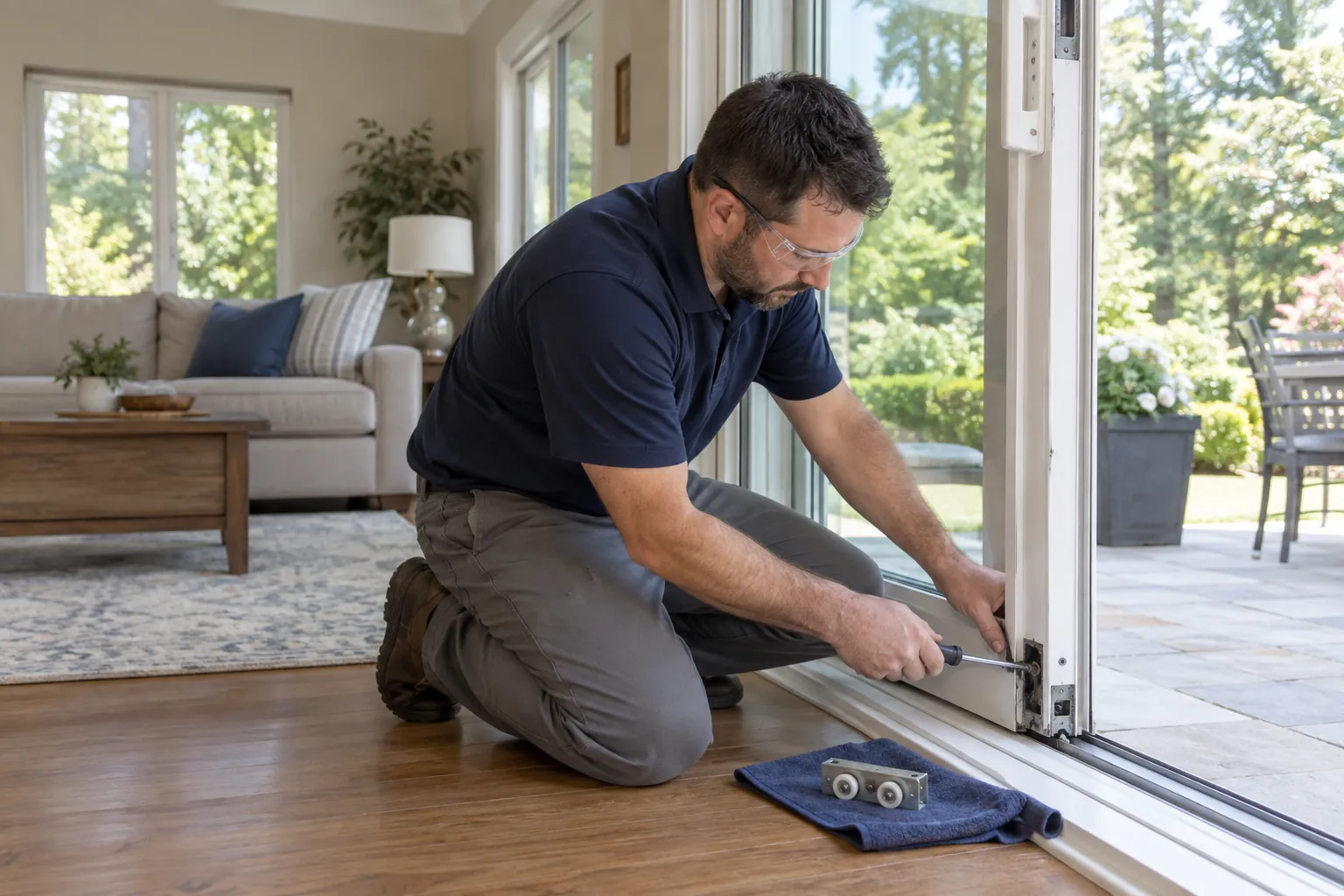
If the track is clean and lubricated but the door still drags, sticks, or wobbles, the rollers are likely worn out. Sliding door rollers are small wheels mounted in spring-loaded housings at the bottom of the door panel. They bear the full weight of the glass panel — which can exceed 100 pounds — and roll thousands of times per year. After 10 to 15 years of daily use, the wheels flatten, the bearings fail, and the springs weaken, causing the door to sit lower in the track and drag on the threshold.
To access the rollers, locate the adjustment screws on the bottom edge or face of the door panel. Turning these screws raises or lowers the door on the rollers. First, try adjusting the rollers up — this lifts the door off the track threshold and may restore smooth operation if the rollers still have functional bearings. If adjustment does not help, the rollers need replacement. This requires lifting the door panel out of the track frame, which is a two-person job due to the weight of the glass. Replacement roller assemblies are available at hardware stores — bring the old roller as a reference to ensure you get the correct type for your door brand and model.
Fixing Drafts and Air Leaks
Sliding glass doors are notorious for drafts because of the necessary gaps between the sliding panel and the frame that allow the door to move. Over time, the pile weatherstripping — the fuzzy strip material that seals these gaps — compresses, wears away, or pulls loose, allowing cold winter air and hot summer air to infiltrate around the door perimeter. In the DMV climate, where both heating and cooling are essential, drafty patio doors can noticeably increase your energy bills.
Inspect the weatherstripping along both vertical edges of the sliding panel, the top rail, and the meeting rail where the two panels overlap when closed. Worn or missing weatherstripping should be replaced — it is available in standard sizes at hardware stores and installs by pressing into the existing channel. For the bottom seal, check the door sweep or fin seal that contacts the track threshold. If the door has settled on worn rollers, raising the rollers (as described above) restores the proper seal between the door bottom and the threshold. For persistent drafts at the meeting rail, an aftermarket interlocking seal or draft stopper can significantly reduce air infiltration.
Addressing Lock and Security Issues
A sliding door lock that does not fully engage is both a security vulnerability and a practical annoyance. The most common cause is misalignment between the lock latch on the sliding panel and the keeper (strike) on the frame. If the rollers have worn and the door has settled, the lock and keeper no longer line up vertically. Adjusting the rollers to raise the door back to its proper height often fixes the lock alignment. If the lock mechanism itself is worn or broken, replacement locks are available for most sliding door brands and install with basic hand tools.
For enhanced security, consider adding a secondary lock — a foot lock at the bottom of the door or a security bar in the track that prevents the door from being forced open. Sliding doors are a common entry point for break-ins because the standard latch lock can be defeated relatively easily. In DMV neighborhoods where property crime is a concern, a secondary lock is an inexpensive but meaningful security improvement. If the door glass itself is standard annealed glass, upgrading to tempered or laminated glass during your next repair significantly improves both security and safety.
When to Call a Professional
Track cleaning, roller adjustment, weatherstripping replacement, and lock repair are within the capability of a handy homeowner. However, certain problems require professional help: a cracked or broken glass panel (sliding door glass is heavy and dangerous to handle without proper equipment), a severely damaged track that needs replacement, roller replacement that requires removing the door panel from the frame, and any situation where the door frame itself has shifted or warped. Sliding door glass panels can weigh well over 100 pounds, and improper handling risks both personal injury and expensive glass breakage.
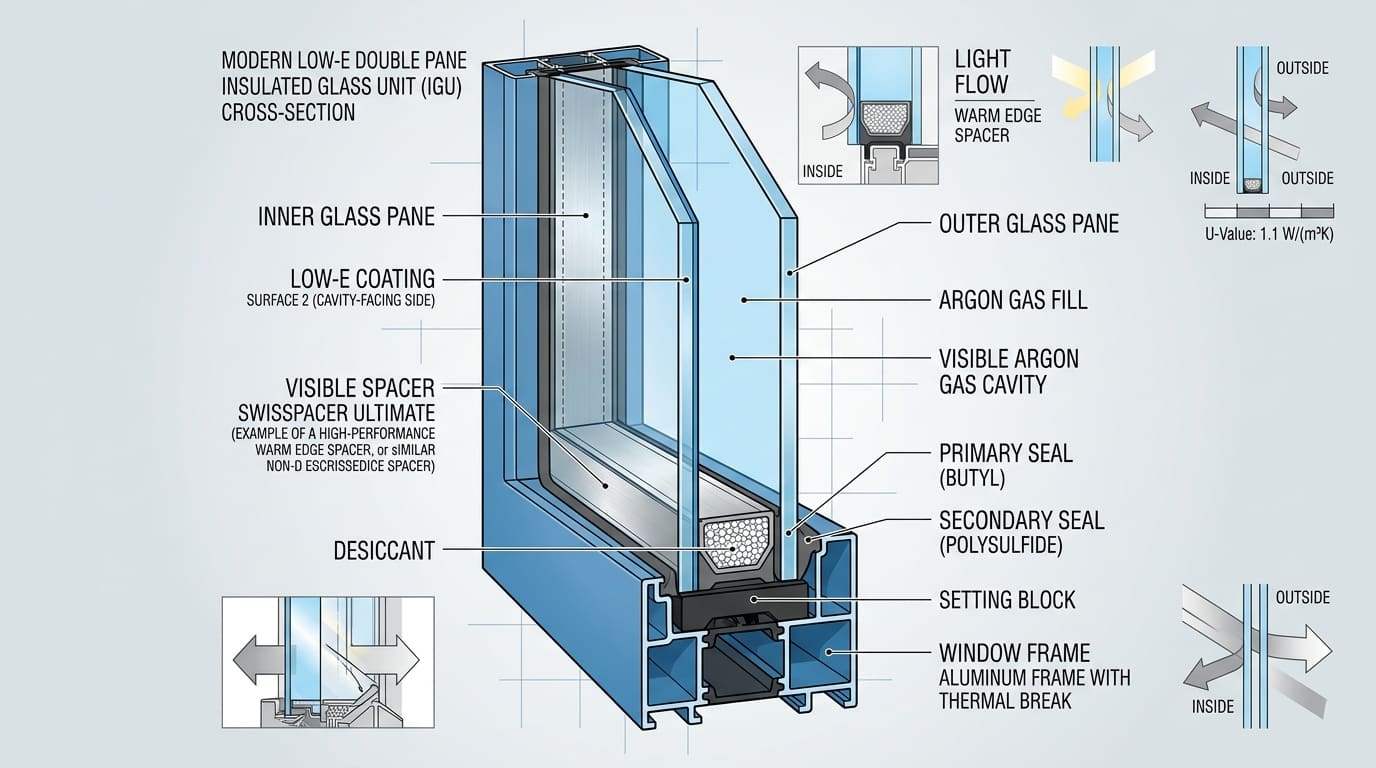
At Virginia Glass Windows, we repair and replace sliding glass door components throughout Washington DC, Maryland, and Virginia — including glass panel replacement, roller and track repair, and complete patio door glass upgrades to energy-efficient Low-E argon units. If your sliding door needs more than a basic cleaning, call us at (703) 470-7867 or send photos through our free estimate service for a professional assessment.
About the Author
Mike Reynolds
Lead Glass Technician & Owner
With over 15 years of experience in window and glass repair across the DC, Maryland, and Virginia area, Mike shares practical expertise to help homeowners and businesses make informed decisions about their glass repair and replacement needs.
Need Help With Your Glass?
Our experts are ready to help with any window or glass issue. Free estimates, same-day service available across DC, MD & VA.
Related Articles
Continue reading about tips & tricks

More Tips & Tricks
View All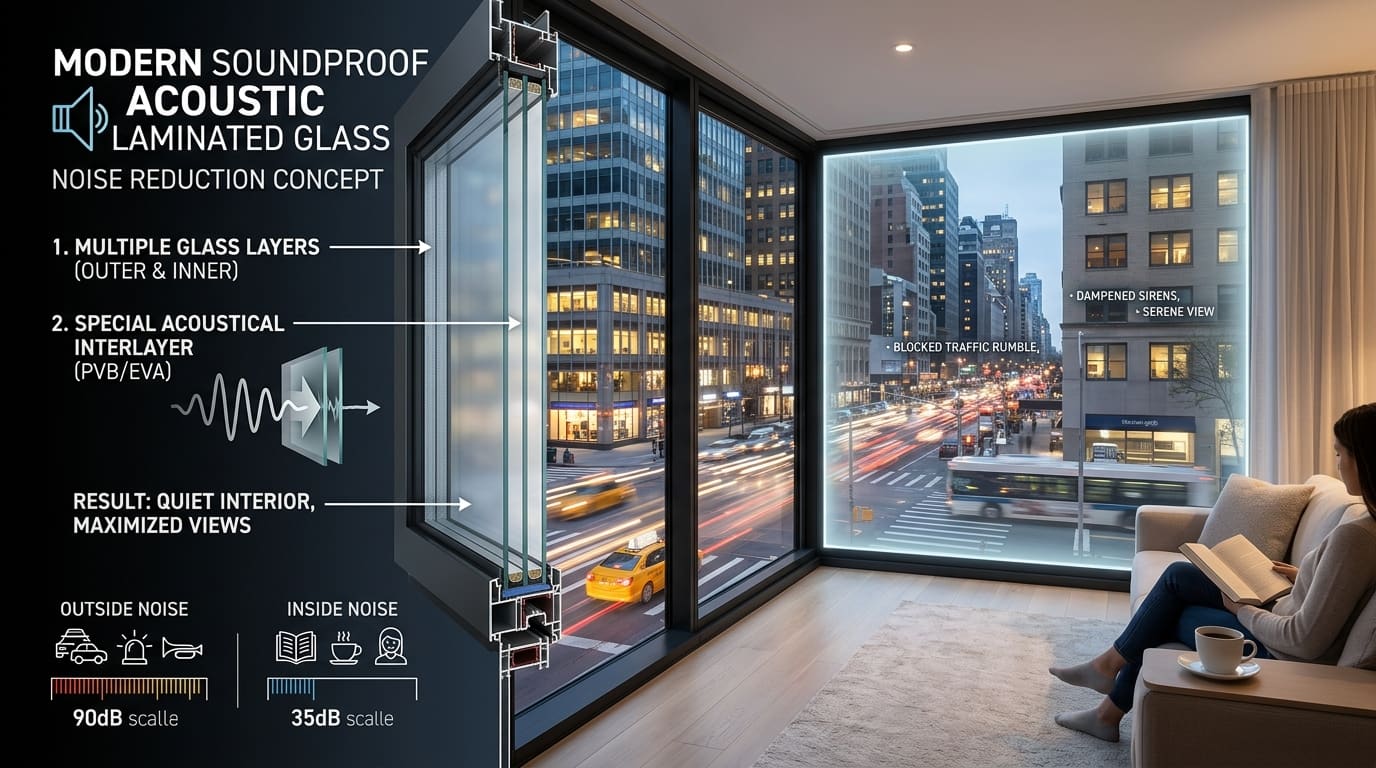
Sound-Reducing Glass for Noisy DMV Locations: Airports, Highways & Metro Lines
7 min read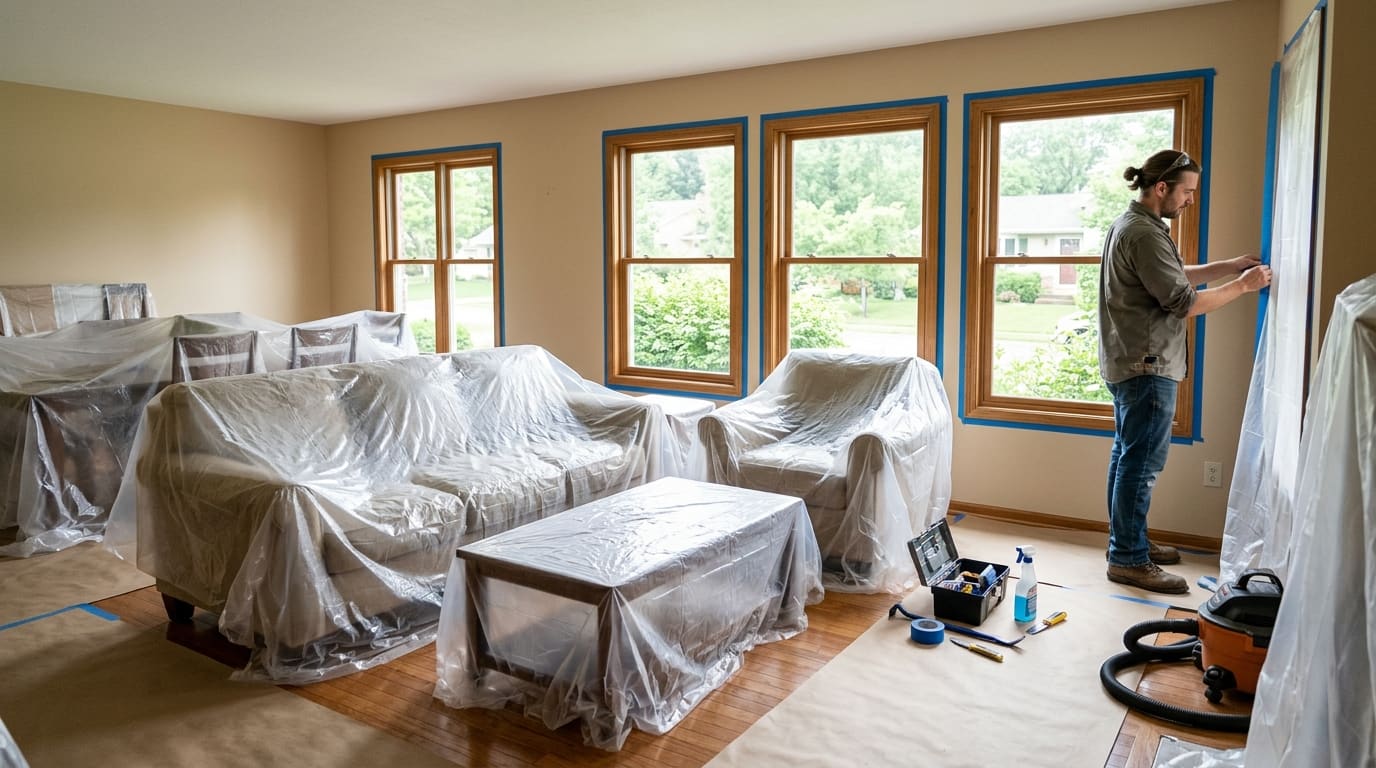
Preparing Your Home for Window Glass Replacement: A Homeowner's Guide
5 min read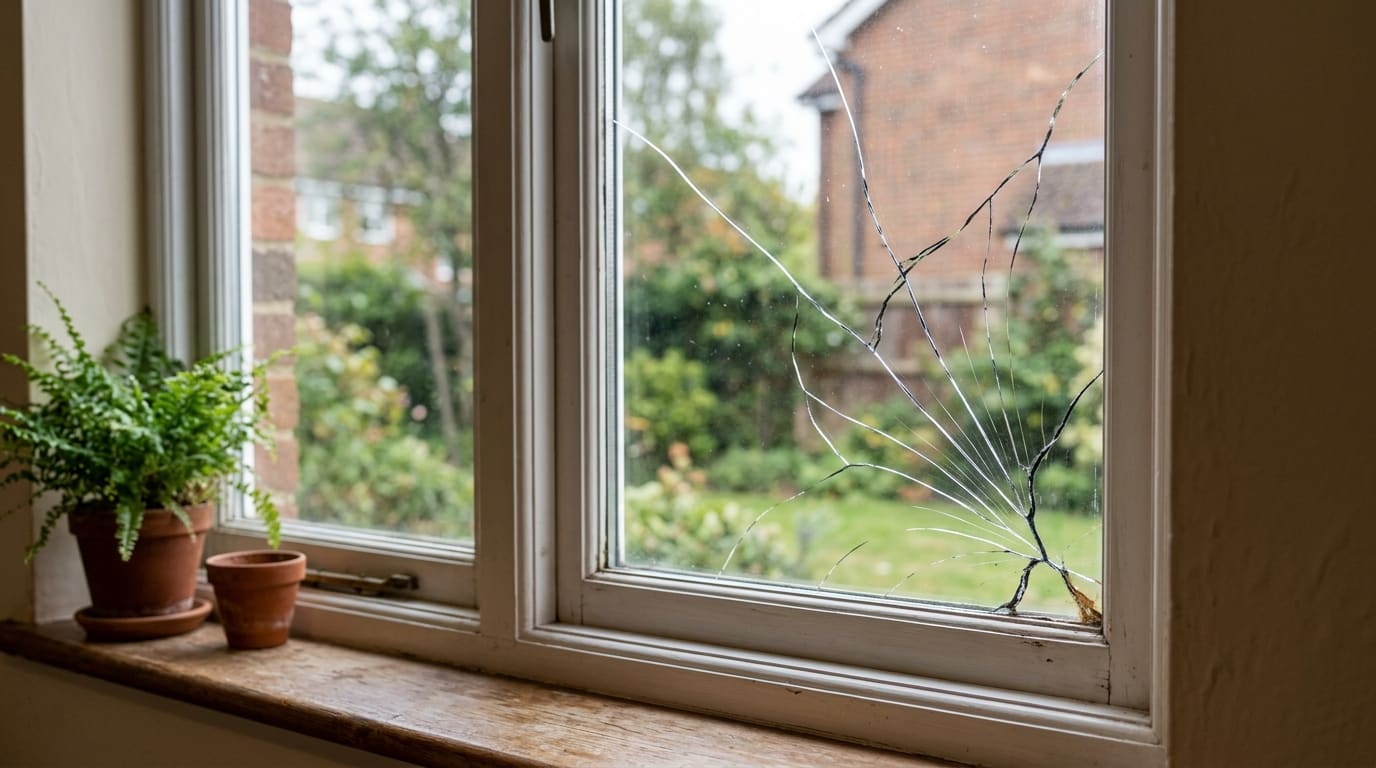
What Causes Window Glass to Crack Without Impact? 7 Common Causes
6 min read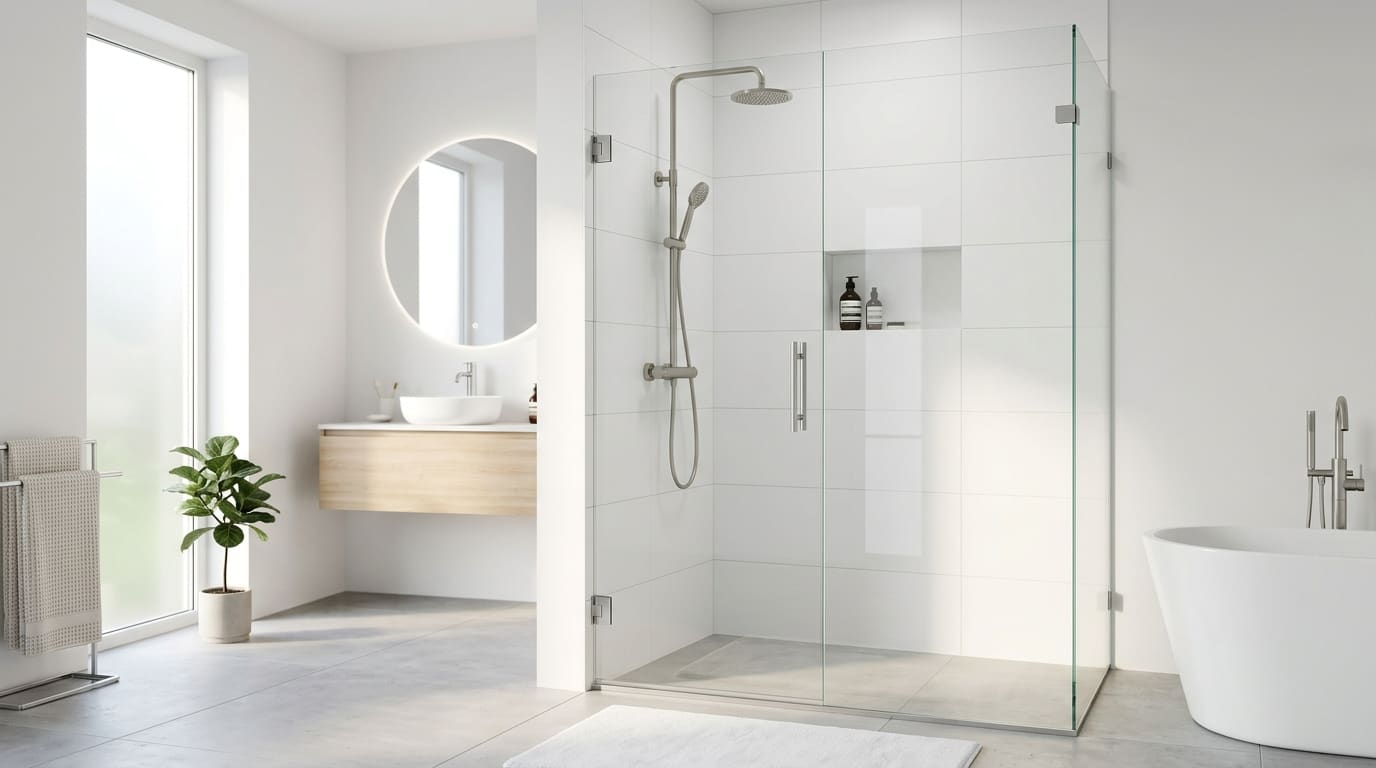
Shower Door Glass: Frameless vs Framed Options for DMV Bathrooms
6 min readExplore More Resources
Helpful Guides
Common Problems
Related Pages
Our Services
24/7 Emergency
Board-Up & Glass
Licensed & Insured
DC, MD & VA
300+ Areas
DMV Coverage
Same-Day Service
When You Need It
Ready to Get Started?
Get a free estimate for any window or glass service across the DMV area.