Starphire vs Clear Glass: Differences, Uses & Which Is Better
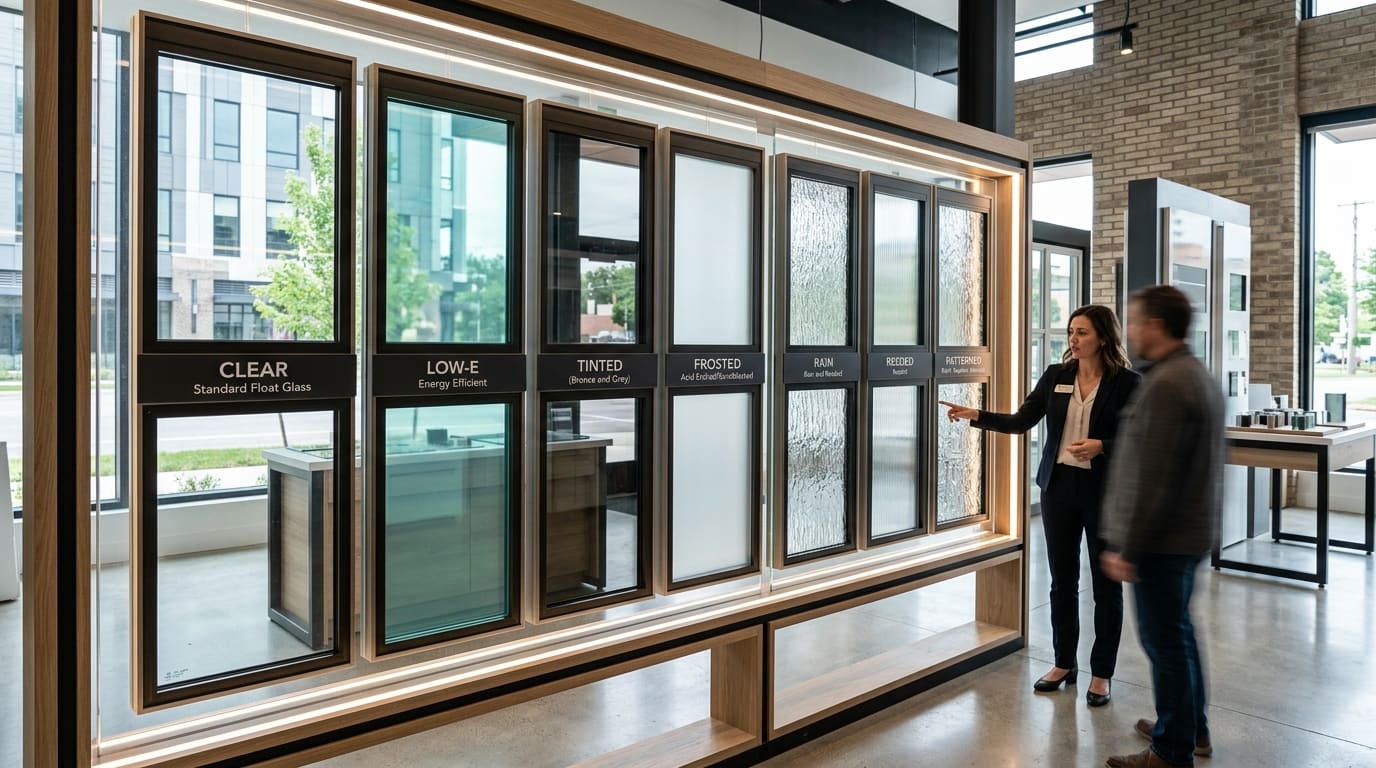
Standard clear glass is not actually clear — it has a green tint caused by iron content. Starphire low-iron glass eliminates this tint for true optical clarity. Here is when the upgrade matters and when standard glass is the better choice.
Mike Reynolds
Lead Glass Technician & Owner
In This Article
Why "Clear" Glass Is Not Truly Clear
If you have ever looked at a standard glass panel from the edge, you have noticed the distinctive green color. This green tint is inherent to all standard float glass and comes from iron oxide — a natural impurity in the silica sand used to manufacture glass. When you look through a window straight on, the green tint is barely noticeable because you are looking through a thin cross-section. But as the glass gets thicker or as you view it at an angle, the green tint becomes increasingly visible. In thick glass applications like frameless shower doors, glass tabletops, glass railings, and architectural glass features, the green tint can be quite pronounced.
For many window applications, the green tint of standard glass is perfectly acceptable — you may never notice it in a typical residential window pane. But for applications where visual clarity, color accuracy, or aesthetics are priorities, the tint matters. Interior designers, architects, and DMV homeowners investing in premium glass features increasingly specify low-iron glass to achieve the crystal-clear appearance that standard glass cannot provide.
What Is Starphire Glass?
Starphire is a brand name for low-iron glass manufactured by Vitro (formerly PPG). It is made from specially selected sand with very low iron oxide content, resulting in glass that is virtually free of the green tint. When you look at Starphire glass from the edge, it appears crystal clear or with a very slight blue-white cast rather than green. Looking straight through a Starphire panel, colors appear more true and accurate because the glass is not adding a green color shift to everything you see through it.
Starphire is the most widely recognized brand of low-iron glass, but other manufacturers produce equivalent products — Guardian Industries makes UltraClear, AGC makes Planibel Clearvision, and other suppliers offer their own low-iron formulations. The performance characteristics are similar across brands: approximately 91 percent visible light transmission (compared to 84 percent for standard clear glass), virtually no color shift, and the same structural and safety properties as standard glass. Low-iron glass can be tempered, laminated, insulated, and coated with Low-E just like standard glass.
Where Starphire Makes the Biggest Difference
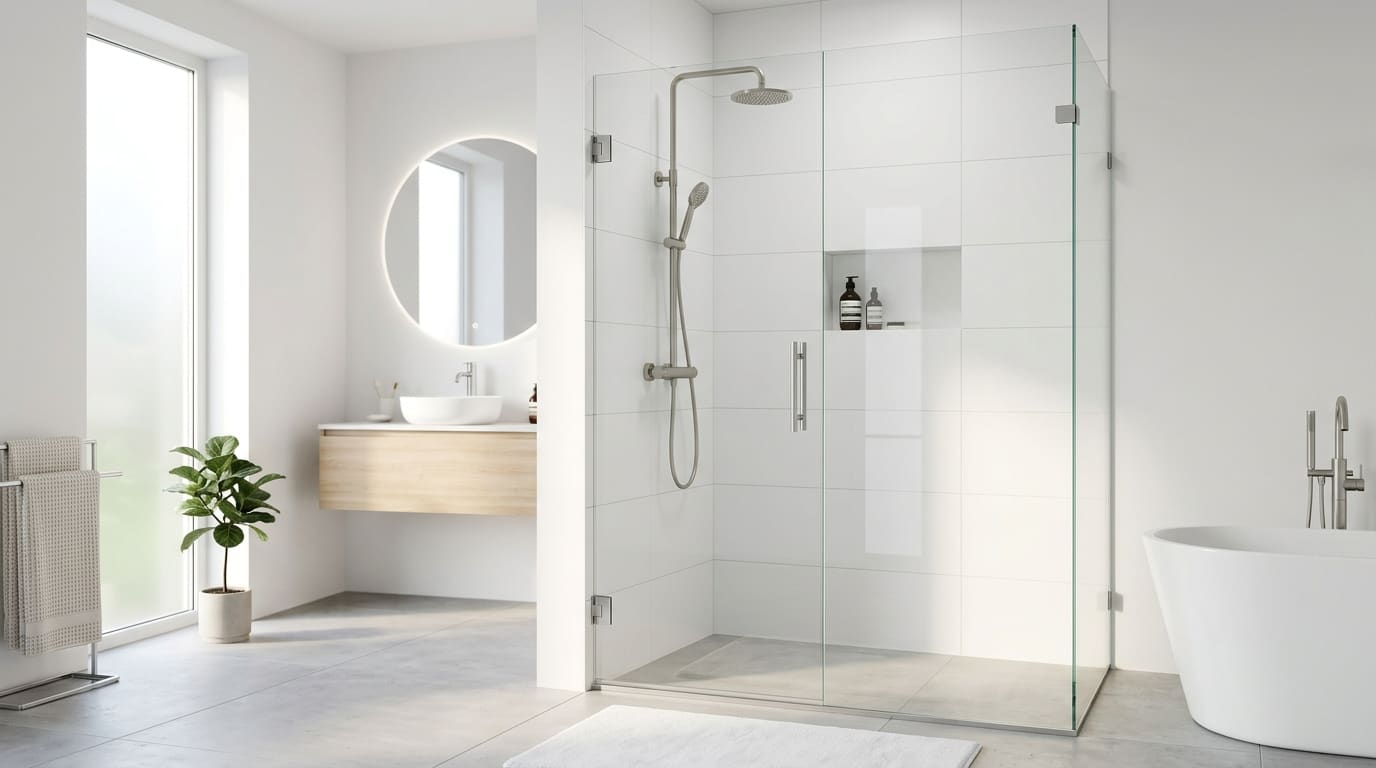
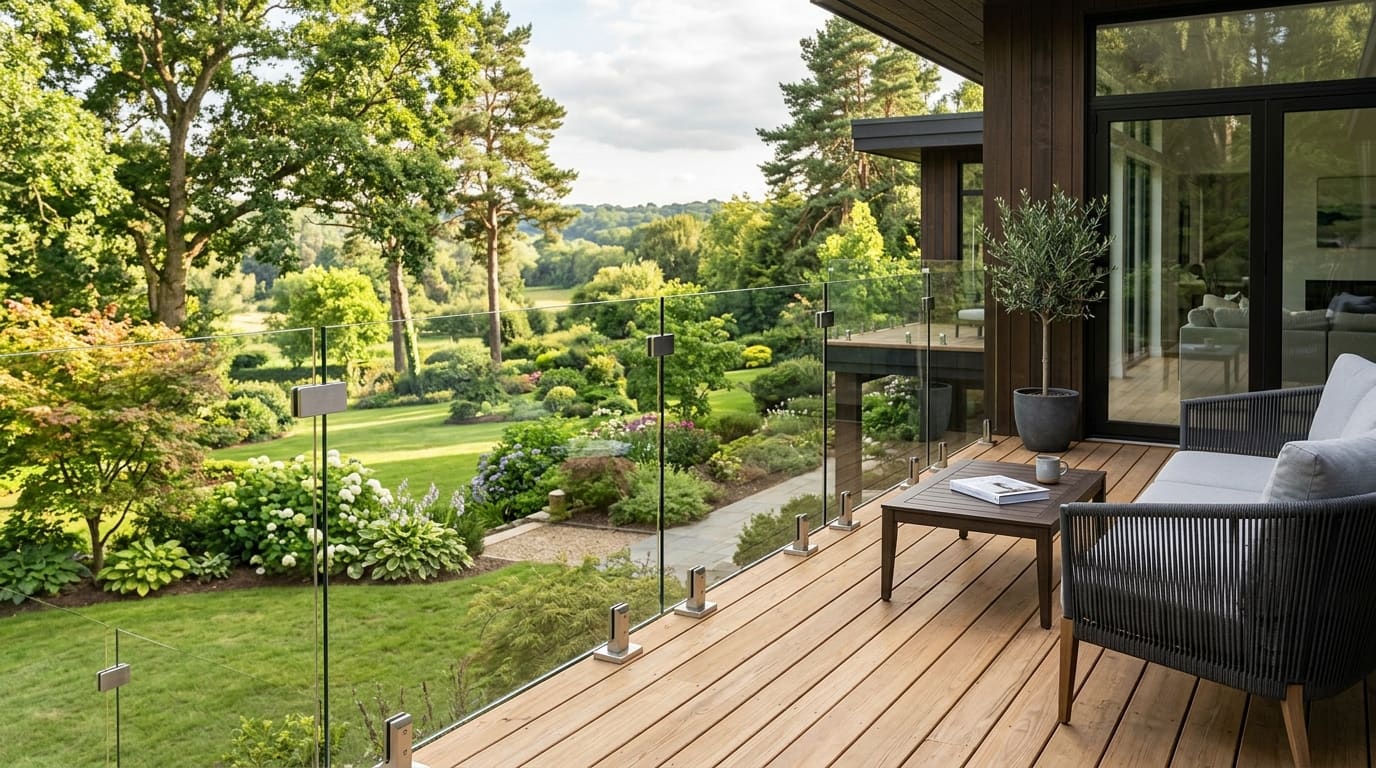
The visual advantage of Starphire is most dramatic in thick glass applications. A 1/2 inch frameless shower door in standard glass shows a noticeable green tint — especially visible against white tile, which is the most common shower tile color in DMV bathrooms. The same door in Starphire glass appears completely clear, allowing the tile color and pattern to show through accurately. Glass railings, which use 3/8 to 1/2 inch tempered panels, benefit similarly — Starphire railing panels on a deck or staircase provide truly invisible protection compared to the green-tinged view through standard glass.
Glass tabletops — a popular design feature in DMV dining rooms and offices — are another application where Starphire excels. A 3/4 inch standard glass tabletop has a pronounced green color, while a Starphire tabletop appears clear and allows the table base, rug, or floor to show through without color distortion. Display cases, museum glass, and retail showcase glass also benefit from Starphire where color accuracy is essential for the items being displayed.
Where Standard Clear Glass Is the Better Choice
For most residential window applications, standard clear glass is the practical choice. In a typical 1/8 inch or 3/16 inch window pane, the green tint is minimal — barely perceptible when looking through the glass at a landscape, street scene, or backyard. The cost premium for Starphire in every window of a house would add up significantly without delivering a noticeable improvement in how most people experience their windows daily.
When Low-E coatings are applied to the glass (which they should be for energy efficiency in the DMV climate), the coating itself has a slight color effect that makes the difference between standard and Starphire even less noticeable. For insulated glass units where you are looking through two panes of glass, the distinction is more visible than in single-pane applications — but for most homeowners, the energy performance of the Low-E coating matters more than the marginal clarity improvement of low-iron glass. Standard clear glass with Low-E coating delivers excellent visual clarity and energy performance at a lower cost than Starphire with the same coating.
Cost Comparison
Starphire and other low-iron glass products typically cost 15 to 30 percent more than standard clear glass of the same thickness and type. For a frameless shower door — where the glass is the most visible and expensive component — this premium translates to a meaningful but not dramatic increase in the total project cost. For a full set of house windows, the premium across 15 to 25 windows adds up to a more significant amount. The cost-versus-benefit calculation depends entirely on the application and how much the visual difference matters to you.
For DMV homeowners planning a premium bathroom renovation, the Starphire upgrade on the shower door is one of the most impactful places to spend the extra dollars — the difference is visible every day and contributes to the high-end aesthetic that makes a renovated bathroom feel truly luxurious. For a glass railing or tabletop where the edge color is prominently visible, Starphire is similarly worthwhile. For standard windows, the standard glass is usually the better value.
Which Should You Choose?
Choose Starphire (low-iron glass) when the glass will be thick (3/8 inch or more), when the edge will be visible, when the glass is the focal point of the design (shower doors, railings, tabletops), or when color accuracy through the glass matters (display cases, art galleries). Choose standard clear glass when the glass is thin (standard window panes), when the edge is hidden in a frame, when Low-E coating will be applied, or when budget is a primary consideration.
Virginia Glass Windows offers both Starphire and standard clear glass across all our residential and commercial services. We can show you samples of both glass types in your chosen thickness so you can see the difference in person before making a decision. Contact us at (703) 470-7867 for a consultation — we help you choose the right glass for every application based on your aesthetic goals and your budget.
About the Author
Mike Reynolds
Lead Glass Technician & Owner
With over 15 years of experience in window and glass repair across the DC, Maryland, and Virginia area, Mike shares practical expertise to help homeowners and businesses make informed decisions about their glass repair and replacement needs.
Need Help With Your Glass?
Our experts are ready to help with any window or glass issue. Free estimates, same-day service available across DC, MD & VA.
Related Articles
Continue reading about guides
More Guides
View All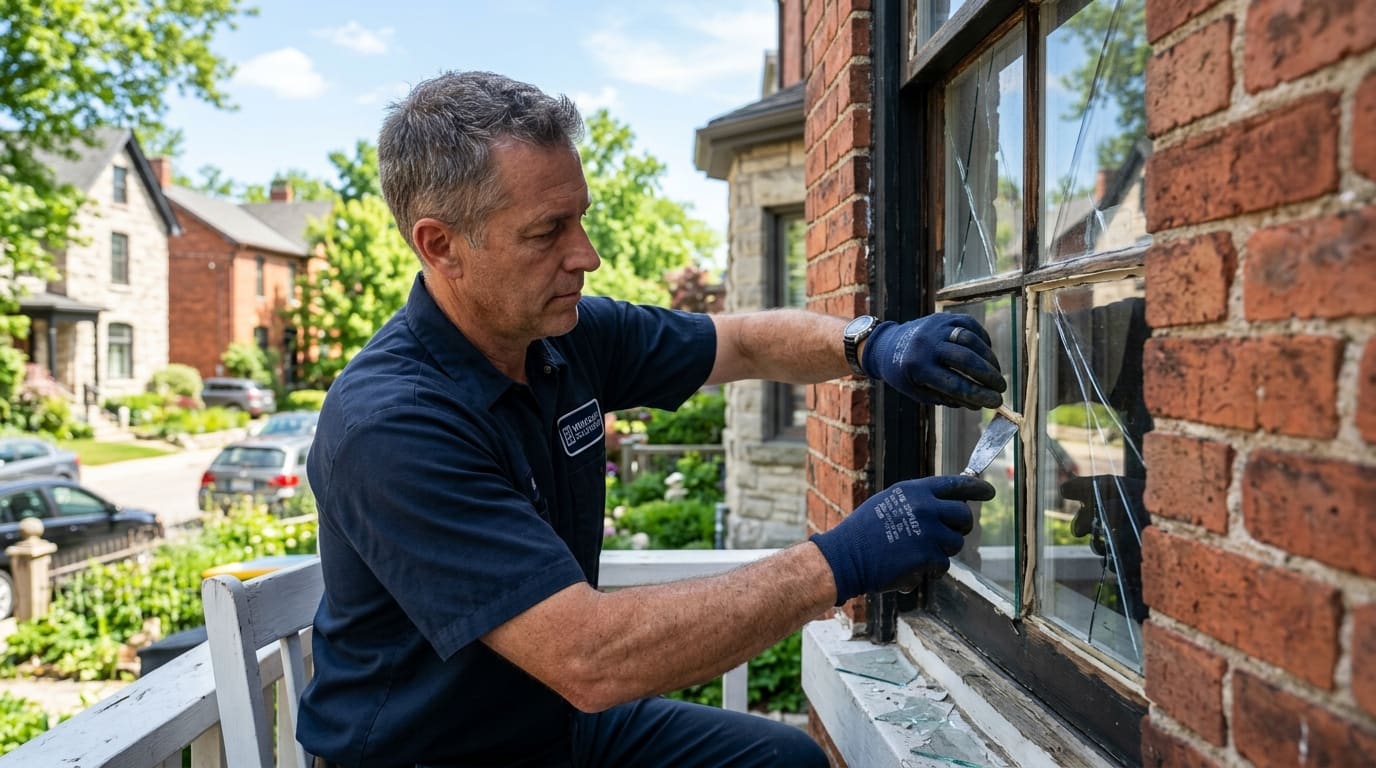
How to Tell If Your Window Glass Needs Repair or Replacement
8 min read
Stress Cracks in Windows: Causes, Prevention & Solutions for DMV Homeowners
7 min read
Foggy Windows: Why Double-Pane Seals Fail & What to Do About It
9 min read
Glass Replacement in Historic DMV Homes: Preservation Meets Performance
9 min readExplore More Resources
Common Problems
Related Pages
Our Services
24/7 Emergency
Board-Up & Glass
Licensed & Insured
DC, MD & VA
300+ Areas
DMV Coverage
Same-Day Service
When You Need It
Ready to Get Started?
Get a free estimate for any window or glass service across the DMV area.