How to Seal Windows and Stop Drafts: Complete Guide
Drafty windows waste energy and make your home uncomfortable. Cold air seeps in during winter, conditioned air escapes in summer — properly sealing your windows can reduce energy loss and improve comfort year-round.
Mike Reynolds
Lead Glass Technician & Owner
In This Article
Identifying Where Your Windows Are Leaking
Before you can seal a drafty window, you need to find exactly where the air is getting through. On a breezy day, slowly pass your hand around the entire perimeter of each closed and locked window — top, bottom, and both sides. Feel for air movement, which indicates a gap in the seal. For a more precise test, hold a lit incense stick near the window edges and watch for smoke movement that indicates air infiltration. Pay special attention to the bottom rail (where the sash meets the sill), the meeting rail (where upper and lower sashes overlap in double-hung windows), and the side channels where the sash slides.
In DMV homes, the most common leak points are the bottom of the sash where the weatherstripping has compressed from years of closing force, the sides of the sash where the pile weatherstripping has worn thin, and the joint between the window frame and the surrounding wall where caulk has cracked or separated. Older homes in Georgetown, Capitol Hill, Takoma Park, and other historic neighborhoods often have multiple leak points per window due to decades of frame movement and material deterioration.
Sealing with Weatherstripping
Weatherstripping seals the gaps between the moving parts of a window — the sash and the frame. For double-hung windows, the most effective weatherstripping types are V-strip (also called tension seal) for the side channels, tubular gasket for the bottom rail, and foam compression strip for the meeting rail where the upper and lower sashes overlap. Each type is designed for a specific gap configuration and movement pattern.
To replace worn weatherstripping, remove the old material completely, clean the surface with rubbing alcohol to ensure adhesion, and apply the new weatherstripping according to the manufacturer's directions. The seal should be snug enough to block air but not so tight that it makes the window difficult to open. For casement and awning windows, the weatherstripping is typically a compression gasket mounted in a groove around the sash — these can be pulled out and replaced with new gasket material of the same profile. Quality weatherstripping from hardware stores costs very little per window and can reduce air infiltration through operable windows by 50 percent or more.
Caulking Around the Window Frame
Caulk seals the non-moving joints — the gap between the window frame and the wall structure around it, the gap between the frame and the exterior siding, and any cracks in the frame itself. Over time, caulk dries out, shrinks, cracks, and separates from the surfaces it was bonded to, creating pathways for air and moisture infiltration. In the DMV climate, where seasonal temperature swings cause significant expansion and contraction, caulk joints deteriorate faster than in more stable climates.
For exterior caulking around windows, use a high-quality paintable silicone or polyurethane sealant rated for exterior use and temperature extremes. Remove all old, cracked caulk with a caulk removal tool or utility knife before applying new material — caulking over old failed caulk does not create a lasting seal. Apply a continuous bead that fully bridges the gap between the frame and the wall surface, tooling it smooth with a wet finger or caulk tool. For interior gaps between the frame and the drywall or trim, an interior-grade latex caulk works well and can be painted to match your trim color.
Repairing Glazing Compound
For older wood-frame windows in DMV homes — especially in historic neighborhoods — the glazing compound that seals the glass to the frame is often the biggest source of air and moisture leaks. Glazing compound is the putty applied to the exterior where the glass meets the wood frame. Over decades, it dries, shrinks, cracks, and eventually falls away in chunks, leaving the glass loose in the frame and exposing gaps where air and water can penetrate.
Re-glazing is a straightforward repair that can significantly reduce drafts. Carefully remove all loose and cracked glazing compound with a putty knife, taking care not to crack the glass. Clean the exposed frame channel of old putty residue. Apply a thin bed of new glazing compound (available at any hardware store), press the glass gently into the bed, and apply a smooth face of glazing compound on the exterior at a 45-degree angle from the glass to the frame. Allow it to cure for the time specified on the product before painting. Re-glazing is especially effective on homes with original single-pane windows where the glazing compound may not have been maintained in decades.
Window Film and Insulation Kits
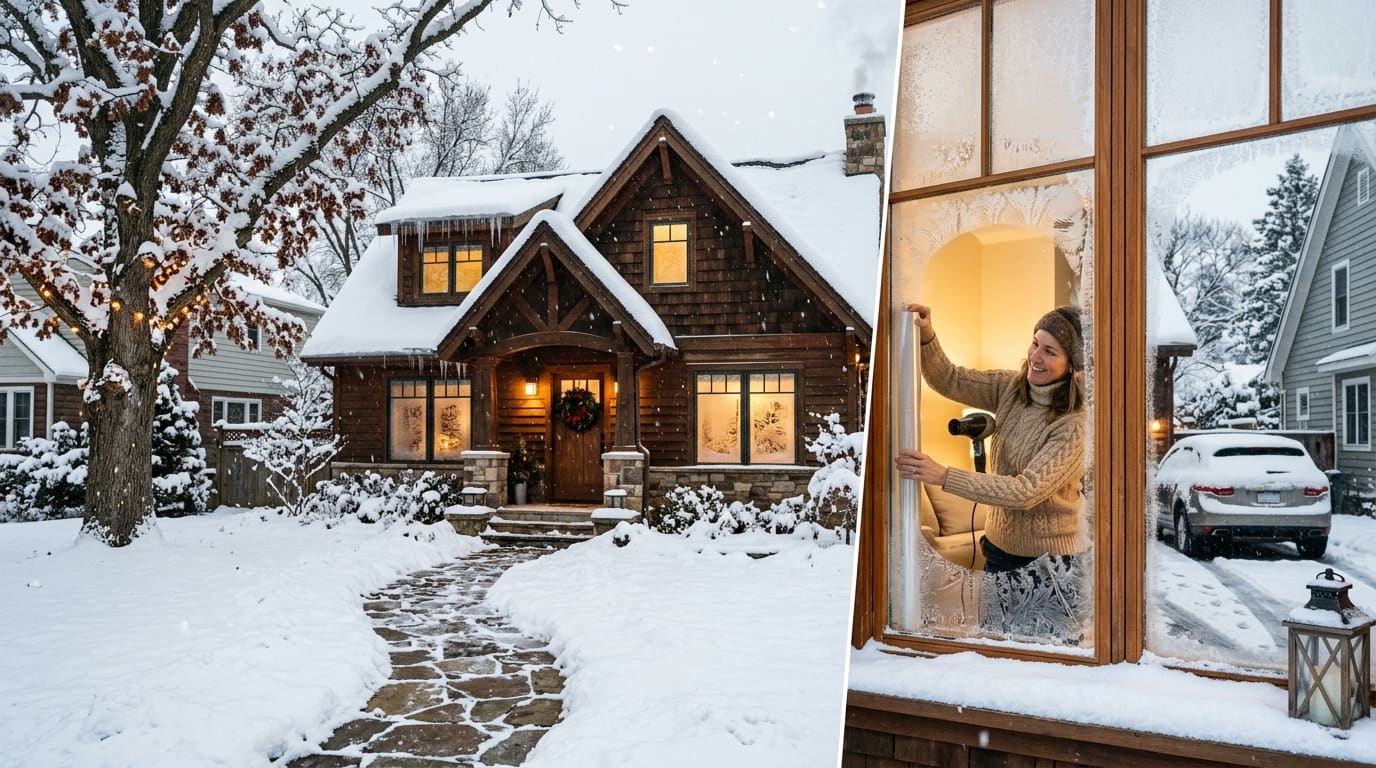
For windows that are drafty despite good weatherstripping and caulk — or for single-pane windows where the glass itself is a major source of heat transfer — window insulation film provides an additional barrier. Clear plastic film is applied to the interior window trim with double-sided tape and then shrunk tight with a hair dryer, creating an insulating air space between the film and the glass. This is a temporary seasonal solution that is removed in spring, but it is remarkably effective at reducing drafts and heat loss through single-pane windows.
For a more permanent solution, interior storm window inserts — custom-fitted acrylic or glass panels that mount inside your existing window frame — create a sealed air gap that provides insulation comparable to a double-pane window. These are available as removable seasonal panels or permanent installations. In the DMV area, interior storm inserts are an approved modification in most historic districts and provide a meaningful energy improvement without altering the exterior appearance of your windows.
When Professional Sealing Is Needed
DIY weatherstripping, caulking, and re-glazing handle most draft problems effectively. However, some situations require professional intervention: windows where the sash has warped and no longer makes full contact with the frame, windows where the frame has shifted due to foundation settling and the gaps are too large for standard weatherstripping, and windows with failed insulated glass units where the draft is coming through the failed seal between the two panes (not around the frame).
For failed IGU seals, no amount of weatherstripping or caulk will stop the draft — the insulated glass unit itself must be replaced with a new factory-sealed unit. Virginia Glass Windows handles both glass replacement and comprehensive window sealing throughout Washington DC, Maryland, and Virginia. If your windows are drafty and you are not sure whether the problem is the glass, the seal, or the frame, our free photo estimate can help identify the source and recommend the most cost-effective solution. Call us at (703) 470-7867 — we keep DMV homes comfortable year-round.
About the Author
Mike Reynolds
Lead Glass Technician & Owner
With over 15 years of experience in window and glass repair across the DC, Maryland, and Virginia area, Mike shares practical expertise to help homeowners and businesses make informed decisions about their glass repair and replacement needs.
Need Help With Your Glass?
Our experts are ready to help with any window or glass issue. Free estimates, same-day service available across DC, MD & VA.
Related Articles
Continue reading about energy efficiency
More Energy Efficiency
View All
Energy-Efficient Glass Upgrades for DMV Homes: Low-E, Argon & Beyond
10 min read
Low-E Glass Explained: Is It Worth the Upgrade for Your DMV Home?
7 min read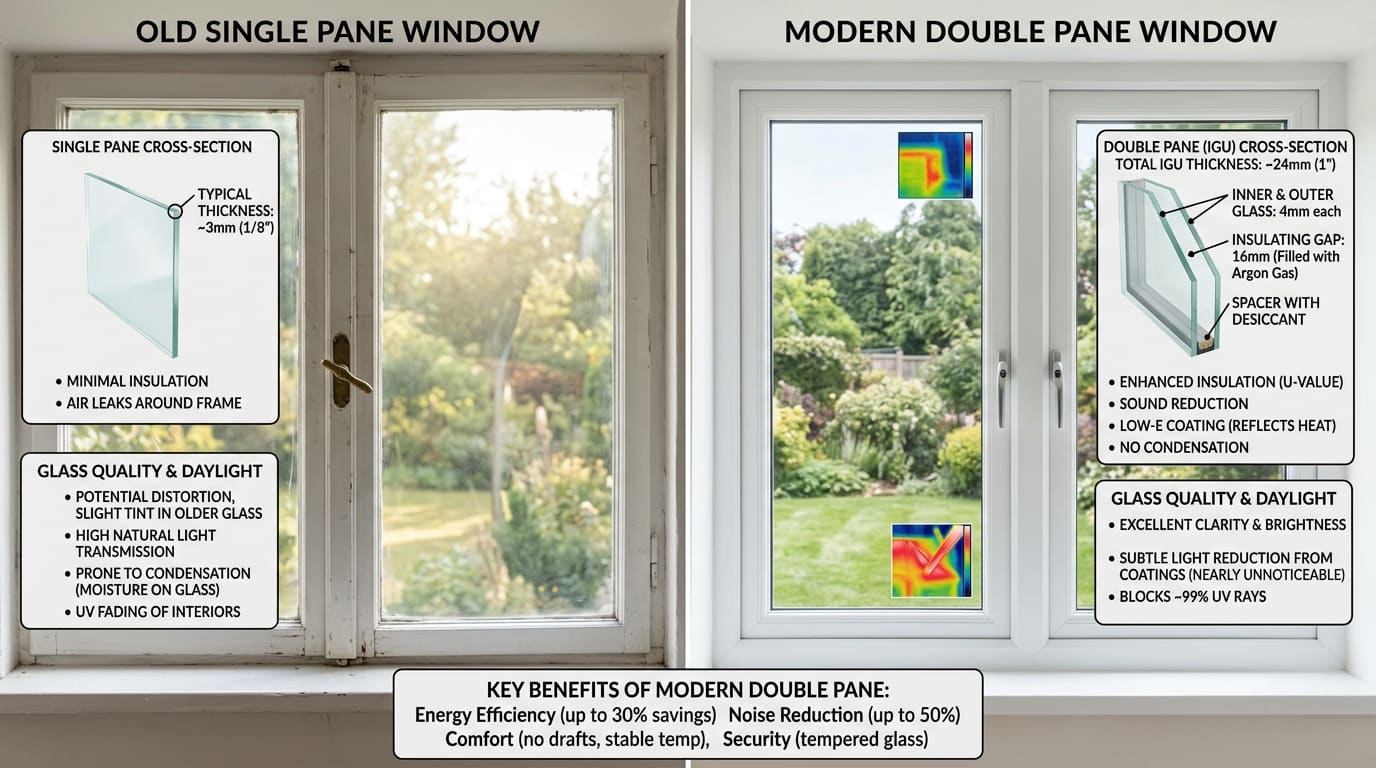
When to Upgrade from Single-Pane to Double-Pane Windows in the DMV
8 min read
How Glass Replacement Saves Money on Energy Bills in the DMV
7 min readExplore More Resources
Common Problems
Related Pages
Free Tools
24/7 Emergency
Board-Up & Glass
Licensed & Insured
DC, MD & VA
300+ Areas
DMV Coverage
Same-Day Service
When You Need It
Ready to Get Started?
Get a free estimate for any window or glass service across the DMV area.