Window Glass Types Explained: Single, Double, Tempered & More
Single-pane, double-pane, tempered, laminated, Low-E, annealed — window glass terminology is confusing. Here is a plain-language guide to every glass type you might encounter as a DMV homeowner.
Mike Reynolds
Lead Glass Technician & Owner
In This Article
Why Glass Type Matters
When a window breaks or needs replacement in a DMV home, you cannot simply order "glass." The replacement needs to match the original glass type in terms of safety requirements, thermal performance, size, and thickness. Using the wrong glass type can violate building code, void your homeowner's insurance coverage, create an energy efficiency gap, or in some cases create a genuine safety hazard. This guide explains every major glass type in plain language so you can have an informed conversation with your glass technician.
Single-Pane Annealed Glass
Single-pane annealed glass is the baseline: a single sheet of standard float glass installed in a window frame. "Annealed" refers to the slow cooling process used during glass manufacturing that creates a uniform, workable sheet that can be cut to any size. This is the most common glass type in pre-1980 DMV homes and in interior applications.
Annealed glass breaks into large, sharp shards. This is why it is not appropriate for safety-critical locations like doors, sidelights, shower enclosures, and windows near floors — in these locations, building code mandates safety glass. Single-pane annealed windows offer R-values around 1.0, minimal sound insulation, and no UV protection. They remain appropriate for interior windows, garage windows, and utility spaces where thermal performance and safety requirements are not governing factors.
Double-Pane Insulated Glass Units (IGU)
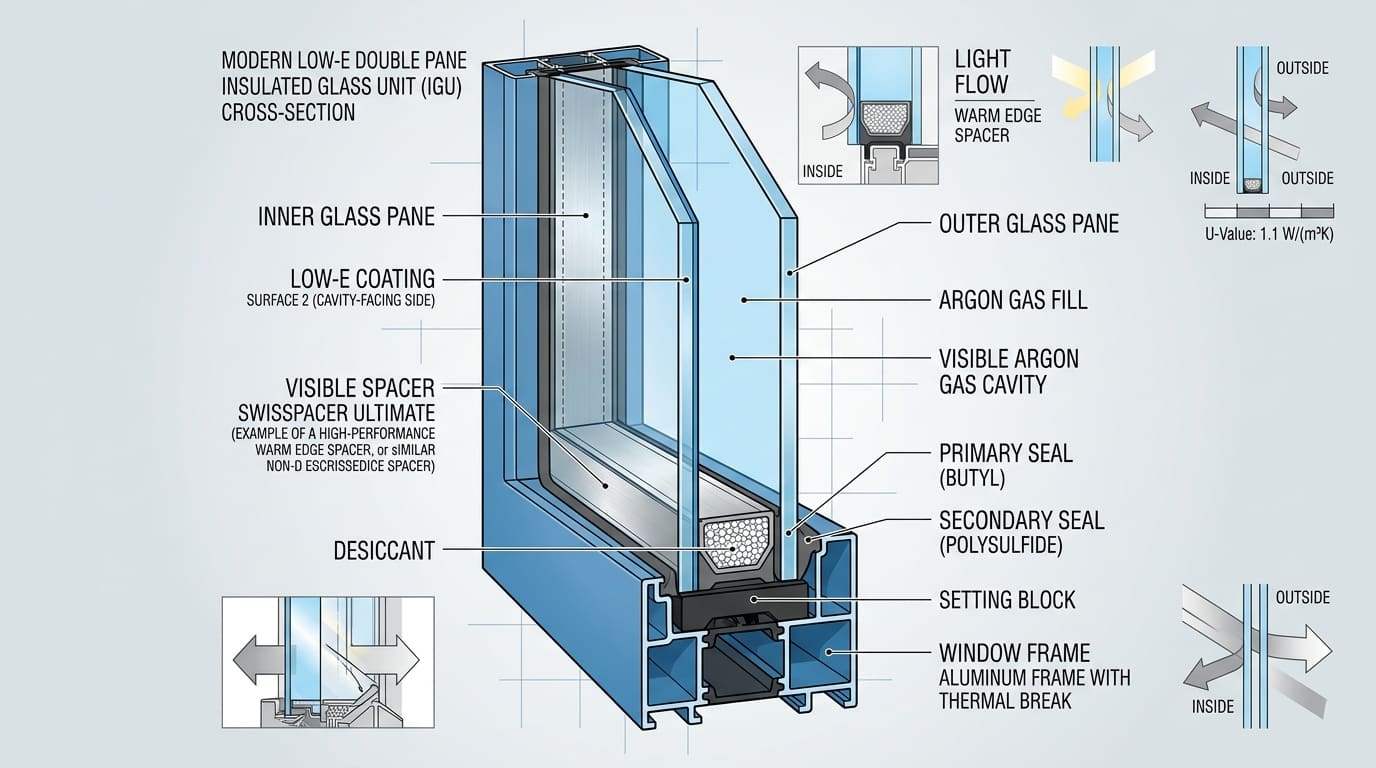
Double-pane IGUs are the standard for modern residential windows in the DMV area. Two panes of glass are separated by a hollow spacer bar filled with desiccant, sealed at the perimeter with dual sealant systems, and filled with argon or krypton gas in the cavity between the panes. This creates the insulating dead-air-space effect that dramatically improves thermal performance compared to single-pane glass.
Standard double-pane IGUs achieve R-values of 2.0 to 3.0. When combined with Low-E coatings and argon fill, modern double-pane units reach R-3 to R-5. IGUs are factory-sealed and cannot be fabricated in the field — they must be custom-ordered to your specific window dimensions from a glass fabricator. The spacer bar thickness determines the cavity width; common configurations include 1/2-inch and 5/8-inch spacer widths, and these cannot be mixed — your replacement unit must match the original spacer size to fit the existing frame correctly.
Tempered Safety Glass
Tempered glass is annealed glass that has been heated to approximately 1,200 degrees Fahrenheit and then rapidly cooled. This process creates a surface compression that makes tempered glass 4 to 5 times stronger than annealed glass of the same thickness. More importantly, when tempered glass breaks, it shatters into small, dull-edged fragments rather than large sharp shards — dramatically reducing injury risk.
Building codes in DC, Maryland, and Virginia (following the International Residential Code) require tempered safety glass in specific locations: all glass in doors, including sidelights within 24 inches of a door, all windows with a sill height less than 18 inches from the floor, glass in shower and bath enclosures, and glass in certain stair landing and railing applications. If your window is in any of these locations, the replacement glass must be tempered — substituting annealed glass is a code violation. Tempered glass cannot be cut after tempering; it must be ordered to finished size from the fabricator.
Laminated Safety Glass
Laminated glass consists of two or more glass panes bonded together with a polyvinyl butyral (PVB) or ethylene-vinyl acetate (EVA) interlayer. When laminated glass breaks, the interlayer holds the fragments in place, preventing the glass from scattering — the broken pane resembles a shattered windshield, with cracks but no falling pieces. This makes it appropriate for skylights (where falling glass is hazardous), hurricane-rated windows, glass railings and floors, and high-security applications.
Laminated glass is required in skylights and overhead glazing applications by building code. It is used in hurricane-impact windows, which are increasingly common in higher-end DMV area construction and especially in coastal Maryland and Virginia properties. The interlayer also provides excellent sound insulation — laminated glass in a bedroom facing a busy street delivers remarkable noise reduction compared to standard glass.
Low-E Glass
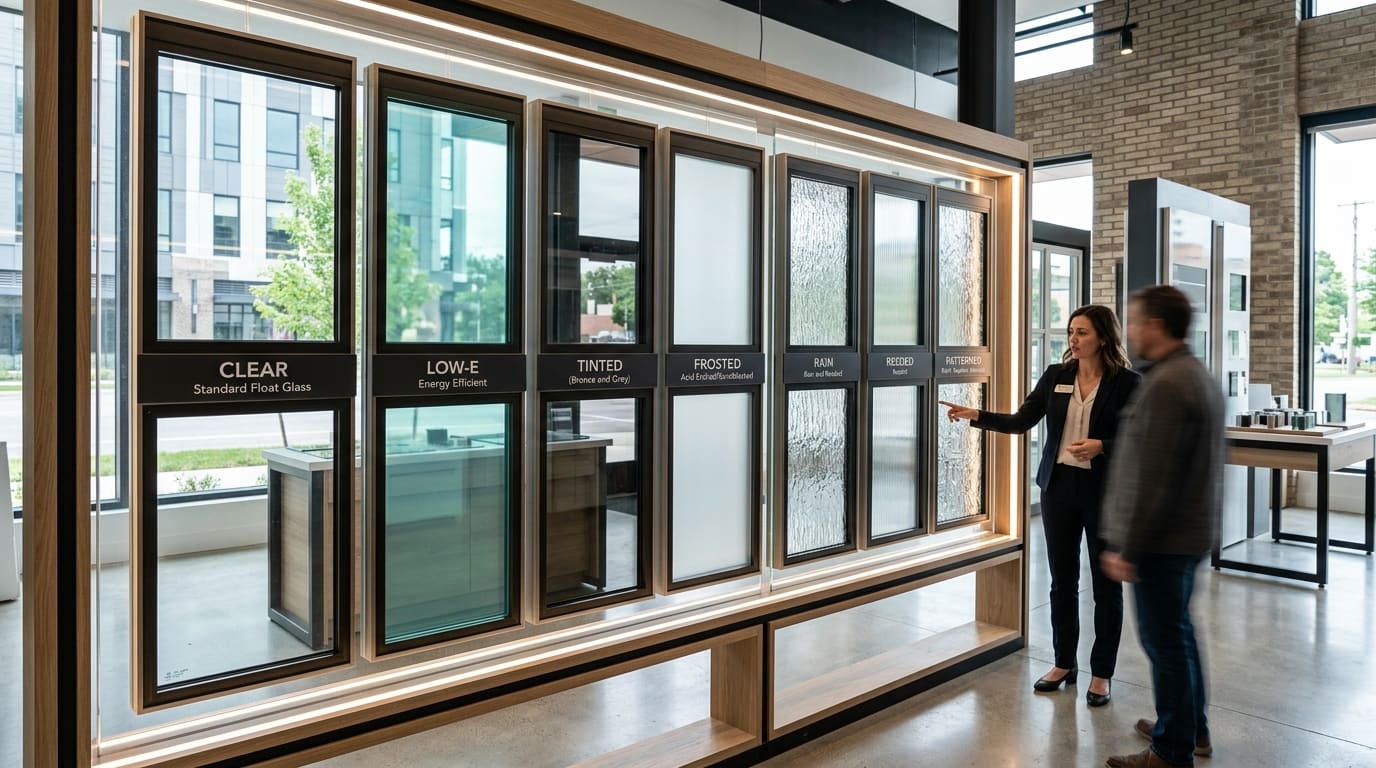
Low-E (low-emissivity) glass features a microscopically thin metallic oxide coating on one surface that reflects infrared radiation while passing visible light. The coating is invisible to the naked eye but fundamentally changes the thermal behavior of the glass. Low-E glass reflects solar heat before it enters your home in summer, and reflects interior heat back inside during winter, dramatically reducing both cooling and heating loads.
For DMV homeowners, Low-E glass is the most impactful single upgrade available when replacing window glass. The DMV's hot, humid summers and cold winters make the directional control of heat flow that Low-E provides especially valuable. Learn more about which Low-E specification is right for your window orientation and energy priorities in our Low-E glass guide.
Obscure and Patterned Glass
Obscure glass has a textured surface that diffuses light while providing privacy — common in bathroom windows, sidelights, garage door panels, and basement windows. "Rain glass" with its vertical ripple pattern and "reed glass" with its parallel lines are popular styles in DMV residential construction from the 1960s through 1980s. Matching vintage obscure patterns for historic home repairs sometimes requires sourcing specialty glass suppliers, which Virginia Glass Windows has experience locating.
Wired Glass
Wired glass — annealed glass with an embedded wire mesh — was commonly used in fire-rated assemblies and school construction through the 1990s. It is no longer considered a safety glass product under current codes because the wire actually reduces the impact resistance of the glass rather than helping it. Replacing wired glass with modern fire-rated safety glazing is required in renovation projects subject to current codes.
Which Glass Type Do You Have?
Not sure what glass type is in your windows? Send us photos through our photo estimate service and we will identify your glass type, advise on appropriate replacement specifications, and provide a detailed written quote. Virginia Glass Windows technicians carry every common glass type and can discuss the options for your specific situation. Call (703) 470-7867 for an immediate consultation.
About the Author
Mike Reynolds
Lead Glass Technician & Owner
With over 15 years of experience in window and glass repair across the DC, Maryland, and Virginia area, Mike shares practical expertise to help homeowners and businesses make informed decisions about their glass repair and replacement needs.
Need Help With Your Glass?
Our experts are ready to help with any window or glass issue. Free estimates, same-day service available across DC, MD & VA.
Related Articles
Continue reading about guides
More Guides
View All
How to Tell If Your Window Glass Needs Repair or Replacement
8 min read
Stress Cracks in Windows: Causes, Prevention & Solutions for DMV Homeowners
7 min read
Foggy Windows: Why Double-Pane Seals Fail & What to Do About It
9 min read
Glass Replacement in Historic DMV Homes: Preservation Meets Performance
9 min readExplore More Resources
Helpful Guides
Common Problems
Related Pages
Our Services
24/7 Emergency
Board-Up & Glass
Licensed & Insured
DC, MD & VA
300+ Areas
DMV Coverage
Same-Day Service
When You Need It
Ready to Get Started?
Get a free estimate for any window or glass service across the DMV area.