Guide to Energy-Efficient Window Glass for DMV Homes
Energy-efficient window glass can significantly reduce HVAC costs in the DMV climate. Virginia Glass Windows explains glass options, ratings, and what to specify for your home.
Why Window Glass Matters for Energy Efficiency
Windows account for 25 to 30 percent of residential heating and cooling energy use in a typical DMV home. The glass is the most thermally active component of the window — the frame and installation matter too, but the glass is where the largest gains or losses occur.
In the Washington DC metro area, you need windows that perform in both extreme summer heat and winter cold. The ideal window glass minimizes solar heat gain in summer while minimizing heat loss in winter — a balance achieved with modern low-E coatings and multi-pane construction.
Understanding U-Factor and SHGC
Two ratings define window glass energy performance: U-factor and Solar Heat Gain Coefficient (SHGC). U-factor measures how well the window prevents heat from escaping — lower numbers are better for heat retention. SHGC measures how much solar heat the glass allows through — lower numbers reduce summer cooling loads.
For the DMV climate (mixed heating and cooling zone), the recommended specifications are U-factor of 0.30 or lower and SHGC of 0.25 to 0.40. South-facing windows may benefit from a higher SHGC to capture winter solar gain, while west-facing windows benefit from lower SHGC to reduce afternoon summer overheating.
Energy Star certified windows for the Northern/Central climate zone (which includes DC, Maryland, and Virginia) must meet specific U-factor and SHGC thresholds. These are a useful baseline when comparing products.
Glass Options From Single to Triple Pane
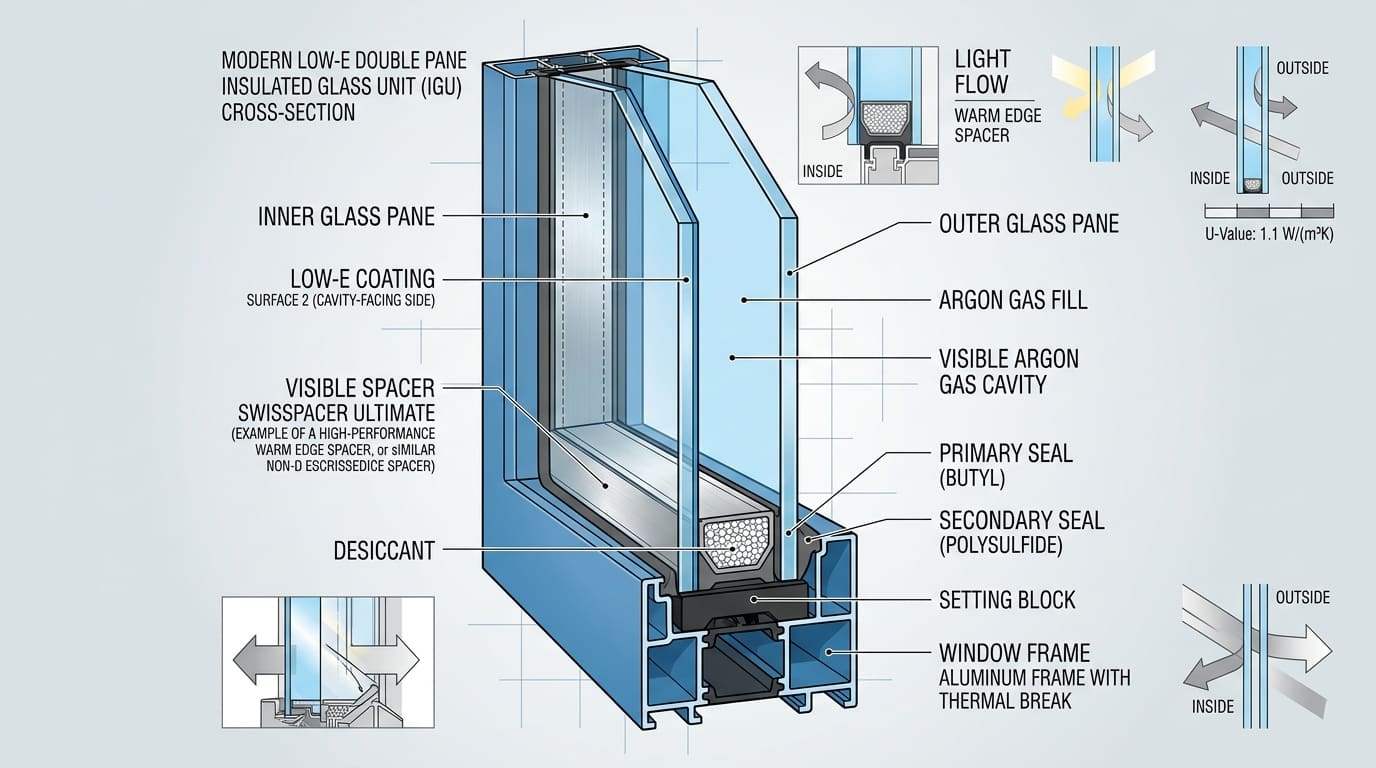
Single-pane glass has a U-factor of approximately 1.0 to 1.1 — very poor by modern standards. Double-pane with air fill improves to approximately 0.50. Double-pane with argon fill and low-E coating reaches 0.25 to 0.30. Triple-pane can achieve 0.15 to 0.20.
For most DMV homes, double-pane with argon and a good low-E coating provides the best cost-performance balance. Triple-pane adds cost and weight but provides additional benefits in rooms facing prevailing winds or with high thermal loads.
For historic homes in DC and inner-ring suburbs where replacement windows may not be permitted, interior storm window inserts add an effective second air gap without altering the historic appearance.
Financing and Incentives
Federal tax credits for energy-efficient windows are available under the Inflation Reduction Act. Through 2032, homeowners may claim up to 30 percent of qualifying window costs (with a lifetime cap). Consult a tax professional for current details.
Maryland EmPOWER and Virginia utility rebate programs periodically offer incentives for energy-efficient window upgrades. Check with your utility before purchasing — timing a replacement to coincide with a rebate period can significantly improve your return on investment.
Need Help With Your Glass?
Send us a photo of your window or glass issue and get a free estimate within hours. Our experts serve all of DC, Maryland, and Virginia.
Common Questions
Frequently Asked Questions
Answers to common questions about this topic from our DMV glass experts.
Keep Reading
Related Guides
Explore More Resources
Related Articles
Common Problems
Related Pages
Our Services
Ready to Get Started?
Get a free estimate from our glass experts. Same-day service available across DC, MD & VA.