Glass Safety Standards & Building Codes for Homeowners
Understand glass safety standards including CPSC 16 CFR 1201, ANSI Z97.1, and IBC Chapter 24. Where safety glass is required in DMV homes and businesses. Code enforcement and penalties.
Why Glass Safety Standards Exist
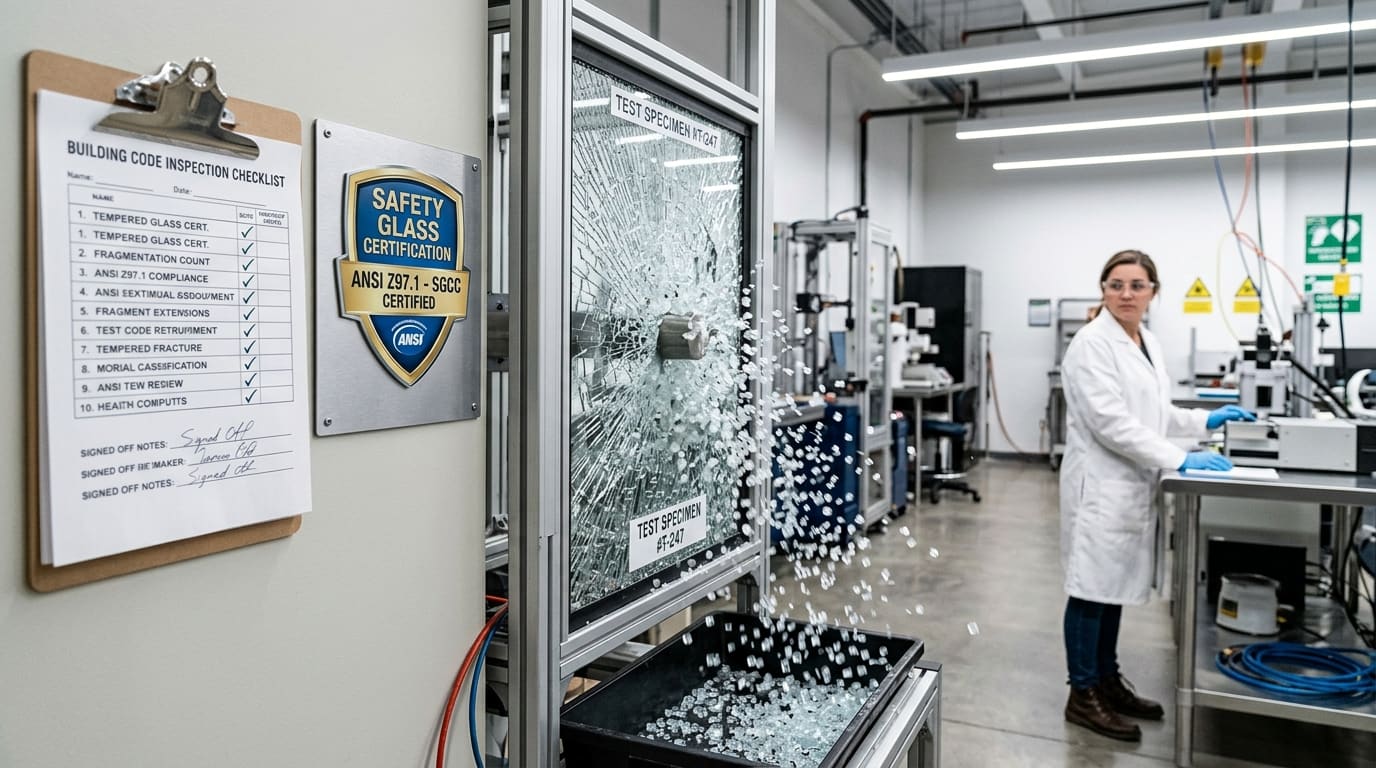
Glass safety standards were developed to prevent serious injuries from human impact with architectural glass. Before modern safety glazing requirements, thousands of people were injured annually by walking or falling through standard annealed glass that shattered into large, dangerous shards. The Consumer Product Safety Commission established federal standards in the 1970s that remain the foundation of glass safety regulation today.
In the Washington DC, Maryland, and Virginia region, glass safety standards are enforced through local building codes that reference federal CPSC regulations and ANSI voluntary standards. These requirements apply to new construction, renovations, and glass replacements. Understanding where safety glass is required protects your family, your tenants, and your liability exposure.
Virginia Glass Windows installs code-compliant safety glass in every hazardous location. Our technicians are trained on current CPSC, ANSI, and IBC requirements as adopted by Virginia, Maryland, and DC jurisdictions, ensuring that your glass installation meets or exceeds all applicable safety standards.
CPSC 16 CFR 1201: The Federal Safety Glazing Standard
The Consumer Product Safety Commission standard 16 CFR 1201 is the federal regulation governing safety glazing materials used in buildings. It establishes two categories of impact resistance: Category I for smaller glazing panels (less than 9 square feet) and Category II for larger panels (9 square feet and above). Glass products must pass a rigorous impact test where a 100-pound leather punching bag is swung into the glass from specified heights.
Category I glass must withstand impact from an 18-inch drop height, while Category II glass must survive a 48-inch drop height. When safety glass breaks under impact, it must either remain intact (laminated glass) or break into small, relatively harmless fragments (tempered glass). Standard annealed glass fails these tests because it shatters into large, knife-like shards.
Every piece of safety glass sold in the United States must be permanently marked with the manufacturer name, CPSC 16 CFR 1201 compliance marking, and the category (I or II). Virginia Glass Windows verifies this marking on every piece of safety glass we install, and our customers can see the compliance label on their installed glass for documentation purposes.
ANSI Z97.1: The Industry Voluntary Standard
ANSI Z97.1 is the American National Standards Institute voluntary standard for safety glazing materials in buildings. While CPSC 16 CFR 1201 is the federal regulation with legal force, ANSI Z97.1 serves as an additional industry benchmark. Many glass manufacturers test and certify their products to both standards. The test procedures are similar but have minor differences in impact body specifications.
Building codes in Virginia, Maryland, and DC reference both CPSC 16 CFR 1201 and ANSI Z97.1 as acceptable safety glazing standards. Glass marked with either standard is accepted by DMV building inspectors. In practice, most modern safety glass products carry dual certification, meeting both CPSC and ANSI requirements simultaneously.
For DMV homeowners and building managers, the practical takeaway is straightforward: verify that any glass installed in a hazardous location carries a permanent safety glass marking referencing CPSC 16 CFR 1201 and/or ANSI Z97.1. Virginia Glass Windows only installs certified safety glass products from reputable manufacturers with proper marking and documentation.
IBC Chapter 24: Where Safety Glass Is Required
The International Building Code Chapter 24 (referenced by Virginia, Maryland, and DC building codes) specifies exactly where safety glazing is required. The most common hazardous locations include: all glass in doors and enclosures for hot tubs, bathtubs, showers, and saunas; glass sidelights adjacent to doors; glass within 24 inches horizontally of a door edge and below 60 inches above the walking surface; glass in guardrails and railings; glass in walls and fences around swimming pools; and any glass panel that could be mistaken for a door or opening.
Additional locations requiring safety glass include glass at the bottom of stairways where someone could fall into the glass, glass adjacent to stairway landings within 60 inches horizontally and 60 inches above the landing surface, glass floors and glass in overhead applications, and glass within 60 inches of the bottom of a stairway where a straight line from the nosing edge intersects the glass surface.
In the DMV area, these requirements apply uniformly across jurisdictions with minor local amendments. Virginia and Maryland follow the IBC with state-specific modifications, while DC has its own construction code that incorporates IBC Chapter 24 safety glazing requirements. Virginia Glass Windows maintains current knowledge of each jurisdiction requirements and ensures every installation complies.
Types of Safety Glass: Tempered vs. Laminated
Tempered glass is heat-treated to be approximately four times stronger than standard annealed glass of the same thickness. When it breaks, it shatters into small, blunt-edged fragments rather than dangerous shards. Tempered glass is the most common safety glazing choice for DMV residential applications including shower doors, patio doors, sidelights, and low windows. It cannot be cut or modified after tempering — all cutting and drilling must be done before the tempering process.
Laminated glass consists of two or more glass panes bonded together with a tough plastic interlayer, typically polyvinyl butyral (PVB). When laminated glass breaks, the fragments adhere to the interlayer, and the glass remains largely intact in the frame. This makes laminated glass superior for overhead applications, security glazing, and locations where glass fallout would be hazardous. In the DMV area, laminated glass is increasingly specified for hurricane-resistant glazing in commercial buildings.
Both tempered and laminated glass meet CPSC 16 CFR 1201 requirements when properly manufactured and tested. The choice between them depends on the application: tempered for cost-effective safety compliance in standard locations, laminated for enhanced security, sound reduction, or situations where the glass must remain in place after breaking. Virginia Glass Windows advises on the optimal choice for your specific project.
DMV Code Enforcement and Inspections
Building inspectors in Virginia, Maryland, and Washington DC actively verify safety glazing compliance during new construction and renovation inspections. In Virginia, the Uniform Statewide Building Code (USBC) empowers local building officials to enforce safety glazing requirements. Maryland counties such as Montgomery, Prince George, and Frederick have their own inspection departments that verify glass safety compliance.
Washington DC Department of Buildings inspects safety glazing as part of permit-based construction inspections. For projects that require permits — which includes most glass replacements in doors and bathrooms — the inspector verifies that installed glass carries proper safety glazing markings and is appropriate for the hazardous location.
Even for projects that do not require permits, the property owner remains legally responsible for safety glazing compliance. If someone is injured by non-compliant glass in a hazardous location, the property owner faces significant liability exposure. Virginia Glass Windows documents every safety glass installation with manufacturer certifications and photographs of safety markings for your records.
Penalties and Liability for Non-Compliance
Non-compliance with safety glazing standards carries both regulatory and civil liability consequences. Building code violations can result in stop-work orders, required corrective work at the owner expense, fines, and delays in obtaining certificates of occupancy. In the DMV area, these penalties vary by jurisdiction but consistently represent significant costs.
The greater risk is civil liability. If someone is injured by non-compliant glass in a hazardous location, the property owner, contractor, or glass installer may face personal injury lawsuits. Courts have consistently held that failure to install safety glass where required by code constitutes negligence. Judgments in glass injury cases can reach hundreds of thousands of dollars or more.
Virginia Glass Windows eliminates compliance risk by ensuring every installation meets current safety glazing standards. We maintain documentation of all safety glass installations, including manufacturer certifications and installation records. Every installation is documented — your glass is safe, legal, and on the record. Contact us for a free safety glass assessment of your property.
Need Help With Your Glass?
Send us a photo of your window or glass issue and get a free estimate within hours. Our experts serve all of DC, Maryland, and Virginia.
Common Questions
Frequently Asked Questions
Answers to common questions about this topic from our DMV glass experts.
Keep Reading
Related Guides
Explore More Resources
Related Articles
Common Problems
Related Pages
Our Services
Ready to Get Started?
Get a free estimate from our glass experts. Same-day service available across DC, MD & VA.