Glass Pool Enclosures & Fencing: Safety, Style & Code Guide
Glass pool fencing provides unobstructed views and meets the strictest safety codes. Here is everything DMV homeowners need to know about glass pool enclosures, fencing options, and code compliance.
Mike Reynolds
Lead Glass Technician & Owner
In This Article
Pool Safety Fencing Requirements in the DMV
Every jurisdiction in the DMV area — Washington DC, all Maryland counties, and all Virginia counties — requires a barrier around residential swimming pools. The purpose is straightforward and non-negotiable: preventing unsupervised access by young children, who are the population most at risk of drowning. Whether you choose glass, metal, wood, or mesh fencing, the barrier must meet the minimum performance standards established by the applicable building code, which in the DMV area is based on the International Residential Code (IRC) Section R326.
The minimum barrier height is 48 inches, measured from the exterior (non-pool) side of the fence from the finished ground level to the top of the fence. The barrier must not have any openings, handholds, or footholds that would allow a child to climb through or over it. Horizontal rails, if present, must be on the pool side of the fence where they are less accessible for climbing. For glass fencing, the smooth, unbroken surface inherently meets the anti-climbing requirement — there are no rails, pickets, or horizontal elements to grab or step on, which is one of the key safety advantages of glass pool barriers.
All gates in the pool barrier must be self-closing and self-latching. The latch mechanism must be located at least 54 inches above the ground surface on the pool side, or the gate and latch must be within a secondary enclosure that prevents a child from reaching the latch. The gate must open outward (away from the pool), and the self-closing mechanism must reliably return the gate to the closed and latched position from any open position. These requirements apply to every gate in the pool barrier, including pedestrian gates, service gates, and any gate through the house wall that opens to the pool area.
Frameless vs Semi-Frameless Glass Pool Fencing
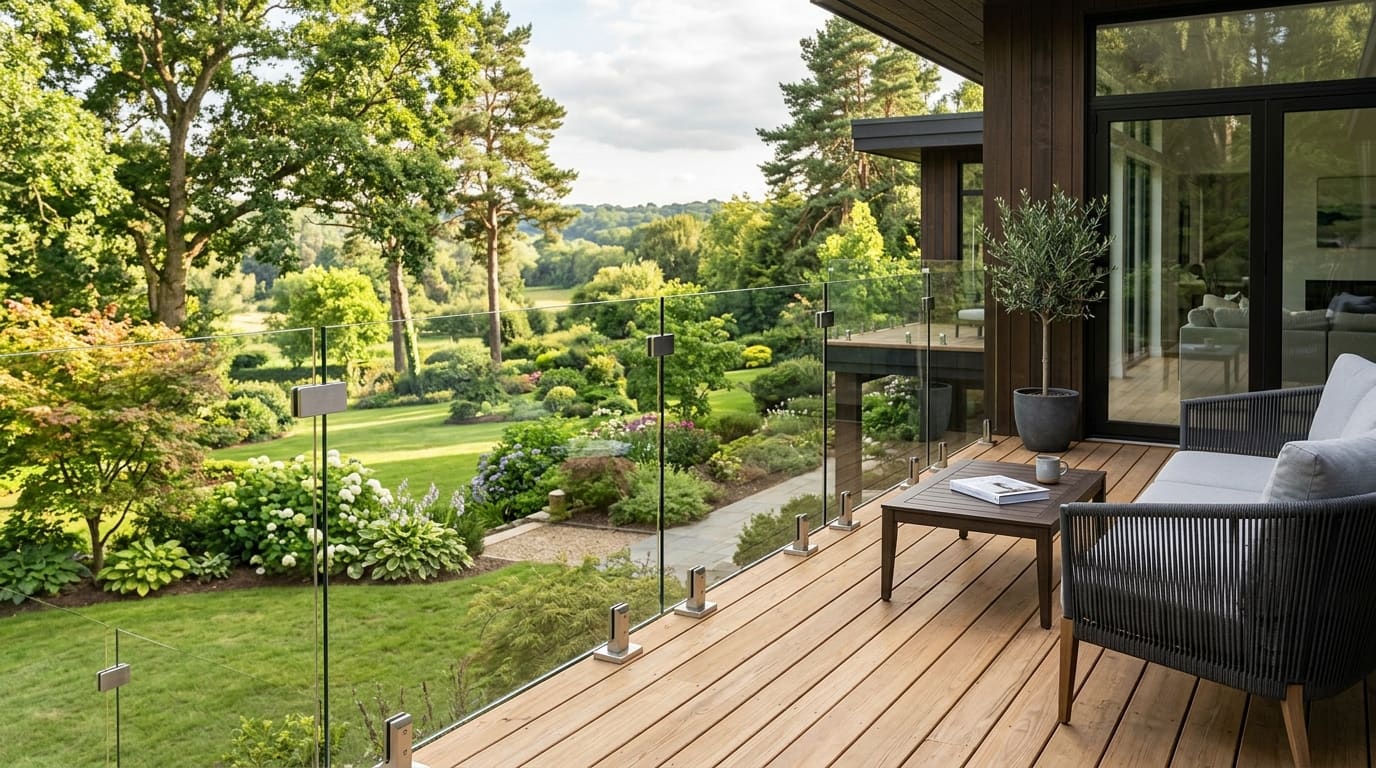
Frameless glass pool fencing is the premium option that maximizes visual transparency and creates a seamless, unobstructed view of the pool and surrounding landscape. In a frameless system, glass panels are secured at the base using either spigots (stainless steel point fixings bolted through the glass and anchored to the deck or a concrete footing) or a channel (a continuous aluminum or stainless steel base shoe that grips the bottom edge of the glass). There are no posts, top rails, or vertical framing elements — just glass panels separated by narrow gaps (typically 1 to 2 inches) with no physical connection between adjacent panels.
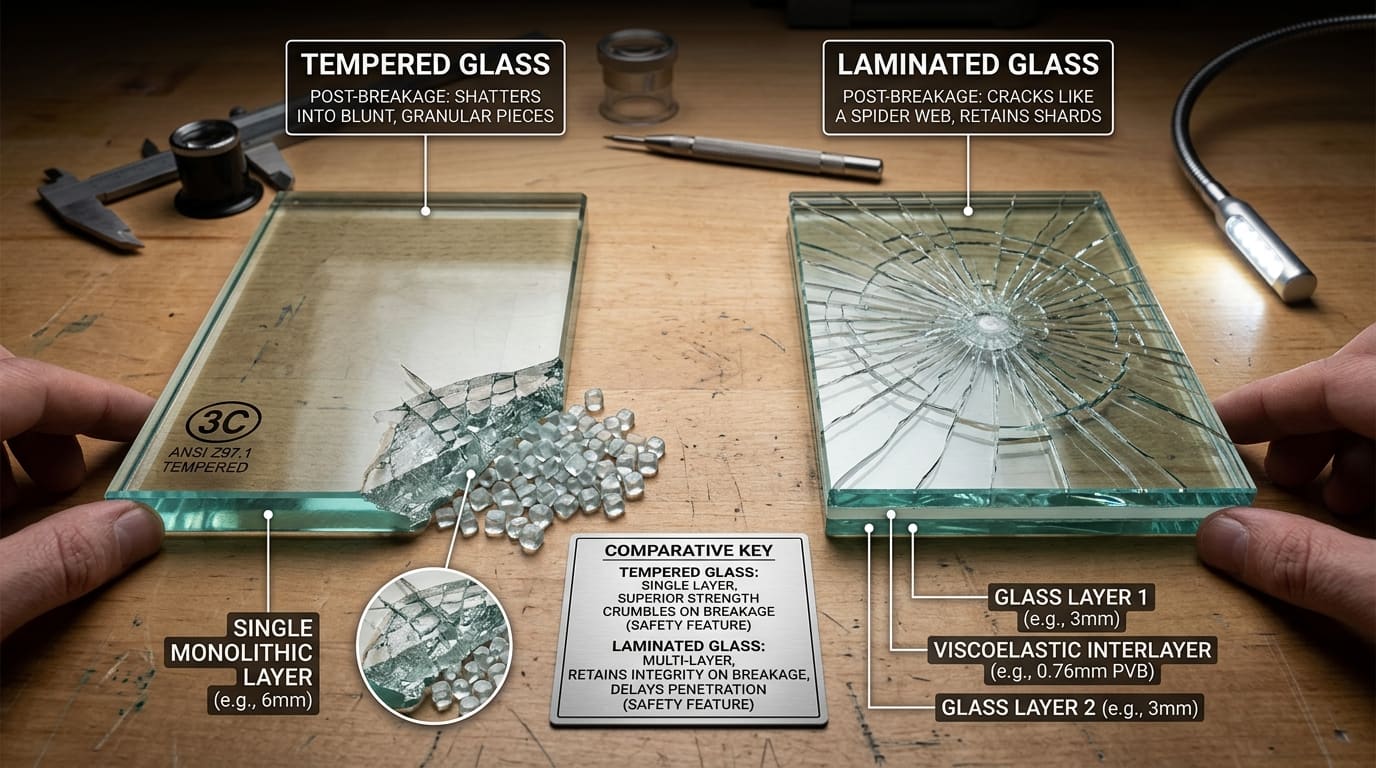
Frameless glass pool fencing uses 1/2-inch (12 mm) tempered safety glass as the standard panel thickness. The glass must be heat-soaked tempered to eliminate the risk of spontaneous breakage from nickel sulfide inclusions — a rare but real phenomenon in tempered glass that can cause a panel to shatter without warning. Heat soaking subjects every panel to an extended high-temperature treatment that accelerates the nickel sulfide reaction, causing susceptible panels to break during the testing process rather than after installation. This quality control step is essential for safety-critical glass applications like pool fencing.
Semi-frameless glass pool fencing uses posts between glass panels, with the glass set into the posts rather than freestanding. This system is typically less expensive than fully frameless because the posts carry the wind and impact loads, allowing thinner glass panels (often 3/8 inch) and simpler base connections. A top rail connecting the posts adds structural rigidity and provides a visual line that some homeowners prefer. Semi-frameless systems are a practical choice for larger pool perimeters where the cost of frameless construction becomes substantial, and for sites with challenging ground conditions where the heavy point loads of frameless spigots are difficult to support.
Wind Load Ratings and Structural Engineering
Glass pool fencing must withstand wind loads without failure — a structural engineering requirement that is often underestimated in residential installations. The DMV area's wind exposure, while moderate compared to coastal regions, can produce sustained winds and gusts during thunderstorms and nor'easters that impose significant lateral force on tall, freestanding glass panels. A 48-inch-tall freestanding glass panel presents a substantial sail area, and the base connection must transfer the full wind load to the foundation without overloading the glass or the hardware.
Wind load calculations for glass pool fencing consider the site's geographic wind speed (based on ASCE 7 wind maps), the exposure category (suburban, urban, open terrain), the fence height, and any topographic features that could accelerate wind flow. In the DMV area, the basic design wind speed is approximately 115 to 120 mph (3-second gust), with higher values in specific locations near the Chesapeake Bay and in areas with elevated terrain. Your glass contractor or structural engineer uses these parameters to determine the required glass thickness, panel width, and base connection capacity.
For frameless glass pool fencing, the base connection is the critical structural element. Spigot systems transfer the wind bending moment through the glass to the spigot bolts and into the foundation. The spigot bolt pattern, bolt diameter, and embed depth must be engineered for the specific wind load. Channel (base shoe) systems distribute the load along the full bottom edge of the glass, typically providing a more favorable load path but requiring a continuous concrete footing or thickened deck slab. Both systems require engineering review for compliance with local building code structural requirements.
Glass Pool Fencing Maintenance
Glass pool fencing is one of the lowest-maintenance fencing options available, but it does require regular attention to maintain its appearance and safety performance. Pool water chemistry — particularly chlorinated or salt-chlorinated water — can deposit mineral scale on the glass surface over time. These deposits are most visible on the pool side of the glass where splash and spray are frequent. Regular cleaning with a squeegee or soft cloth after pool use prevents scale buildup from becoming a persistent haze.
For established scale deposits, a mild acid-based glass cleaner or a water-vinegar solution can dissolve mineral buildup without damaging the glass or the hardware. Avoid abrasive cleaners, steel wool, or razor blades on tempered glass — while tempered glass is scratch-resistant, scratches compromise the tempered surface and can create stress points. The stainless steel hardware (spigots, hinges, latches, and channels) should be cleaned with a stainless steel cleaner and inspected annually for corrosion, particularly in salt-chlorinated pool environments where chloride exposure accelerates stainless steel degradation.
Structural inspection of the base connections, glass panel alignment, and gate operation should be performed at least annually. Check that all spigot bolts are tight and that no glass panels have shifted or tilted from their original position. Verify that the self-closing gate mechanism returns the gate to the fully closed and latched position from every open angle. Check the gap between adjacent panels to ensure no panel has shifted to create a gap wider than the code-allowed maximum. These inspections take only a few minutes and are essential for maintaining the safety performance of the barrier.
DMV Pool Glass Installation Services
Virginia Glass Windows designs, engineers, and installs glass pool fencing throughout Washington DC, Maryland, and Virginia. Our process begins with a site visit to measure the pool perimeter, assess the deck and substrate conditions, evaluate the wind exposure, and discuss your design preferences — frameless or semi-frameless, clear or tinted glass, spigot or channel mount. We prepare engineered drawings that comply with the applicable building code, coordinate with the building department for permits, and fabricate the glass panels and hardware to precise specifications.
Our installation team handles the precision work of core-drilling or casting spigot anchors, setting glass panels to exact alignment and level, installing gate hardware, and testing the complete system for code compliance. We verify gate self-closing and self-latching function, check all panel gaps and heights, and provide documentation for the building inspection. For existing pool fencing replacement — upgrading from metal or wood to glass — we can typically complete the installation with minimal disruption to your pool use schedule. Contact Virginia Glass Windows at (703) 470-7867 for a free consultation on glass pool fencing for your DMV home.
About the Author
Mike Reynolds
Lead Glass Technician & Owner
With over 15 years of experience in window and glass repair across the DC, Maryland, and Virginia area, Mike shares practical expertise to help homeowners and businesses make informed decisions about their glass repair and replacement needs.
Need Help With Your Glass?
Our experts are ready to help with any window or glass issue. Free estimates, same-day service available across DC, MD & VA.
Related Articles
Continue reading about guides
More Guides
View All
How to Tell If Your Window Glass Needs Repair or Replacement
8 min read
Stress Cracks in Windows: Causes, Prevention & Solutions for DMV Homeowners
7 min read
Foggy Windows: Why Double-Pane Seals Fail & What to Do About It
9 min read
Glass Replacement in Historic DMV Homes: Preservation Meets Performance
9 min readExplore More Resources
Helpful Guides
Common Problems
Related Pages
Our Services
24/7 Emergency
Board-Up & Glass
Licensed & Insured
DC, MD & VA
300+ Areas
DMV Coverage
Same-Day Service
When You Need It
Ready to Get Started?
Get a free estimate for any window or glass service across the DMV area.