Glass Fence & Railing Guide: Pool, Deck & Balcony Requirements
Guide to glass railings for decks, balconies, and stairs plus glass pool fences. DMV building codes, structural requirements, glass specifications, and professional installation.
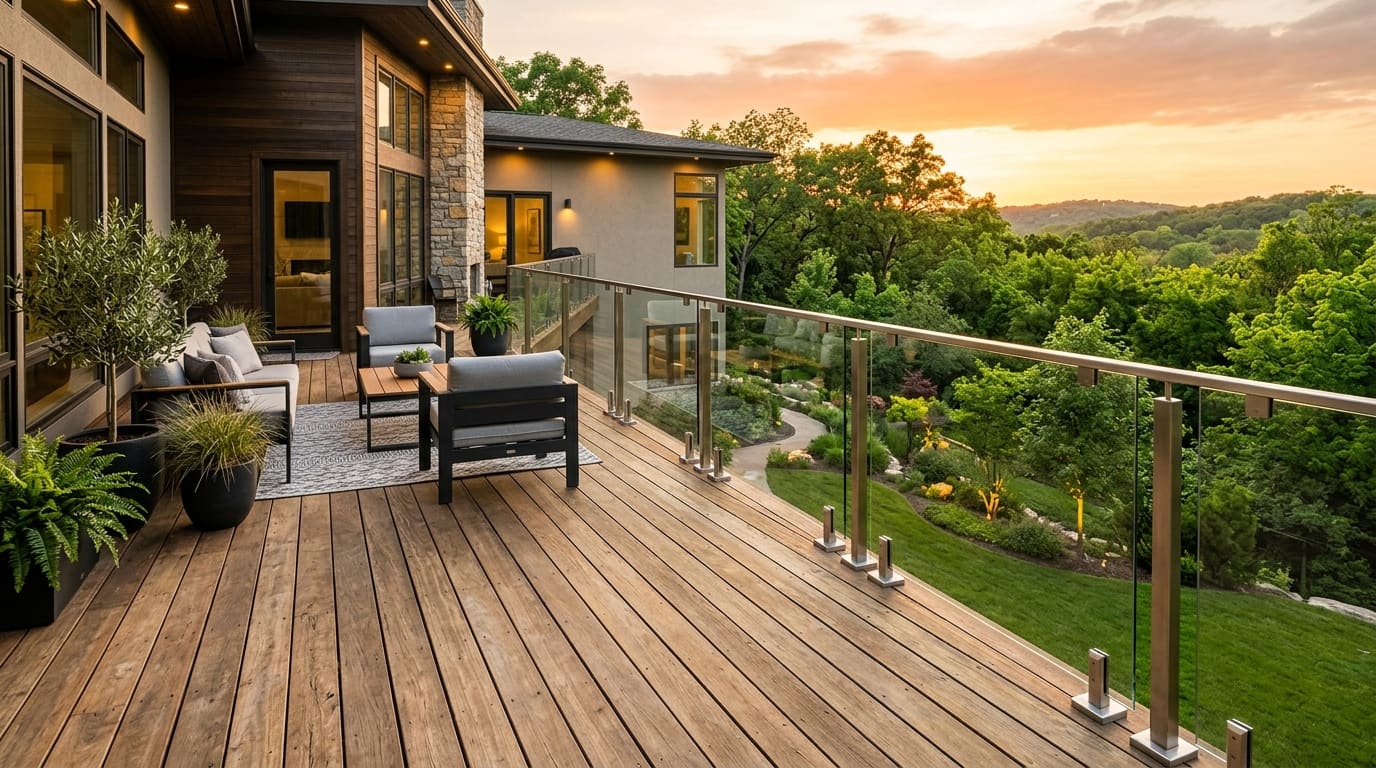
Glass Railings and Fences: An Overview
Glass railings and glass fences combine safety with unobstructed views, creating clean modern aesthetics for DMV residential and commercial properties. From glass deck railings overlooking the Potomac to glass pool fences in Great Falls estates, glass barriers provide the required fall protection and enclosure without blocking sightlines, natural light, or the sense of open space.
The structural demands on glass railings and fences are substantial. Unlike windows that primarily resist wind pressure, railings must withstand direct human impact forces — someone falling against or pushing on the glass. Building codes specify minimum glass thickness, type, mounting methods, and load capacities that are significantly more stringent than standard window glazing requirements.
Virginia Glass Windows designs and installs glass railing and fence systems for residential and commercial applications throughout the Washington DC metropolitan area. Every installation is engineered to meet or exceed Virginia, Maryland, and DC building code requirements for guardrails, pool barriers, and fall protection.
Glass Deck and Balcony Railings
Glass deck railings are increasingly popular in DMV homes, particularly properties with scenic views — waterfront homes along the Chesapeake Bay and Potomac River, hillside properties in Great Falls and Potomac, and elevated decks throughout the region. Glass panels replace traditional wood or metal balusters, providing fall protection while maintaining open views.
Two primary mounting systems are available: post-mounted and base-shoe (channel) mounted. Post-mounted systems use vertical metal posts with glass panels clamped between them — this is the more economical option and allows for easier individual panel replacement. Base-shoe systems mount the glass panels directly into an aluminum channel at the base, creating a frameless appearance with no vertical posts interrupting the view.
For DMV deck applications, the glass must be tempered or laminated safety glass meeting CPSC 16 CFR 1201 Category II. Minimum thickness is typically 3/8-inch tempered or 1/2-inch laminated for post-mounted systems, and 1/2-inch tempered or laminated for base-shoe systems. Virginia Glass Windows performs structural calculations based on your specific railing height, span between posts, and wind exposure to specify the correct glass thickness and system.
Glass Stair Railings
Glass stair railings provide a contemporary open look for interior and exterior stairs. In DMV homes, glass stair railings are popular in modern renovations and new construction where homeowners want to maximize light flow and visual openness between floors. The glass panels serve as the infill between a top rail and the stair stringer or mounting posts.
Building code requirements for glass stair railings in the DMV are specific. The IBC and IRC require that glass railing infill panels withstand a 50-pound-per-linear-foot load applied horizontally at the top and a 200-pound concentrated load at any point. The glass must be tempered, laminated, or tempered-laminated, and the top edge of the glass must be protected by a cap rail — exposed top edges of glass panels without a cap rail are not permitted by most DMV jurisdictions.
The geometry of stair railings adds complexity. Glass panels must be custom-sized to follow the stair angle, with precise measurements at each riser location. Virginia Glass Windows creates detailed field measurements using digital templating to ensure perfect fit for every stair glass panel. We work with your architect or contractor to select the mounting system, glass type, and hardware finish that complements your design vision.
Glass Pool Fences
Glass pool fences meet building code requirements for pool barriers while preserving open views of the pool area — particularly valuable in DMV homes where the pool is a focal point of the outdoor living space. Unlike traditional metal or wood pool fences that obstruct views and create a confined feel, glass pool fencing allows unobstructed supervision of the pool from the house, patio, and surrounding yard.
Virginia, Maryland, and DC building codes require pool barriers to be at least 48 inches tall with no openings that allow passage of a 4-inch sphere. Self-closing, self-latching gates are required, with latches positioned at least 54 inches above grade or on the pool side of the fence. Glass pool fences must meet these requirements while also satisfying structural glass guardrail standards for impact resistance.
Glass pool fence panels are typically 1/2-inch tempered or laminated glass, mounted in stainless steel spigots or base shoes. The frameless design uses no top rail, creating the most unobstructed view. Hinged glass gates with self-closing mechanisms complete the enclosure. Virginia Glass Windows installs glass pool fences that meet both pool barrier and structural glass codes, providing safety, supervision sightlines, and aesthetic excellence.
DMV Building Code Requirements
Building codes in Virginia, Maryland, and Washington DC reference the International Building Code (IBC) and International Residential Code (IRC) for guardrail and fence requirements. Residential guardrails must be at least 36 inches high (42 inches in commercial and multifamily applications). The infill (glass panels) must not allow passage of a 4-inch sphere. Structural loads include 200 pounds concentrated at any point and 50 pounds per linear foot distributed horizontally.
Glass in guardrails must comply with CPSC 16 CFR 1201 Category II and meet the specific structural requirements of the IBC Section 2407 for glass used as guards. This section requires that glass guards use either laminated glass with a minimum 0.030-inch PVB interlayer, or tempered glass that meets the 200-pound concentrated load requirement at the specified span. Single tempered glass without a cap rail is generally not accepted.
Permits are required for glass railing and fence installations in all DMV jurisdictions. Fairfax County, Montgomery County, Arlington County, Alexandria, and Washington DC building departments review railing plans for structural adequacy and code compliance. Virginia Glass Windows prepares permit-ready drawings and engineering documentation and coordinates with building inspectors to ensure approved installations.
Maintenance and Long-Term Care
Glass railings and fences require regular maintenance to maintain their appearance and structural integrity. In the DMV climate, glass surfaces accumulate mineral deposits from rain, pollen, and in coastal areas, salt spray. Regular cleaning with a glass-specific cleaner (avoid abrasive compounds) keeps glass panels clear and prevents permanent staining.
Hardware inspection is equally important. Stainless steel spigots, clamps, and base shoes should be checked annually for corrosion, loose fasteners, and gasket deterioration. In the DMV area, winter road salt tracked onto pool decks and patios can accelerate hardware corrosion if not cleaned promptly. Virginia Glass Windows recommends marine-grade 316 stainless steel hardware for all exterior glass railing installations to maximize corrosion resistance.
If a glass railing panel is damaged — by impact, thermal stress, or extreme weather — it must be replaced promptly. A broken or missing glass panel in a guardrail creates an immediate fall hazard and code violation. Virginia Glass Windows provides emergency glass railing replacement and maintains inventory of common panel sizes for fast turnaround. Contact us at (703) 470-7867 for glass railing service.
Need Help With Your Glass?
Send us a photo of your window or glass issue and get a free estimate within hours. Our experts serve all of DC, Maryland, and Virginia.
Common Questions
Frequently Asked Questions
Answers to common questions about this topic from our DMV glass experts.
Keep Reading
Related Guides
Explore More Resources
Related Articles
Common Problems
Related Pages
Our Services
Ready to Get Started?
Get a free estimate from our glass experts. Same-day service available across DC, MD & VA.