Mirror Buying and Installation Guide for DMV Homes
Choosing and installing mirrors correctly affects aesthetics, safety, and longevity. Virginia Glass Windows explains everything you need to know for mirrors in DC, MD & VA homes.
Mirror Types and Applications
Float glass mirror is the standard for residential applications: bathroom vanity mirrors, closet mirrors, and decorative wall mirrors. It is made from standard float glass with a silver nitrate backing, protected by copper and paint layers.
Low-distortion mirror uses higher-quality glass substrate for applications where precise reflection is important: full-length dressing mirrors, gym and dance studio mirrors. The glass is flatter and has less optical distortion than standard float glass mirror.
Specialty mirrors include antique mirror (deliberately distressed silver backing for vintage appearance), tinted mirror (bronze, gray), and one-way mirror glass for specific architectural applications.
Moisture-resistant (MR) mirror is essential for bathroom applications. MR mirror uses edge sealing to prevent moisture from penetrating and causing the silver backing to deteriorate ("black edge" or desilvering).
Sizing and Proportion Guidelines
Bathroom vanity mirrors: the mirror should be slightly narrower than the vanity (2 to 4 inches narrower on each side) and positioned so the top is at eye level for the primary users, typically 60 to 65 inches from the floor.
Full-length mirrors: a 16 by 48-inch mirror is the minimum for a full view. For a true full-length view with 6 feet of clearance, specify a mirror at least 24 by 60 inches.
Decorative wall mirrors: follow the rule of 2/3 — a mirror should be approximately two-thirds the width of the piece of furniture below it (console, sofa, bed). This proportion looks balanced in virtually any setting.
Safe Installation Methods
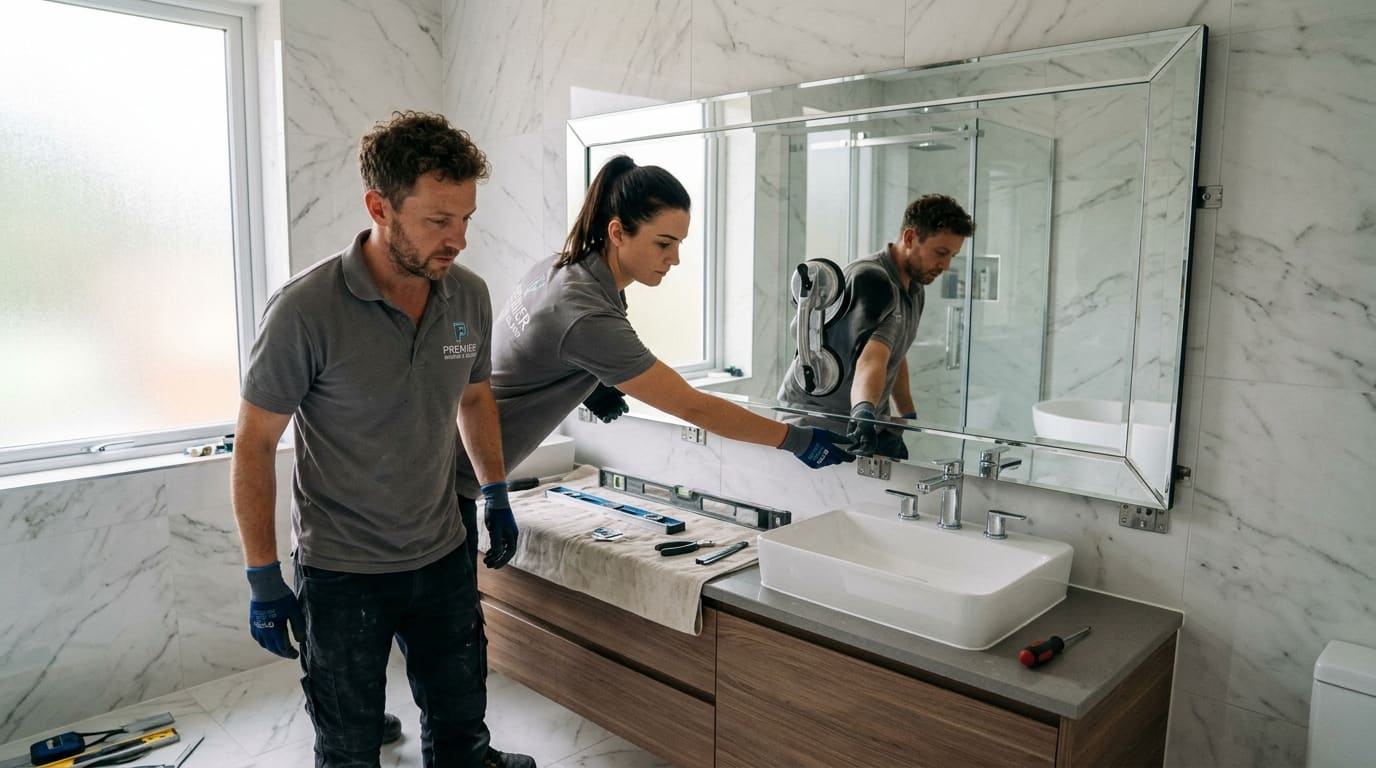
Mirror mastic adhesive combined with mirror clips is the professional standard for wall-mounted mirrors. Mastic alone is not recommended for large mirrors — the clips provide secondary support if the adhesive bond fails over time.
J-channel mounting is another option: a horizontal metal channel at the bottom of the mirror supports the mirror weight, with clips or mastic at the top. This allows for easy removal and replacement.
For very large mirrors (over 6 square feet), always use a combination of mastic, clips, and locate fasteners into wall studs. The weight of large mirrors requires secure anchoring into structural backing.
Bathroom mirrors should be positioned away from shower spray — moisture contact accelerates desilvering. If a large mirror must be near a shower, specify moisture-resistant (MR) grade mirror with sealed edges.
Need Help With Your Glass?
Send us a photo of your window or glass issue and get a free estimate within hours. Our experts serve all of DC, Maryland, and Virginia.
Common Questions
Frequently Asked Questions
Answers to common questions about this topic from our DMV glass experts.
Keep Reading
Related Guides
Related Services
Explore More Resources
Common Problems
Our Services
Ready to Get Started?
Get a free estimate from our glass experts. Same-day service available across DC, MD & VA.