Residential service 24/7 Emergency

Sliding Glass Door Repair & Replacementin DC, MD & VA

A slider that fights you every time you open it is almost never a glass problem — it is rollers, track or alignment. A cracked or fogged panel is a glass problem. We work out which one you have, then repair the running gear or replace the panel with safety glazing to code. Homes and businesses across DC, Maryland and Virginia.

  • 24/7 Emergency Service
  • DC · Maryland · Virginia
  • Free photo estimates

Bonded & Insured

Residential and commercial

24/7 Emergency

Seven days a week

Free Estimates

No obligation

Locally Owned

Residential and commercial

Upfront Pricing

Never an overtime charge

24/7

Emergency dispatch

DC/MD/VA

All three jurisdictions

Tempered

Safety glazing to code

Same-Day

Service available

Types we handle

Sliding Glass Door Repair: what we work on

Each of these is a different assembly with its own hardware, tolerances and code path. Drawings, not stock photos.

Sliding patio door, planOne fixed panel and one operating panel running in a two-track sill, meeting at the interlock stile.

Two-Panel Bypass

One fixed panel, one operating panel running past it on a second track plane — the standard slider in DMV homes, usually described as XO or OX depending on which side moves. Rollers, track, interlock, weatherpile, lock keeper and panel glazing are all serviced in place.

Multi-slide door, planOne fixed panel and one operating panel running in a two-track sill, meeting at the interlock stile.

Three and Four Panel

Wider openings where two or three panels stack behind a fixed light, or where two operating panels meet in the middle. More panels means more meeting stiles, more interlocks and more places for the alignment to go out. Each panel is set and adjusted independently.

Pocket door running into the wall, planOne fixed panel and one operating panel running in a two-track sill, meeting at the interlock stile.

Pocket Sliders

A panel that runs right into a wall cavity so nothing is left standing in the opening. Servicing one means working through the pocket access rather than pulling the panel out to the room, and the weatherpile inside the pocket is the part that is always overlooked.

Mirrored bypass closet doors, elevationTwo panels running past one another on a header track, hung from top rollers over a bottom guide.

Bypass Closet and Interior Sliders

Top-hung interior panels — mirrored wardrobe doors, glass room dividers — running on a header track over a floor guide rather than on sill rollers. Different hardware, same failure pattern: the hangers wear, the panel drops, and the leading edge starts catching.

Impact fracture, elevationRadial cracks running out from the point of contact, crossed by concentric rings closest to the strike.

Broken Panels

Safety glazing does not crack and wait for you. When a slider panel goes it dices, and the opening is gone. We secure it, template the sash, and glaze a replacement unit back into the original frame and hardware.

Failed sealed unit, section through the edgeA breach in the perimeter seal lets the gas fill escape and moist air in. Once the desiccant saturates, that moisture condenses on the cavity faces and the unit fogs.FOGGINGBREACH

Fogged Sealed Units

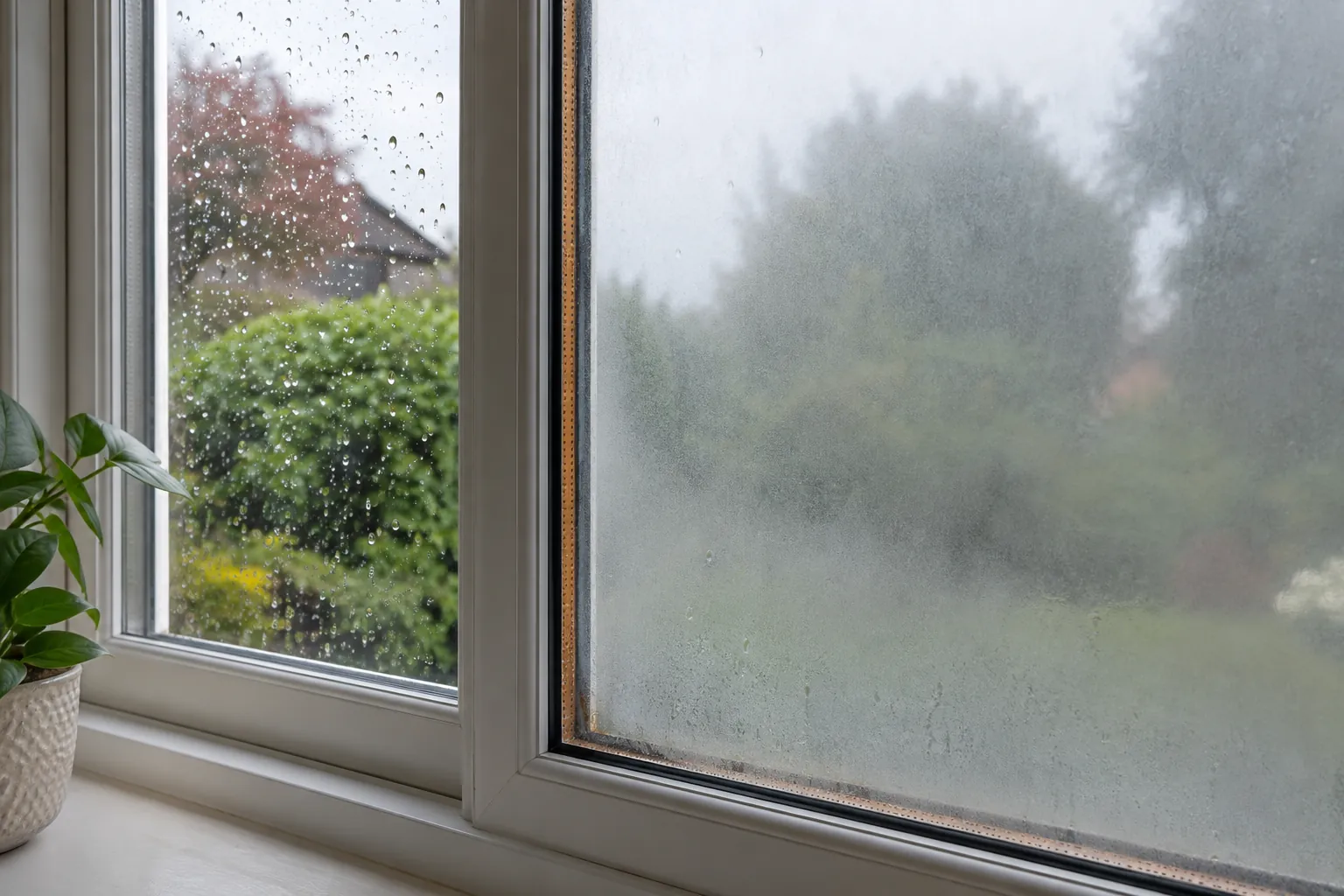
Haze, streaking or a tide line inside a slider panel means the perimeter seal has failed and the cavity is breathing. Because a door panel is a large lite in full sun, this is usually the first sealed unit in a house to go. Replaced as a unit, not resealed.

Every hour costs you more

Why you need sliding glass door repair now

Delaying repair doesn't save money — it multiplies the damage.

01

A panel off the track is an unlocked door

Once a slider has jumped its rib or dropped off its rollers, the hook on the lock no longer reaches its keeper and the panel can often be lifted straight out of the head channel from outside. The door looks closed from the room. It is not secured.

02

Every day it drags, it damages itself further

A dropped panel puts its whole weight on the bottom rail and the sill rib instead of on two wheels. The aluminium rib rolls over, the rail scores, and the corner of the glass takes load it was never meant to carry — which is where the crack starts.

03

The largest glazed opening in the house is the leakiest

A slider is usually the biggest single expanse of glass in a home, and it is the one with a moving joint down the middle of it. Compressed pile, a worn interlock and a failed sealed unit turn it into the room's main heat loss and the reason one end of the house never feels right.

What You Get

Sliding Glass Door Repair Benefits

Every service comes with our commitment to quality, speed, and transparency.

01

Diagnosis before parts

We work out whether the fault is running gear, alignment, seal or glass before anything is ordered. The wrong repair on a slider is a thorough way to change nothing.

02

Glazed into your existing frame

Where the sash and frame are sound, the panel is re-glazed rather than replaced. Your track, hardware, finish and opening size all stay exactly as they are.

03

Safety glazing to code

Sliding door panels are a hazardous location under IRC R308.4.1 and IBC 2406.4.1. Everything we glaze into one is tempered or laminated and carries its permanent designation.

04

Track restored, not replaced

A chewed sill rib usually takes a capping track rather than a new sill, which keeps the work inside a single visit and leaves your floor and threshold untouched.

05

Secured the same day

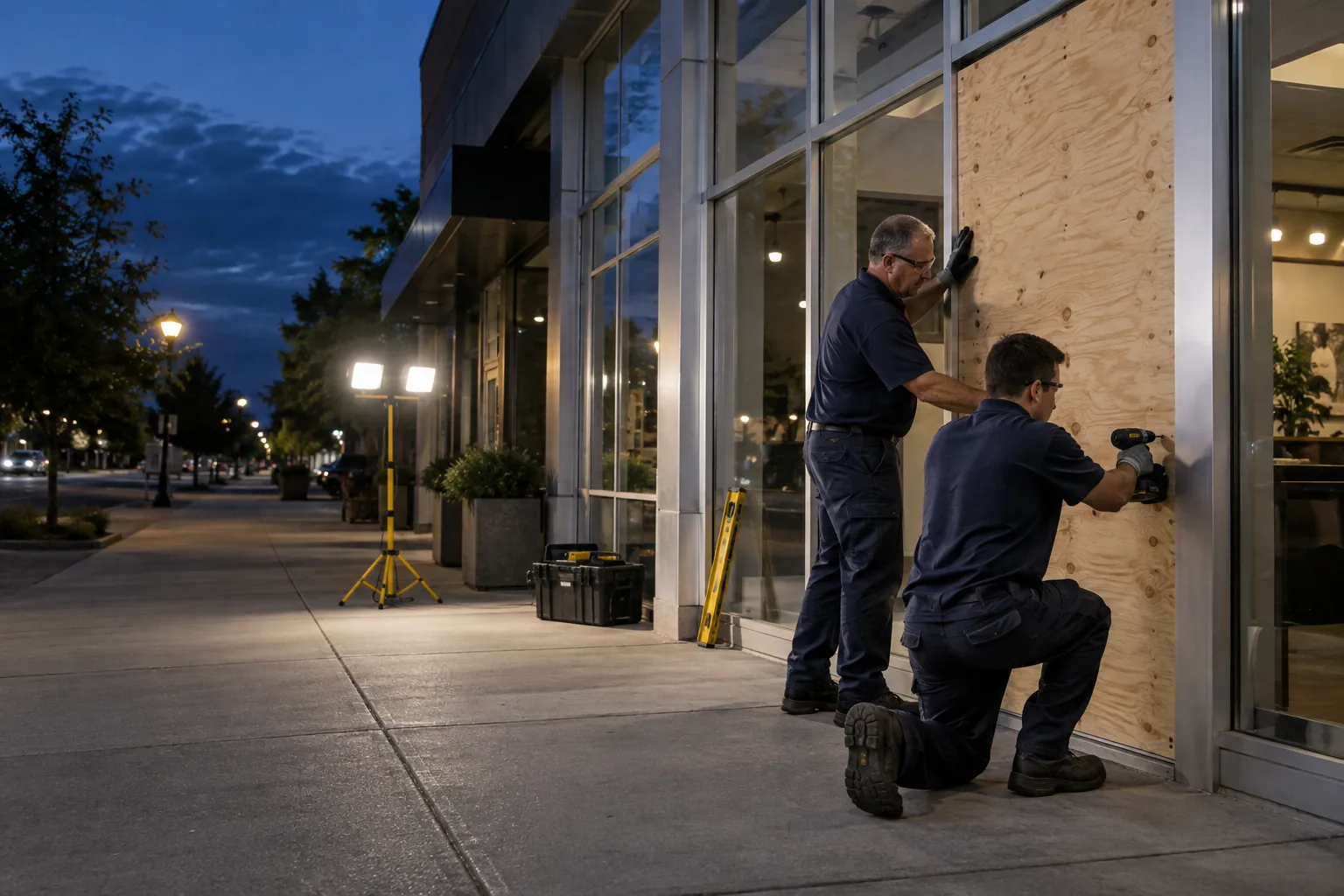
A broken slider leaves an opening the size of a doorway. We board it, then come back with the templated panel.

06

Low-E and laminated options

If the unit is coming out anyway, it is the moment to change the specification — a coating on surface two, an argon fill, or a laminated lite for street noise and forced-entry resistance.

Sliding Glass Door Repair on a job site in the DMV
Insulated glass unit, section through the edgeTwo lites of glass separated by an argon-filled cavity. The low-emissivity coating sits on surface two, the room side of the outboard lite. A warm-edge spacer holding desiccant is bedded on a primary seal, with a secondary seal closing the edge.1234EXTERIORINTERIORLOW-E COATING — SURFACE 2ARGON-FILLED CAVITYWARM-EDGE SPACER + DESICCANTSECONDARY SEAL
Sealed unit — edge section
The detail behind it

Specified before it is ordered

Every sliding glass door repair job starts with the assembly, not the pane. What the frame is, how the glass is captured, which code applies to that opening — those decide the specification, and the specification decides whether the repair lasts.

  • Safety glazing specified to the code for the opening
  • Same-day service for most jobs
  • Free photo estimates with no obligation
  • Bonded and insured, residential and commercial

Get a Free Sliding Glass Door Repair Estimate

Upload photos of the glass and we will come back with an itemized estimate. No home visit needed, no obligation.

Upload Photos Now
Our Process

How Sliding Glass Door Repair Works

A simple, transparent process from first contact to completed job.

01

Photos or a call

Send pictures of the door, the sill track and the bottom rail, or describe what it is doing. Heavy, skipping, rattling, fogged and broken all point somewhere different.

02

Diagnose on site

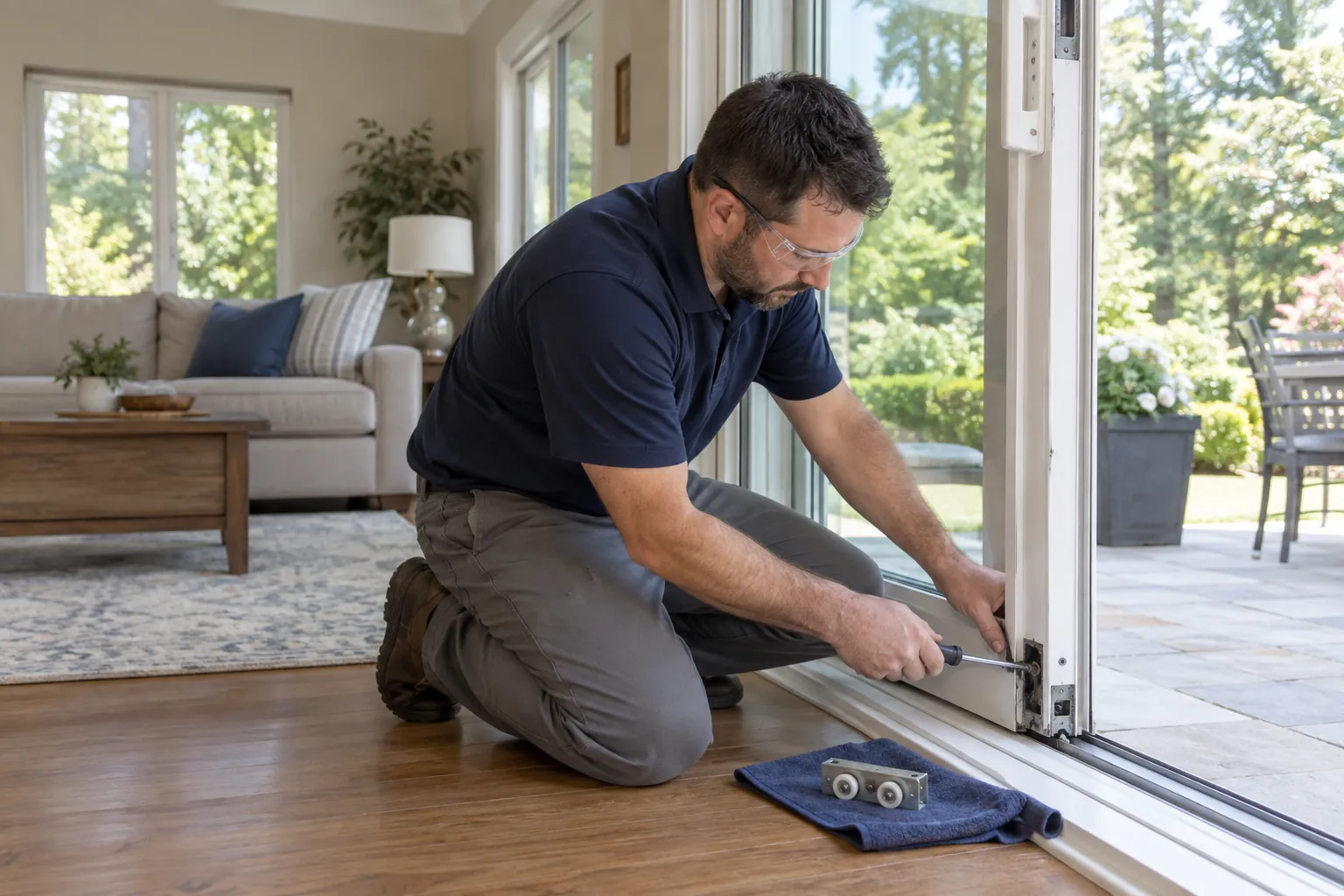
We lift the panel, look at the wheels, the rib, the interlock and the pile, and check the sash for square. That tells us whether this is a hardware visit or a glazing visit.

03

Repair or template

Running gear is repaired and adjusted on the spot. Glass is templated off the sash — every slider sash has its own tolerance and nothing about it is a stock size.

04

Fit, set and prove it

Panel back in, height set on the adjusters, lock and keeper aligned, pile and interlock checked, and the door run end to end with you before we leave.

The Transformation

Before & After Sliding Glass Door Repair

Before

Damaged, inefficient glass compromising safety and comfort.

After

Crystal-clear, professionally installed glass restoring beauty and performance.

Warning Signs

Signs You Need Sliding Glass Door Repair

The door takes two hands, or a shoulder, to move.
It skips, bumps or catches at the same point every time.
The panel has visibly dropped — a wedge of daylight at the top, dragging at the bottom.
The lock hook no longer lines up with its keeper.
You can see daylight down the meeting stile when the door is shut and locked.
The panel rattles in a wind, or whistles.
Water sits in the sill track after rain instead of weeping out.
The glass is hazy, streaked or has a tide line that will not clean off — from either side.
A crack running from a corner of the panel.
The panel can be lifted upward in its frame by hand.
The track has a bright rolled-over ridge, or grooves worn into it.
Roller wheels are visibly flat-spotted or seized when the panel is tipped out.

Why a sliding door gets heavy, and what actually fixes it

The panel rides on two tandem roller assemblies tucked into the bottom rail, each running on a raised rib formed into the sill track. Nothing about that arrangement tolerates grit. Sand and salt work into the rib, steel wheels flat-spot or seize on their bearings, and the rib itself starts to roll over under the weight of a panel that is no longer rolling. From the room this reads as a door that has simply become heavy, so people push harder, which accelerates all of it. The fix is a set of roller assemblies matched to the extrusion, a cleaned or capped track, and the panel height reset on the adjuster screws behind the plugs in the stile face. Squaring the panel at the same time is what brings the lock hook back into line with its keeper.

Why the panel can be lifted out at all

A slider is installed by lifting the panel up into the head channel and then swinging the bottom in over the sill rib. That means the head channel has to be deeper than the panel ever needs, and that spare depth stays there for the life of the door. Anti-lift blocks are small steel or plastic stops screwed into the head channel to take that clearance away once the panel is in. They are routinely missing, either never fitted or removed by a previous repair, and their absence is the single most common way a sliding door is defeated from outside. Fitting them takes minutes and is done as part of any roller or track service.

The interlock is the seal, and it is the part nobody names

Where the operating panel meets the fixed one, the two stiles are extruded as hooks that pass each other without touching, with a weatherpile bridging the gap. That joint is the air seal down the middle of the door. When the pile compresses, when the panel drops out of plumb, or when the interlock is bent by forcing a dragging door, you get a slot of daylight from top to bottom and a whistle in a north wind. New pile in both the jambs and the interlock, plus a squared panel, closes it. No amount of glass changes anything about this.

Repairing the hardware versus replacing the glass

These are separate jobs on the same door and they are constantly confused. Hardware faults — heavy operation, skipping, rattling, drafts, a lock that no longer engages, a panel that can be lifted — are solved by rollers, track, pile, interlock and adjustment, and the original glass never comes out. Glass faults — a cracked or shattered lite, or a sealed unit that has gone milky between the panes — are solved by glazing a new unit into the existing sash. They can of course both be true at once, and usually the hardware fault came first: a panel that has been dragging for two years is why the corner of the glass finally let go.
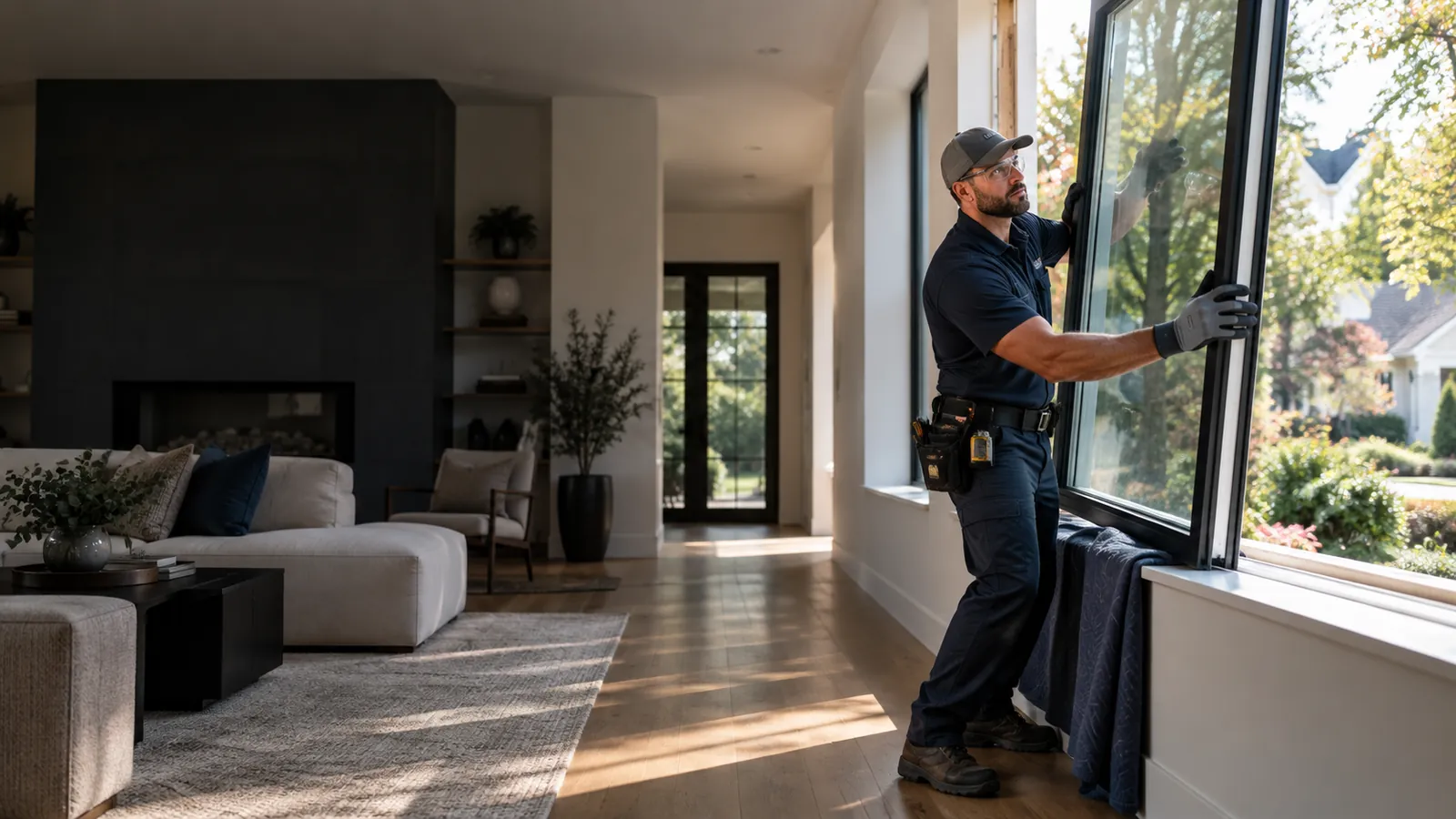

Tempered, laminated, and what the code requires

Under the International Residential Code as adopted across DC, Maryland and Virginia, section R308.4.1 makes glazing in all fixed and operable panels of sliding doors a hazardous location. Both leaves, including the one that never moves, must be safety glazing, and R308.1 requires each lite to carry a permanent manufacturer designation identifying the standard it was made to — CPSC 16 CFR 1201 or ANSI Z97.1. Commercial work follows the equivalent provisions at IBC 2406. Tempered glass is heat-treated so it breaks into blunt granules; laminated glass carries a plastic interlayer that holds the fragments in place. Both satisfy the code. Laminated is the better choice where street noise, solar fading or forced entry matter, because a broken laminated panel stays in the opening rather than emptying out of it.

Upgrading the specification while the unit is out

A slider panel is typically the largest single lite in a house and it usually faces a garden, which means it faces either the morning or the afternoon sun with nothing in front of it. When a unit is being replaced anyway, the specification is worth revisiting rather than matching by default. A low-emissivity coating on surface two — the inside face of the outer lite — reflects long-wave heat back out in summer while letting daylight through, and an argon fill with a warm-edge spacer reduces conduction through the cavity and keeps the edge of the glass warmer, which is what stops the perimeter condensation that ruins the paint on the sash. If noise is the problem rather than heat, a laminated inboard lite with an acoustic interlayer does more than any amount of extra cavity width.

Commercial and multi-family sliders

Balcony sliders in condominium and apartment buildings across the DMV are the same assembly under harder use, and they carry an extra layer of process: association rules on what the exterior may look like, restrictions on which face of the building may be worked from, and unit access that has to be scheduled. We work to matched panel appearance where an association requires it, and we can survey and stage a run of identical units so that a whole elevation is done in one mobilisation rather than one call at a time.

For Every Property

Residential & Commercial Sliding Glass Door Repair

Residential sliding glass door repair

Residential Sliding Glass Door Repair

Professional service for homes, condos, and townhomes across the DMV.

Commercial sliding glass door repair

Commercial Sliding Glass Door Repair

Serving offices, retail, restaurants, and buildings of any scale.

Common Questions

Sliding Glass Door Repair FAQ

No. Weight and stiffness are running gear, essentially every time. The panel rides on two tandem roller assemblies on a raised rib in the sill track, and once the wheels flat-spot, seize, or lose their adjustment the panel starts to bear on the rail instead of on the wheels. Grit in the track and a rib that has begun to roll over add to it. The repair is new roller assemblies, a cleaned or capped track, and the panel height reset on its adjusters — the glass never comes out.

Work we stand behind

See the work, then judge it

Virginia Glass Windows is locally owned and has been doing residential and commercial glass across Northern Virginia, DC and Maryland for over a decade. Bonded and insured, on call around the clock.

24/7 Emergency Service

Sliding Glass Door Repair Emergency? Call Now.

Call the dispatch line and we will get a crew out to secure the opening.

(703) 470-7867
Shop drawings

How a slider is actually put together

Four plates, drawn rather than photographed, because the parts that fail are the ones you cannot see from the room. If you know which of these has gone, you already know whether you need a repair or a new panel.

SD-01 · Two-panel slider — plan

Scale NTS

EXTERIORINTERIORpanel at the open positiontravelfixed panel — Ooperating panel — Xhooked meeting stiles + pileclear opening ≈ one panel wideTwo planes of glass, not one. Only the inner panel moves.IRC R308.4.1: both panels of a sliding door are safety glazing — the fixed one included.

SD-02 · Head and sill — section

Scale NTS

structural headerweeplift clearanceengagement1 · lift2 · swing the bottom clearanti-lift blockhead pile, both facestempered or laminated litetandem rollersill ribThe head is deeper than the panel needs. That gap is the door.

SD-03 · Tandem roller — true and worn

Scale NTS

A · RUNNING TRUEB · WORN AND DROPPEDadjusterroller housingtandem wheelsrail rides clearflat-spottedrib rolled overrail now dragsA door that has become heavy is running gear, not glass.Steel wheels cut soft aluminium. A capping track restores a chewed rib without touching the sill.A dropped panel is also why the lock stops meeting its keeper — and why the glass corner breaks next.

SD-04 · Panel make-up — edge section

Scale NTS

SEALED UNIT — EDGE SECTIONEXTERIORINTERIORargon1234Low-E coating on surface 2warm-edge spacer + desiccantbutyl primary, structural secondaryLose that seal and the cavity breathes. That is the fog,and drilling it out does not put the argon back.HOW IT BREAKStempered · dicesthe opening empties in one golaminated · holdsfragments stay on the interlayer

Repairing the hardware and replacing the glass are two different jobs

They get confused constantly, and the confusion wastes a visit in both directions — new glass will not fix a dragging door, and new rollers will not clear a fogged unit. Here is how the two sort out.

Hardware repair

It is heavy, it skips, it will not lock

Flat-spotted or seized rollers, a rib that has been rolled over by steel wheels, grit packed into the track, a panel that has dropped out of square. All of it is running gear. The glass is fine and stays where it is — we replace the roller assemblies, cap or replace the track, reset the panel height on the adjusters and re-pile the jambs and interlock.

Hardware repair

It rattles, draughts, or lifts out too easily

A worn interlock and compressed weatherpile leave a slot of daylight down the meeting stile. Missing anti-lift blocks leave the panel liftable from outside — the single most common way a slider is defeated. Both are hardware fixes, and both are worth doing at the same visit as the rollers.

Glass replacement

The panel is cracked or shattered

Sliding door panels are safety glazing under IRC R308.4.1, so a broken one has usually dropped into granules and left the opening wide open. We board the opening the same day, take the panel out, template it and glaze a new unit into the existing sash — the frame, track and hardware all stay.

Glass replacement

It has gone milky and will not clean

The haze is inside the sealed unit, between the lites, where nothing you can buy will reach it. The perimeter seal has failed and the cavity is breathing. The unit is replaced, not repaired — which is the moment to add a Low-E coating on surface two and an argon fill if the old one did not have them.

Looking for the patio door itself?

This page is about the door — the running gear, the track, the interlock and the panel that goes back into it. If what you want is the wider patio opening, including French, bi-fold, multi-slide and pocket systems and the glass options for each, that is covered separately.

Patio door glass

Tell us what the door is doing, not what you think it needs.

Heavy, off the track, rattling, fogged or broken — each one points somewhere different, and the diagnosis is what the visit is for.

(703) 470-7867

Ready for Sliding Glass Door Repair?

Upload photos for a free estimate, or call for same-day service. Bonded and insured across DC, Maryland and Virginia.