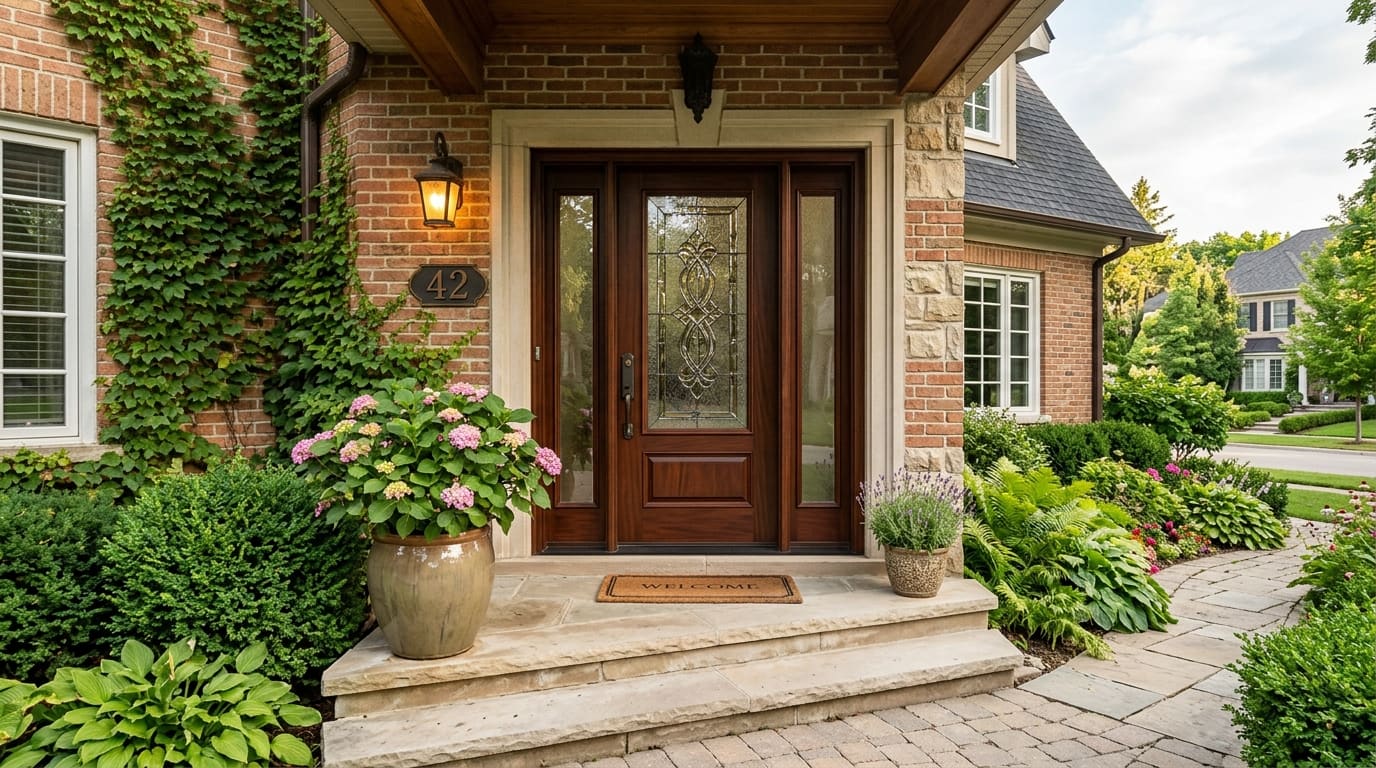
French Door Glass Replacement: Divided Lites, True Divided Lite, and Matching Historic Patterns
French door glass replacement is a project where getting the details wrong is very visible. Here is what you need to know about divided lites, true divided lites, historic pattern matching, and the replacement process.
Mike Reynolds
Lead Glass Technician & Owner
In This Article
Why French Door Glass Is Its Own Category
French doors come in more configurations and with more historically sensitive details than almost any other glass application in residential work. A standard double-hung window replacement is relatively forgiving — you need the right dimensions and glass specification and the result either looks right or it does not, and the evaluation is clear. French doors, especially in older DMV homes in Georgetown, Capitol Hill, Cleveland Park, and Old Town Alexandria, often have specific divided lite patterns that were original to the house and that define the character of the door in a way that a slightly wrong muntin profile or an incorrect glass type makes instantly visible.
I want to give you a realistic picture of what French door glass replacement involves — not just the technical aspects, but the judgment calls about matching, upgrading, and deciding what matters versus what is acceptable compromise. These are the questions I talk through with homeowners regularly, and they rarely get addressed in the generic "how to replace French door glass" content online, which typically treats all French doors as interchangeable.
Simulated Divided Lite vs True Divided Lite: Understanding the Difference
In a true divided lite (TDL) French door, each individual pane of glass is a separate piece, genuinely separated by the wood, aluminum, or steel muntin bars of the door construction. The muntins are structural elements, and there is actual air — or a separate frame — between each pane. In a simulated divided lite (SDL) door, the door is actually built around a single large glass unit, with decorative muntin grilles applied to the surface (and sometimes in the airspace of a double-pane unit) to simulate the appearance of individual panes. SDL construction has been the dominant approach in manufactured French doors for the past thirty years because it is easier to produce, achieves better thermal performance with a full IGU behind the decorative grilles, and is less prone to the individual small-pane seal failures that true divided lite double-pane construction creates.
Why does this matter for replacement? Because TDL and SDL doors require completely different repair approaches. In a TDL door, replacing a single cracked pane means removing that specific pane and its glazing compound, cutting a new pane to size, and re-glazing. The surrounding panes are unaffected. In an SDL door, a crack in what appears to be a single small pane is actually a crack in the full IGU behind the grilles — to fix it, you replace the entire IGU, which means removing the door from its frame, stripping the grilles, and installing a new full-unit IGU. This is more work than it appears from looking at the "small pane" that cracked. Understanding which type you have before you call for service helps calibrate expectations about cost and complexity.
Matching Historic Muntin Patterns in Georgetown and Capitol Hill
The French door patterns in pre-1940 Georgetown, Capitol Hill, and Old Town Alexandria rowhouses were not manufactured to today's standard sizes. The pane proportions, the muntin width, the glass thickness, and in some cases the glass type (original wavy or cylinder glass) are specific to the era and the craftsmen who built those doors. When one pane in a historic set breaks, you have a choice: replace with modern float glass (which is flat, colorless, and slightly different in thickness), or attempt a match of the original glass character.
For most Historic District properties in DC and Old Town Alexandria, the relevant question is what your historic preservation office or HOA requires versus recommends. DC's Historic Preservation Office has guidance on replacement glass in historic structures — in some cases, wavy or antique glass is required for visible street-facing panes. In other cases, flat modern glass is acceptable for interior-facing replacements. We have done matching work throughout Capitol Hill and Georgetown and have sources for reproduction wavy glass that meets historic appearance standards. If you are in a historic district and dealing with French door glass, it is worth a call to your local historic preservation office before proceeding, and worth working with a glass company that has done this type of matching work before.
Muntin profiles are the other matching challenge. Original wood muntins in pre-war doors were often custom-milled in profiles that are not available off the shelf today. If a muntin is damaged along with the glass, reproducing it requires either finding a millwork shop willing to run a custom profile or accepting a slightly different profile from available stock. For most interior French doors this is a minor aesthetic question. For street-facing historic district doors it is a more significant one, and we recommend documenting the original profile before any work begins so you have a reference for matching.
Upgrading to Double-Pane in Existing French Door Frames
One of the most common requests we receive for French doors in older DMV homes is upgrading from original single-pane glass to double-pane insulated units while retaining the existing door frame. This is achievable in SDL-style doors where the frame was designed around a full-unit glass panel — you remove the single-pane panel and install a thicker double-pane IGU, potentially with a slight frame modification to accommodate the added thickness. In true divided lite doors, this requires converting each individual pane to a mini IGU, which is mechanically possible but complex and often cost-effective only on high-value doors in prominent locations.
For most older DMV homes with true divided lite French doors, the more practical energy upgrade is thorough weatherstripping and frame sealing rather than glass replacement. The air infiltration around the frame and through the weatherstripping in old French doors typically dwarfs the thermal transmission through the single-pane glass in terms of heat loss. Fixing the infiltration first — which costs a fraction of glass replacement — often solves most of the comfort problem, and glass replacement can follow as a secondary project if additional thermal improvement is desired.
What the Replacement Process Looks Like
For a straightforward French door glass replacement — a cracked pane in an SDL door or a broken individual pane in a TDL door — the process is relatively quick once the glass is fabricated. We measure, fabricate the replacement unit (usually one to three business days for standard configurations, longer for custom or historic glass), and return to install. Installation time for a single pane in a TDL door is typically under an hour. For a full IGU replacement in an SDL door, plan on two to three hours including door removal, glass swap, and re-hanging. For any French door glass work in the DC metro area, call (703) 470-7867 — we will tell you upfront whether what you have is a quick repair or a more involved process.
About the Author
Mike Reynolds
Lead Glass Technician & Owner
With over 15 years of experience in window and glass repair across the DC, Maryland, and Virginia area, Mike shares practical expertise to help homeowners and businesses make informed decisions about their glass repair and replacement needs.
Need Help With Your Glass?
Our experts are ready to help with any window or glass issue. Free estimates, same-day service available across DC, MD & VA.
Related Articles
Continue reading about guides
 Tips & Tricks
Glass Safety for Pet Owners: What DMV Dog and Cat Owners Need to Know
 Tips & Tricks
Entryway Glass: Sidelights, Transoms, Storm Doors, and Getting the Balance of Light, Privacy, and Durability Right
 Guides
How to Tell If Your Window Glass Needs Repair or Replacement
More Guides
View AllHow to Tell If Your Window Glass Needs Repair or Replacement
8 min read
Stress Cracks in Windows: Causes, Prevention & Solutions for DMV Homeowners
7 min read
Foggy Windows: Why Double-Pane Seals Fail & What to Do About It
9 min read
Glass Replacement in Historic DMV Homes: Preservation Meets Performance
9 min readExplore More Resources
Helpful Guides
Common Problems
Related Pages
Our Services
24/7 Emergency
Board-Up & Glass
Licensed & Insured
DC, MD & VA
300+ Areas
DMV Coverage
Same-Day Service
When You Need It
Ready to Get Started?
Get a free estimate for any window or glass service across the DMV area.