Glass Cleaning and Care Tips from a DMV Glass Tech
After years of replacing glass damaged by improper cleaning and neglected maintenance, I put together the tips I wish every homeowner had before picking up a squeegee.
Mike Reynolds
Lead Glass Technician & Owner
In This Article
The Products That Are Quietly Wrecking Your Windows
This one is painful to talk about because I know how well-intentioned the people are who do it. I have replaced glass in houses that had been meticulously maintained — really cared-for homes — only to find that the "thorough cleaning" the homeowner was so proud of was actually the source of the damage. The culprits are almost always the same: abrasive cleaners, razor blades, hard bristle brushes, and ammonia-based glass cleaners on coated or tinted glass.
Ammonia sounds like the right thing. It cuts grease and it is in window cleaner, after all. But ammonia degrades the seal on double-pane units when it gets into the edge gap, and it dissolves some Low-E coatings if they are on the interior surface of a pane. If your double-pane windows are starting to show early seal failure — a slight haze that was not there before, subtle moisture intrusion — and you have been using ammonia-based cleaners, that could be contributing. For coated glass, Low-E glass, and any tinted glass, ammonia-free cleaner is not optional. It is the only thing you should ever use.
Razor blade scrapers are the other villain. A single pass with a razor blade on slightly gritty glass — and all exterior glass has some grit — leaves micro-scratches that are invisible individually but collectively create a haze that catches light and gradually looks like the glass is aging. I can tell within about ten seconds of looking at a window whether a razor blade has been used on it. If you have paint spots, tape residue, or other hard deposits, use a proper glass scraper with a fresh blade, keep the blade flat and lubricated with cleaner, and never drag it dry. Or call us — removing deposits without scratching is something we do regularly.
The Right Way to Clean Windows in the DMV
The actual technique is not complicated, but it matters. For exterior windows, start by rinsing the glass with a garden hose to remove loose grit and debris — this alone prevents most of the fine scratching that happens when you scrub a dry dirty window. Then use a soft microfiber cloth or a clean window washing sleeve with an ammonia-free glass cleaner. Work from top to bottom in overlapping vertical strokes. Finish with a good rubber squeegee — a 12-inch Ettore or Unger squeegee costs about fifteen dollars and outlasts every spray-and-wipe product sold at any hardware store.
For interior windows, the same principles apply with one addition: dry the edges carefully. Water that sits in the channel between the glass and the frame — especially in wood frames — promotes wood rot, paint failure, and seal degradation over time. A dry chamois or absorbent microfiber cloth along the perimeter after cleaning adds maybe thirty seconds and eliminates a genuine maintenance problem.
DMV-specific timing matters. Spring cleaning after pollen season (usually late April to early May) removes the layer of fine yellow pollen that coats everything. Late fall cleaning before winter removes the accumulated summer grime that would bake on over the freezing months. Avoid cleaning in direct summer sun — the cleaner dries before you can squeegee it and leaves streaks that take another round to remove. Overcast days or the shaded side of the house first are the professional's approach.
Hard Water Stains: The DMV's Particular Problem
The Washington area has moderately hard water — not the worst in the country, but hard enough to leave mineral deposits on glass from irrigation systems, sprinklers, and even rain running off concrete or masonry. These white haze spots are calcium and magnesium carbonate deposits that bond to the glass surface and cannot be removed with standard glass cleaner. I see them most on low-level windows next to landscaping beds and on any glass in range of irrigation heads.
For light mineral deposits, a solution of white vinegar and water (roughly 1:1 ratio) applied with a soft cloth and left to sit for a few minutes will dissolve the carbonate deposits without scratching. Rinse thoroughly and squeegee dry. For heavier deposits, a commercial calcium/lime/rust remover formulated for glass — I like CLR and Bring It On Cleaner for glass applications — handles what vinegar cannot. Apply according to the label, do not let it dry on the glass, and rinse completely.
What you should never do is use any abrasive cleaner — no Bar Keepers Friend, no Comet, no Magic Eraser on glass surfaces. All of these will micro-scratch the glass and create a dull haze that no cleaning will remove. Once the glass is scratched, the options are polishing (which removes a small amount of glass and works for very fine scratches only) or replacement. Neither is inexpensive. Prevention is vastly cheaper.
Seasonal Maintenance: A Quick Annual Checklist
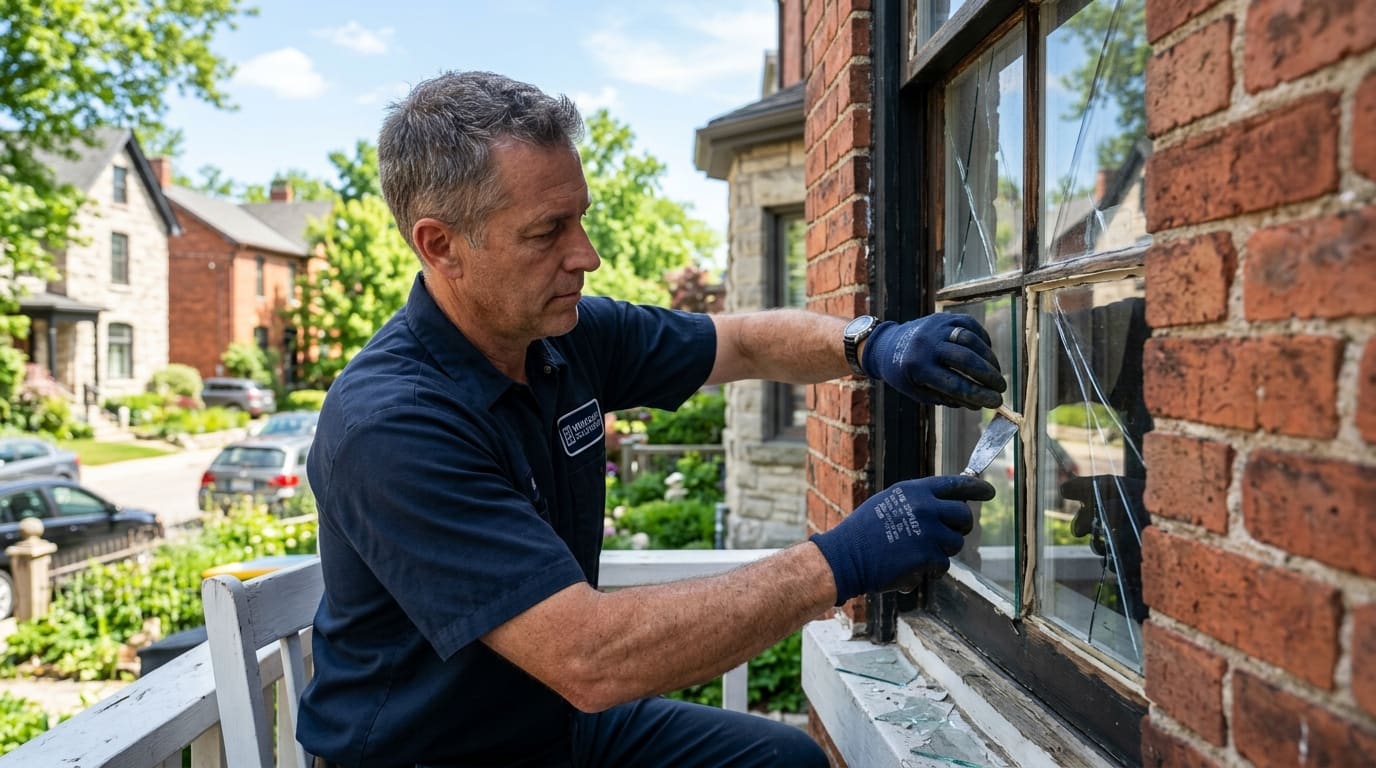
Beyond cleaning, there are a few things I recommend DMV homeowners check on their windows once a year — ideally in early spring before summer, when any damage from the winter is visible and there is still time to address it before the season. First, check the glazing compound or perimeter sealant around each glass pane. In older wood-frame windows common in DC and inner-ring Maryland suburbs, the putty glazing dries, cracks, and eventually detaches, leaving a gap where water can enter the wall. This is cheap and easy to re-do before it becomes a water damage problem.
Second, inspect the seal on double-pane units. Early-stage seal failure shows as a slight cloudiness or faint white haze in the middle of the glass that cannot be cleaned off from either side. This is moisture between the panes, meaning the hermetic seal has failed. It will not get better on its own, but catching it early lets you schedule replacement on your timeline rather than waiting until the fogging is severe enough to be urgent. Third, check the weep holes in the frame — the small slots at the bottom of window frames that allow any water that enters the frame to drain out rather than sitting and rotting the wood. In the DMV's humid summers, debris-blocked weep holes are a common source of unexplained moisture problems.
Any of these issues that you find, we can help with. A quick photo sent through our estimate form at (703) 470-7867 gives us enough to assess what is going on and what the repair or maintenance involves. We do a lot of small maintenance work — re-glazing, seal replacement, weep hole clearing — that keeps windows in good condition for years longer than they would otherwise last.
About the Author
Mike Reynolds
Lead Glass Technician & Owner
With over 15 years of experience in window and glass repair across the DC, Maryland, and Virginia area, Mike shares practical expertise to help homeowners and businesses make informed decisions about their glass repair and replacement needs.
Need Help With Your Glass?
Our experts are ready to help with any window or glass issue. Free estimates, same-day service available across DC, MD & VA.
Related Articles
Continue reading about tips & tricks
More Tips & Tricks
View All
Sound-Reducing Glass for Noisy DMV Locations: Airports, Highways & Metro Lines
7 min read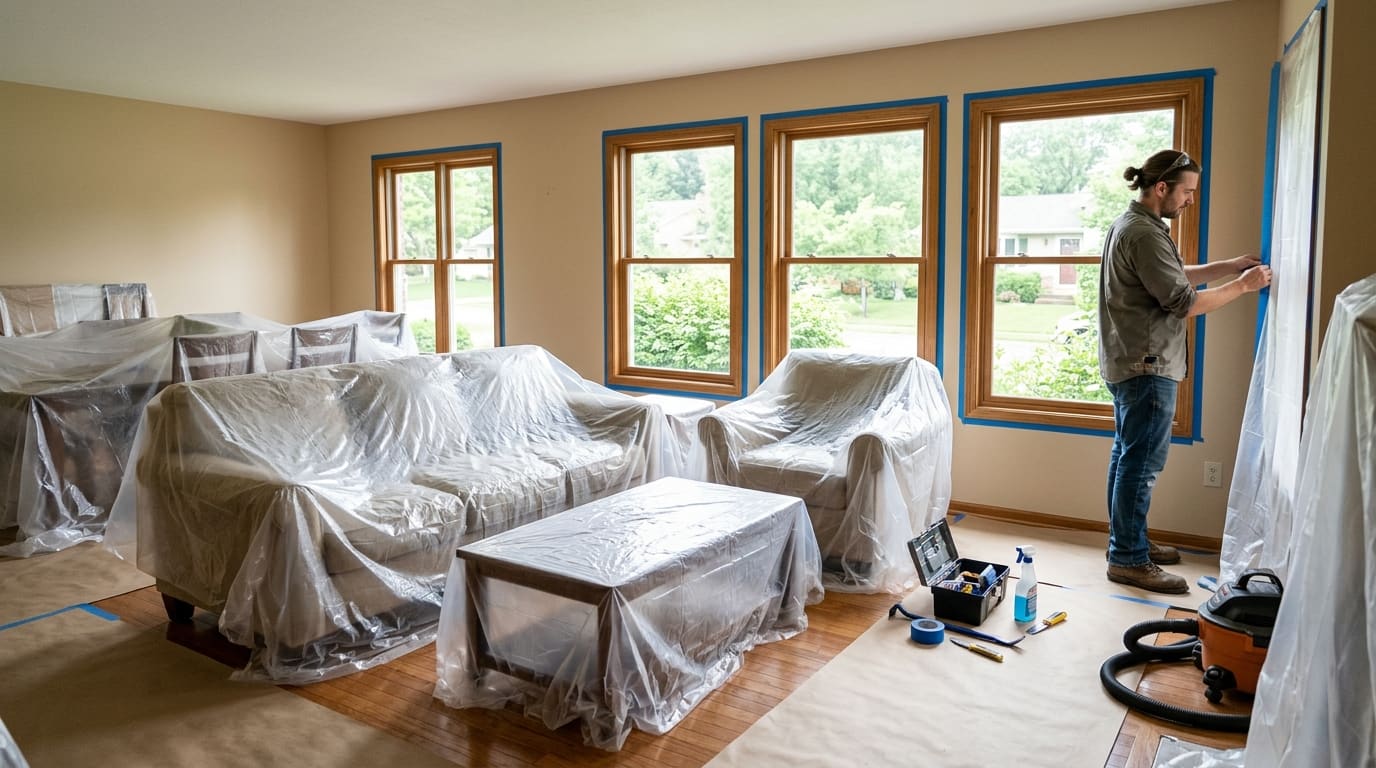
Preparing Your Home for Window Glass Replacement: A Homeowner's Guide
5 min read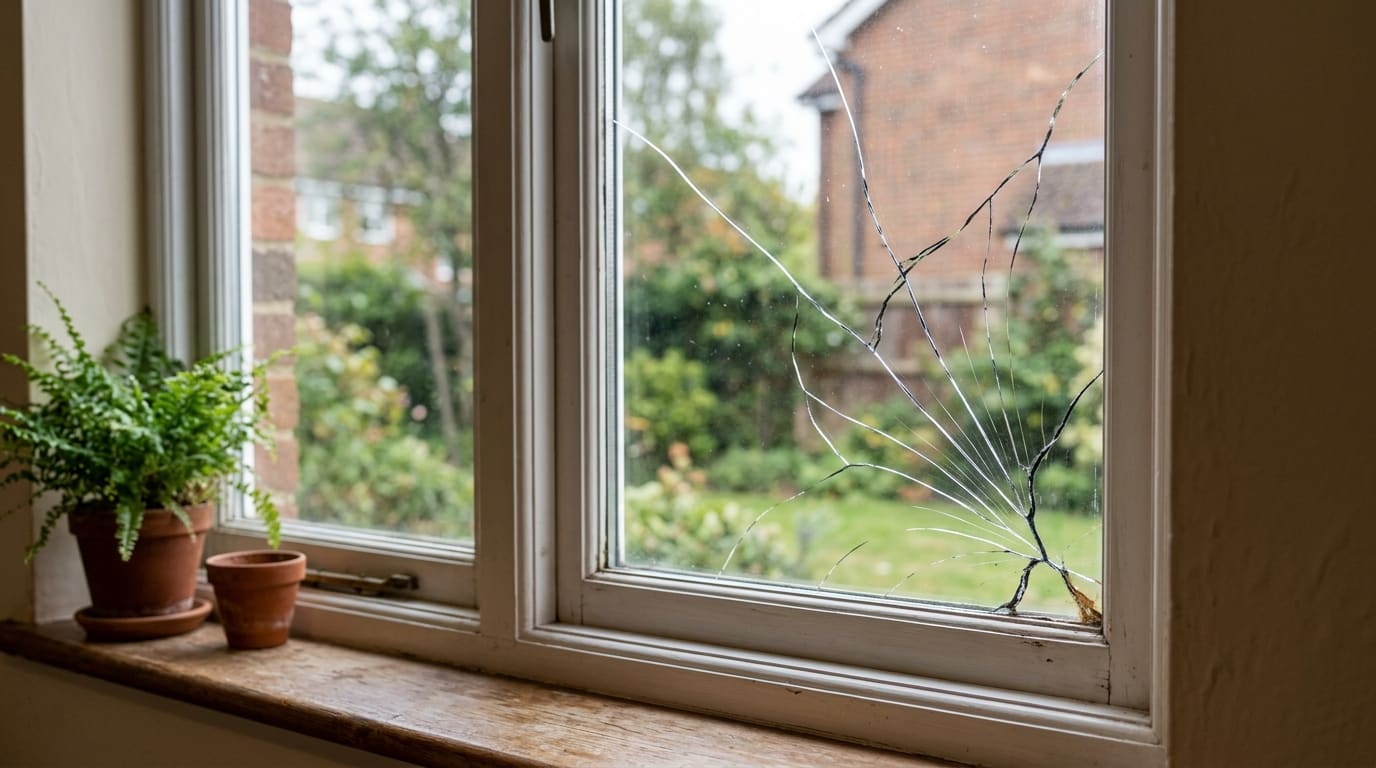
What Causes Window Glass to Crack Without Impact? 7 Common Causes
6 min read
Shower Door Glass: Frameless vs Framed Options for DMV Bathrooms
6 min readExplore More Resources
Helpful Guides
Common Problems
Our Services
24/7 Emergency
Board-Up & Glass
Licensed & Insured
DC, MD & VA
300+ Areas
DMV Coverage
Same-Day Service
When You Need It
Ready to Get Started?
Get a free estimate for any window or glass service across the DMV area.