Window Glass in DC Historic Districts: Navigating Preservation Rules Without Sacrificing Performance
Working on a rowhouse in Georgetown, a Victorian in Capitol Hill, or a colonial in Old Town Alexandria means navigating historic preservation rules that are stricter than most homeowners expect. Here is what you actually need to know about glass replacement in protected neighborhoods.
Mike Reynolds
Lead Glass Technician & Owner
In This Article
The Scope of Historic Preservation Glass Rules in the DMV
The Washington DC metropolitan area has more designated historic districts than almost any comparable metro area in the country. Between the DC Historic Preservation Office, the Maryland Historic Trust, the Virginia Department of Historic Resources, and dozens of locally designated historic districts in jurisdictions like Alexandria, Annapolis, Rockville, and Frederick, a significant percentage of the DMV's older housing stock sits in some form of preservation overlay that governs what you can do with windows and glass.
The rules vary considerably between jurisdictions and even between individual district designations. Georgetown's historic district is among the stricter in the region; Capitol Hill has established guidelines that are enforced with varying consistency; Old Town Alexandria has detailed preservation standards; the Maryland National Capital Park and Planning Commission historic overlays in Montgomery and Prince George's Counties have their own framework. If you are not certain whether your property is in a designated historic district, the first step is checking with your local historic preservation office before ordering any glass or scheduling any work.
What Historic Preservation Rules Typically Govern
Most historic preservation guidelines for windows focus on maintaining the visual character of original windows as seen from the street — what preservationists call the "primary facade." The elements most commonly regulated are: the overall window opening size and shape (which cannot be changed), the number and arrangement of window panes (the muntins grid pattern), the material and profile of the window frame, and the glass itself.
Glass regulations in historic districts typically prohibit or restrict: reflective glass that changes the visual character of the facade; colored glass that alters the building's appearance; thick insulated glass units visible from the street if the original window used single-pane glass in a profile that cannot accommodate the additional thickness; and full window unit replacement with products that have different sightline widths, muntin profiles, or frame materials than the original.
What most historic regulations do not prohibit: replacing deteriorated glass with new glass of the same visual appearance, upgrading to Low-E glass that looks visually identical to clear glass from the exterior, replacing failed insulated glass units with new IGUs of the same dimensions in windows already set up for double-pane glass, or secondary interior storm window systems that do not alter the primary facade's appearance.
Wavy Glass and Historic Authenticity
One of the most distinctive features of 19th and early 20th century glass is its slight waviness and surface variation — the product of the cylinder or crown glass manufacturing processes used before flat float glass became universal in the mid-20th century. In the most stringent historic preservation contexts — National Historic Landmarks, prominently visible original windows in high-character historic districts — there can be pressure or requirements to use restoration glass that replicates these visual characteristics.
Restoration glass is manufactured specifically to replicate historic glass appearance while meeting modern safety and cutting tolerances. It is available from specialty suppliers and it is more expensive than standard float glass. For most DMV historic district work, standard clear float glass is acceptable — the preservation office is typically concerned with the overall window character, not whether the glass has period-accurate waviness. But if you are working on a high-profile property or a building with particular historic significance, ask the historic preservation office about glass appearance requirements before ordering.
We have sourced restoration glass for projects in Georgetown and Capitol Hill where the historic commission specifically requested period-appropriate glass character on prominent primary facade windows. It is more involved logistically and takes longer to fabricate, but it is entirely achievable. Send us photos if your project involves this level of historic authenticity requirement.
Thin Double-Pane Units for Historic Sash
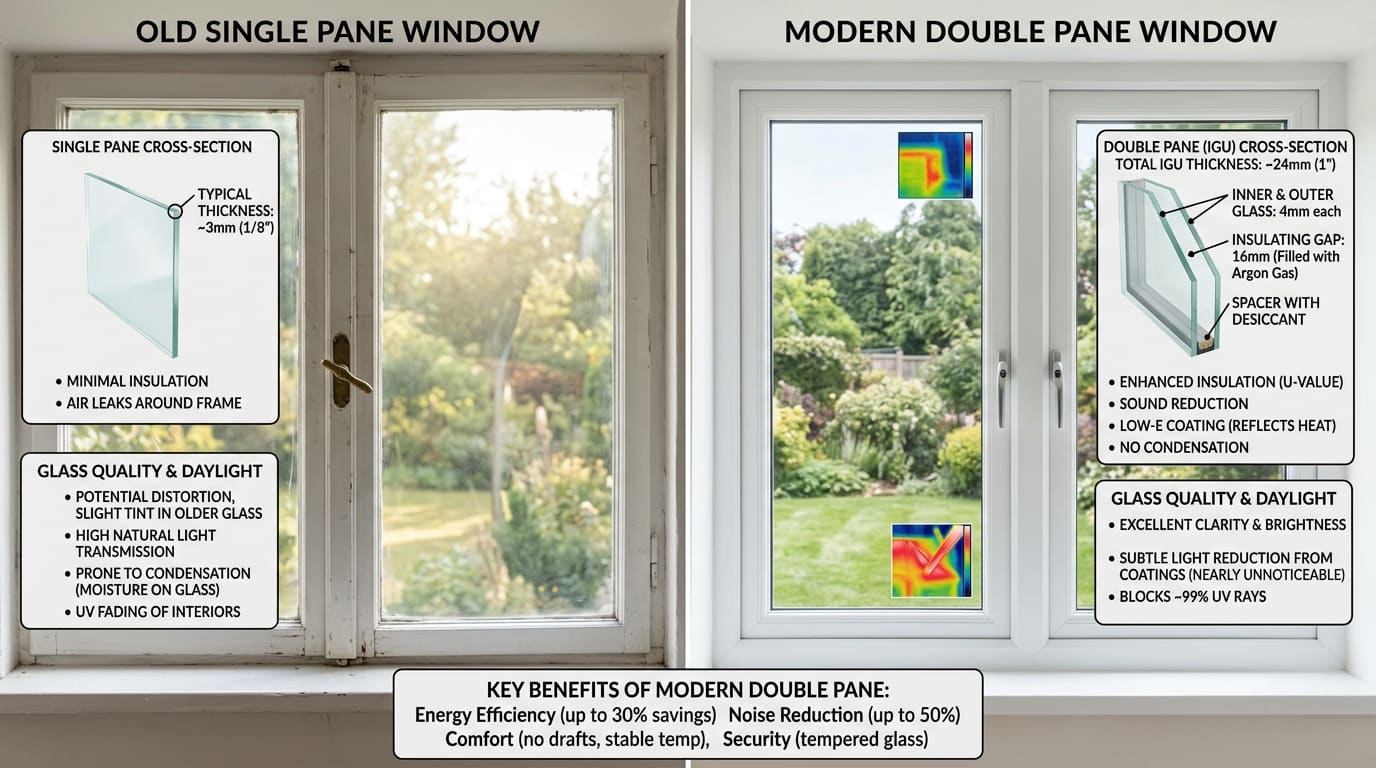
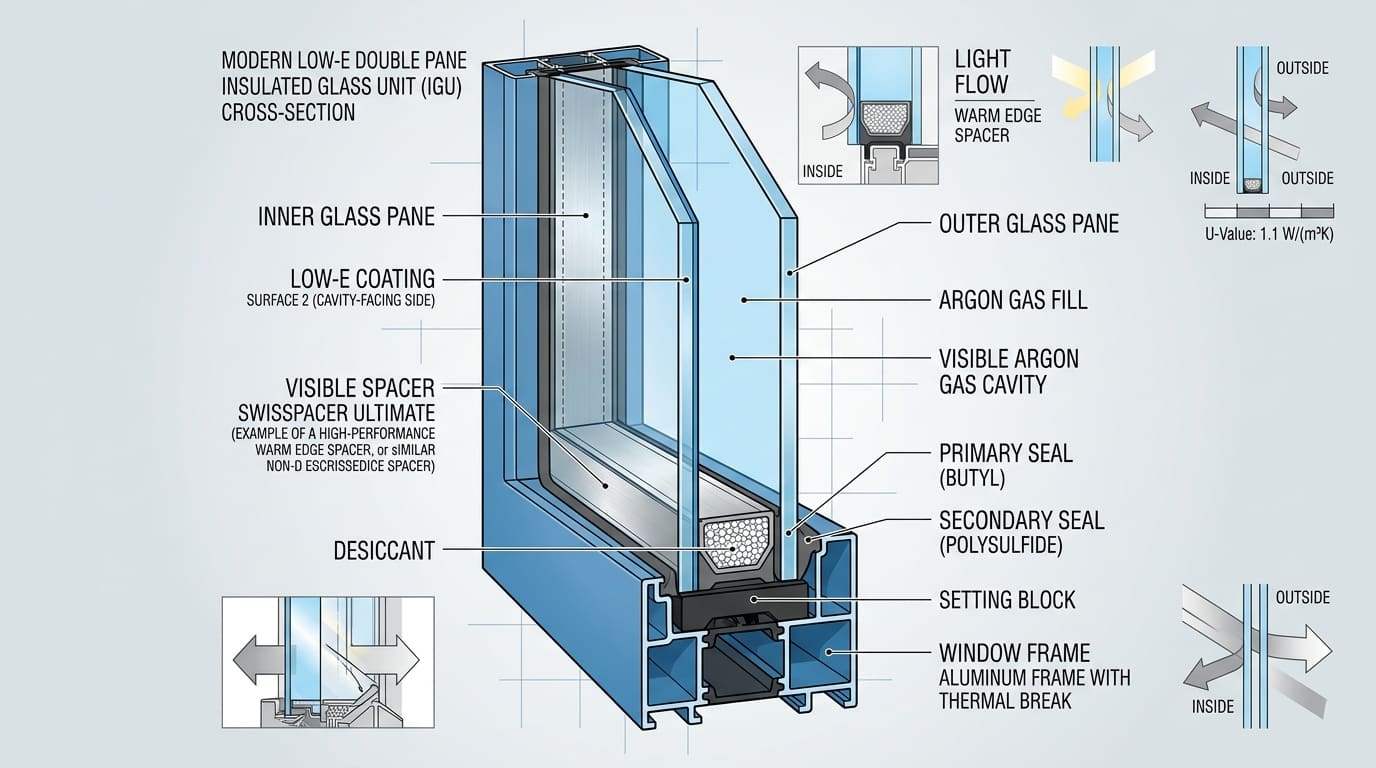
The most common technical challenge in historic district glass work is fitting insulated glass units into single-pane window sash that was not designed for the thickness of a standard IGU. A standard residential IGU is 7/8 inch to 1 inch thick. Many historic wood sash windows have glazing rebates designed for 1/8 inch to 3/16 inch single-pane glass — there is simply not enough depth in the frame channel to accommodate a standard IGU.
The solution is thin IGUs — specialized insulated glass units built with thinner glass lites (3mm or even 2.5mm each versus the standard 3mm to 6mm) and a narrower spacer bar. Thin IGUs can be manufactured in overall thicknesses of 5/8 inch or even 1/2 inch, which fits into many historic sash profiles that cannot accept standard units. Performance is reduced compared to a full-thickness IGU — the thinner spacer means less gas fill depth and reduced thermal resistance — but it is dramatically better than single-pane glass while being visually nearly identical from the exterior. For historic district work where the visual character of the original sash must be preserved, thin IGUs are often the right technical solution.
Secondary Storm Windows: The Non-Invasive Solution
Interior secondary storm windows are a preservation-friendly option for improving the thermal performance of historic single-pane windows without altering the primary facade at all. A properly fitted interior storm panel — either a rigid acrylic or glass insert that fits within the existing window opening on the interior side — can improve the overall window system's insulating performance significantly while being completely invisible from outside the building.
This approach is widely accepted by historic preservation offices precisely because it makes no alteration to the historic fabric. The original window remains completely intact and unaltered; the interior storm is a reversible addition. For homeowners in the DMV's strictest historic districts who want better energy performance without the complexity of navigating permit approvals for exterior window changes, interior storm windows are often the most straightforward path.
Working With the Historic Preservation Office
Before any window work in a designated historic district, the practical sequence is: check whether your specific property requires a Certificate of Appropriateness (COA) for the proposed work, understand what the relevant guidelines require, and if there is any uncertainty, schedule a pre-application consultation with the local historic preservation office before ordering materials.
Most routine glass replacement — replacing broken or fogged glass with new glass of the same visual character — does not require a COA in most jurisdictions. Full window unit replacement almost always requires one. The gray areas are where pre-consultation saves time and money. We have worked with clients on COA applications in DC, Alexandria, and Montgomery County and can advise on what documentation and specifications are typically required. Having a glass contractor who understands the preservation process makes these projects significantly less complicated.
For glass work in any DMV historic district, call us at (703) 470-7867 to discuss your specific situation. We will tell you honestly what requires a preservation permit and what does not, and we can help navigate the process when approvals are needed. See our historic window preservation guide for additional detail on district-specific requirements.
About the Author
Mike Reynolds
Lead Glass Technician & Owner
With over 15 years of experience in window and glass repair across the DC, Maryland, and Virginia area, Mike shares practical expertise to help homeowners and businesses make informed decisions about their glass repair and replacement needs.
Need Help With Your Glass?
Our experts are ready to help with any window or glass issue. Free estimates, same-day service available across DC, MD & VA.
Related Articles
Continue reading about guides
 Guides
Vinyl vs. Wood vs. Aluminum Windows: Which Frame Material Is Right for Your DMV Home?
 Energy Efficiency
When to Upgrade from Single-Pane to Double-Pane Windows in the DMV
 Energy Efficiency
Energy-Efficient Glass Upgrades for DMV Homes: Low-E, Argon & Beyond
More Guides
View All
How to Tell If Your Window Glass Needs Repair or Replacement
8 min read
Stress Cracks in Windows: Causes, Prevention & Solutions for DMV Homeowners
7 min read
Foggy Windows: Why Double-Pane Seals Fail & What to Do About It
9 min read
Glass Replacement in Historic DMV Homes: Preservation Meets Performance
9 min readExplore More Resources
Helpful Guides
Common Problems
Related Pages
Our Services
24/7 Emergency
Board-Up & Glass
Licensed & Insured
DC, MD & VA
300+ Areas
DMV Coverage
Same-Day Service
When You Need It
Ready to Get Started?
Get a free estimate for any window or glass service across the DMV area.