Glass Safety Codes for DC, MD & VA: What You Need to Know
Understanding glass safety codes prevents code violations and injury. Virginia Glass Windows explains the key safety glazing requirements for homes and businesses in the DMV area.
Why Safety Glazing Codes Exist
Standard annealed glass breaks into large, extremely sharp shards that cause serious lacerations. Safety glazing requirements — mandating tempered or laminated glass in hazard locations — have dramatically reduced glass-related injuries in buildings since their introduction in the 1970s.
DC, Maryland, and Virginia all adopt versions of the International Building Code (IBC) and International Residential Code (IRC) that include safety glazing requirements. Understanding these requirements helps homeowners and businesses make informed decisions and avoid code violations.
Required Safety Glazing Locations
The following locations require safety glazing (tempered or laminated) in residential construction in DC, Maryland, and Virginia:
All glass in doors (including swinging, sliding, and bifold doors), sidelights within 2 feet of a door and less than 60 inches from the floor, and stair railings and enclosures.
Shower and bathtub enclosures of any kind. This includes fixed glass panels, shower doors, and tub enclosures.
Glass within 18 inches of a walking surface (floor) and within 3 feet of a door edge.
Skylights and overhead glazing.
Windows in gymnasiums, athletic facilities, and areas where play activities occur.
Commercial Safety Glazing Requirements
Commercial buildings have additional requirements beyond residential codes. All glass in areas subject to human impact — including lobby glass, glass partitions, and storefront systems — must be safety glazed.
Commercial building codes also specify minimum glass thicknesses, design loads (wind pressure requirements), and seismic requirements for glass installations. DC, as a dense urban area with significant wind loads from high-rise developments, has specific requirements for facade glass.
Overhead glass in commercial applications (skylights, glass roofs, atria) must use laminated glass to prevent fall-through after breakage. This is more stringent than the residential requirement for overhead glazing.
Verification and Compliance
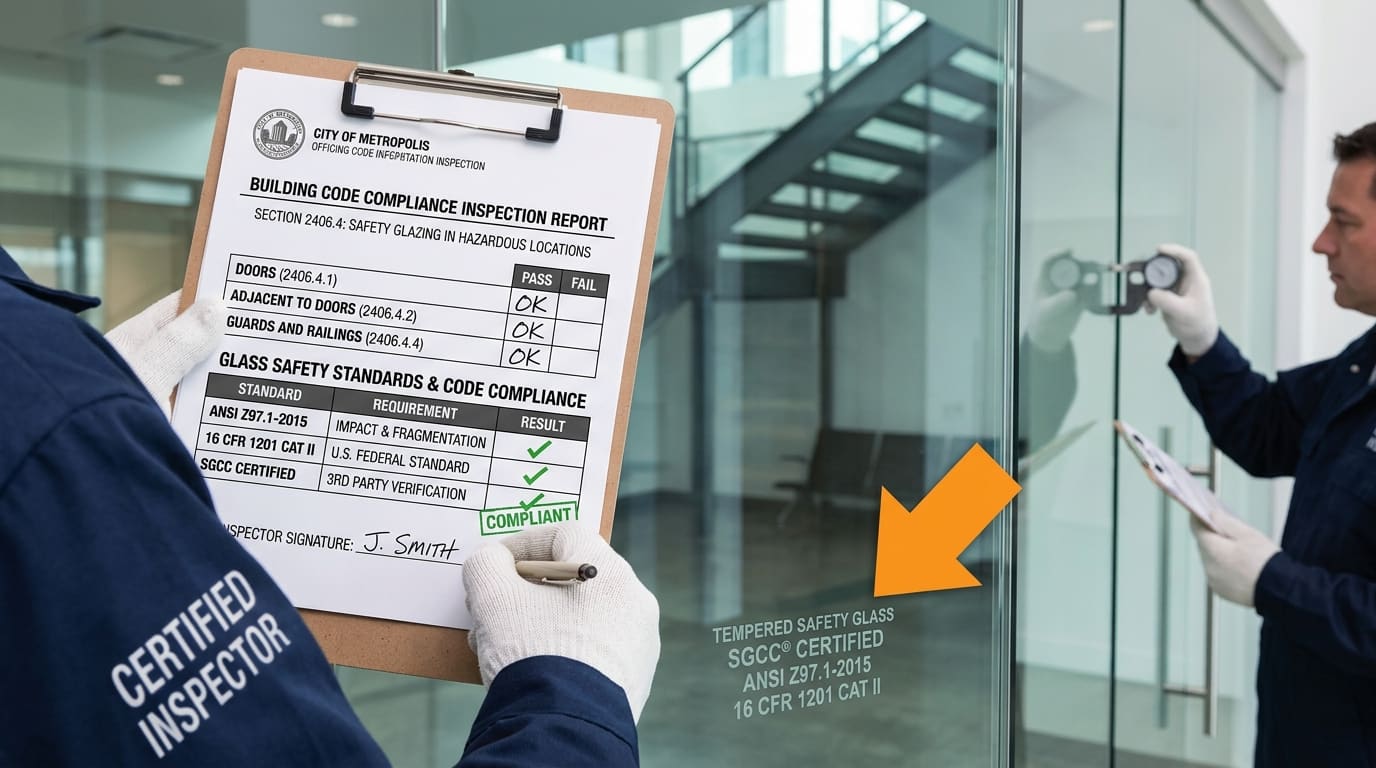
Safety glazing must be identified by an etched or labeled mark in the corner of each glass pane. This mark includes the product standard (ANSI Z97.1 or CPSC 16 CFR 1201), the manufacturer, and the product class.
When purchasing replacement glass, always specify safety glazing for hazard locations and verify that the glass you receive is marked appropriately. Virginia Glass Windows provides properly certified safety glass for all code-required applications.
Code compliance ultimately rests with the building owner and contractor. When in doubt, use safety glazing — the cost difference is modest and the safety benefit is significant.
Need Help With Your Glass?
Send us a photo of your window or glass issue and get a free estimate within hours. Our experts serve all of DC, Maryland, and Virginia.
Common Questions
Frequently Asked Questions
Answers to common questions about this topic from our DMV glass experts.
Keep Reading
Related Guides
Explore More Resources
Related Articles
Common Problems
Related Pages
Our Services
Ready to Get Started?
Get a free estimate from our glass experts. Same-day service available across DC, MD & VA.