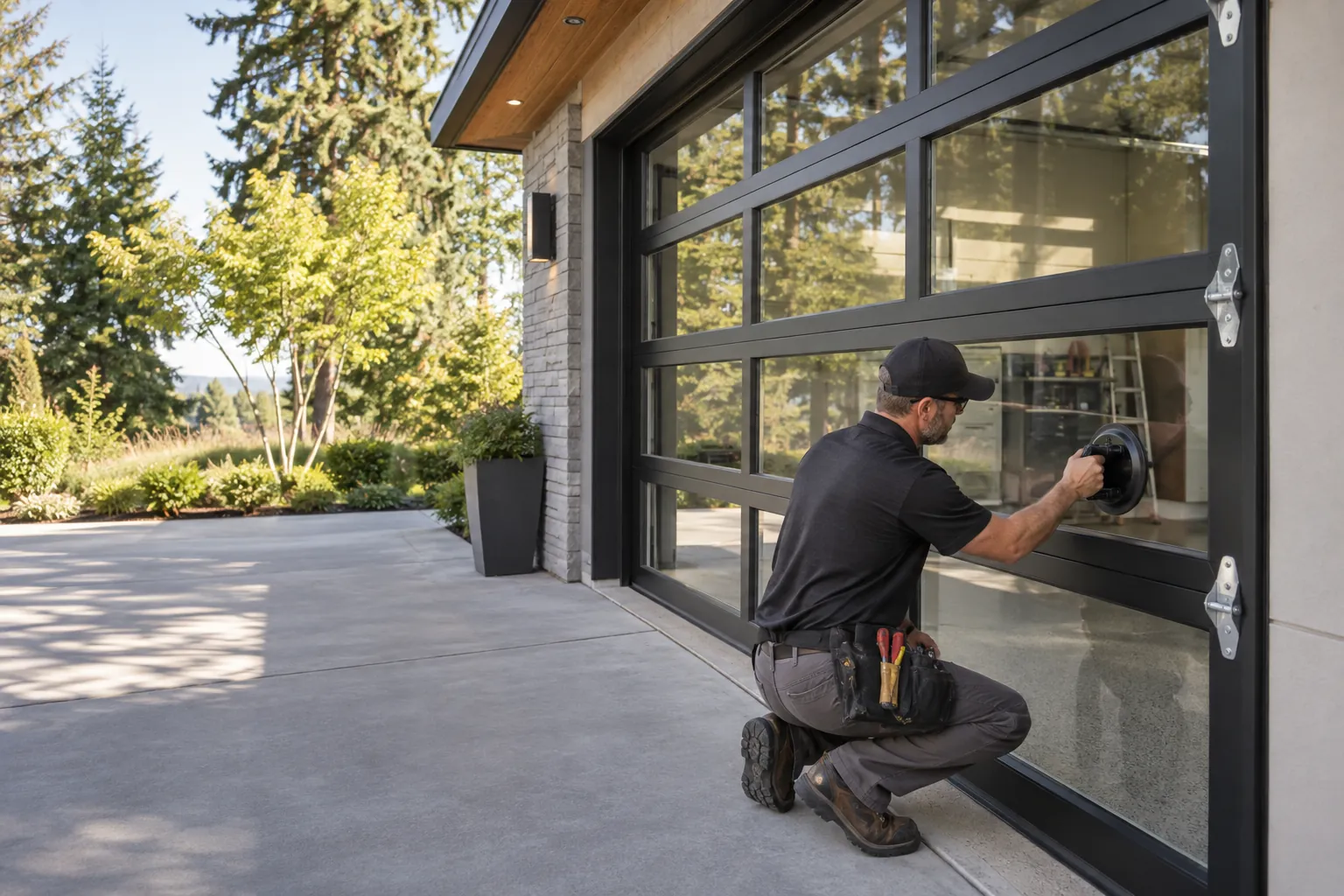
Garage Door Glass Panel Replacement: What DMV Homeowners Need to Know
Garage door glass panels take a specific kind of abuse — vehicle exhaust, temperature swings from the attached garage to the outdoors, and the occasional errant basketball. Here is the full picture on replacement options for the DMV.
Mike Reynolds
Lead Glass Technician & Owner
In This Article
Garage Door Glass Panel Basics
Modern residential garage doors are typically sectional — composed of horizontal panels that hinge together and ride on tracks as the door opens and closes. Glass panels, when present, are installed in one or more of these horizontal sections, usually the top section closest to the door header or in multiple sections for full-lite designs. The glass lights in these panels range from small rectangular inserts to full-width panels spanning the width of the door section.
The frame holding the glass within the door panel is a separate component from the door panel structure itself. In most residential garage doors, the glass frame is held by clips, screws, or a snap-in retainer that allows the glass to be replaced without replacing the entire door panel. This is important because it means a cracked or broken glass panel often does not require door panel replacement — just the glass itself.
However, not all garage door glass is interchangeable. The glass thickness, width, and frame profile vary significantly between door manufacturers and door age. Before ordering replacement glass, the frame profile dimensions need to be measured carefully to ensure the new glass fits the existing retainer system.
Safety Glazing Requirements
Building codes in DC, Maryland, and Virginia all require safety glazing in garage door panels. The International Residential Code (IRC), which all three jurisdictions have adopted with local amendments, specifies that glazing in garage doors must be safety glazing — either tempered glass, laminated glass, or wire glass meeting the applicable CPSC standard (16 CFR 1201 or ANSI Z97.1).
This is a non-negotiable requirement, not an upgrade recommendation. If someone offers you annealed (standard) glass for a garage door panel replacement, that is a code violation and a safety issue. Standard glass in a garage door panel that fails under impact creates large, extremely sharp shards — the kind that cause serious lacerations. Tempered glass breaks into small rounded fragments. We install only code-compliant safety glazing in all garage door glass work.
Most garage door manufacturers specify tempered glass in their original door construction. If you are replacing glass in a garage door and the original glass was tempered, the replacement must also be tempered. Clear float glass of the same thickness will fit but is not code-compliant and creates a liability issue if someone is subsequently injured by the non-compliant glass.
Insulated vs. Non-Insulated Panels
For attached garages — where the garage shares a wall with living space — insulated glass panels make a meaningful difference in the thermal performance of the garage. An attached garage in the DMV without insulation is a significant thermal bridge into the home; in mid-winter, garage temperatures in uninsulated attached garages regularly drop to 30-40°F, and in August they can reach 110-120°F on the south and west sides of the home.
Insulated garage door glass panels are double-pane IGUs in the same frame as standard single-pane panels. They cost more but reduce heat loss and heat gain through the garage door glass area. For attached garages where the homeowner is trying to improve the overall thermal envelope of the home, insulated glass panels are worth specifying. For detached garages, the thermal benefit is less compelling unless the garage is conditioned (heated or cooled).
Several garage door manufacturers have insulated glass panel upgrade kits that replace the standard single-pane glass inserts in existing door panels. These are worth exploring if your current door has the right frame profile to accept the insulated unit.
Common Garage Door Glass Damage Scenarios
The most common garage door glass failure we see in the DMV is thermal stress fracture — a crack that starts at the edge of a panel and runs inward, without any obvious impact cause. This is particularly common in south and west-facing garage doors where the glass faces intense summer afternoon sun. The mechanism is the same as thermal stress failure in any window: the center of the glass heats up in direct sunlight and expands while the edges, shaded by the frame, remain cooler. The resulting stress fracture typically runs diagonally from a corner.
Impact damage — from basketballs, debris, and vehicle backs — is the second most common cause. Garage doors in neighborhoods where kids play basketball in the driveway are in a high-risk environment for this. If the garage door glass is broken repeatedly by the same activity, a polycarbonate insert is worth considering over glass — polycarbonate is impact-resistant, though it yellows over time and scratches more easily than glass.
Hail damage to garage door glass is less common than in other regions but does occur in the DMV during severe thunderstorm seasons. Large hail — golf ball size or larger — can break tempered glass; smaller hail typically does not. If you have hail damage to multiple glass panels after a severe storm, document the damage for a homeowner's insurance claim before having repairs done.
The Replacement Process
Replacing a garage door glass panel typically takes 1-2 hours for a standard single-panel replacement and involves removing the door panel from the door (or working on it in place if the retainer system allows), extracting the damaged glass and frame components, installing the new glass in the frame, and reinstalling the panel. For multi-section doors with multiple glass panels, we typically work through one section at a time.
For custom-size garage door glass — older doors with non-standard panel dimensions, or high-end doors with unusual profiles — we fabricate the replacement glass to the measured dimensions. Lead time for custom tempered glass is typically 3-7 business days. For standard sizes, we maintain stock of the most common residential garage door glass sizes and can often complete same-day or next-day replacement.
If you have broken garage door glass panels in the DMV area, send photos for a free custom quote. Include the panel dimensions and manufacturer name if visible on the door hardware. Call (703) 470-7867 for emergency board-up or to schedule a replacement visit.
About the Author
Mike Reynolds
Lead Glass Technician & Owner
With over 15 years of experience in window and glass repair across the DC, Maryland, and Virginia area, Mike shares practical expertise to help homeowners and businesses make informed decisions about their glass repair and replacement needs.
Need Help With Your Glass?
Our experts are ready to help with any window or glass issue. Free estimates, same-day service available across DC, MD & VA.
Related Articles
Continue reading about guides
More Guides
View All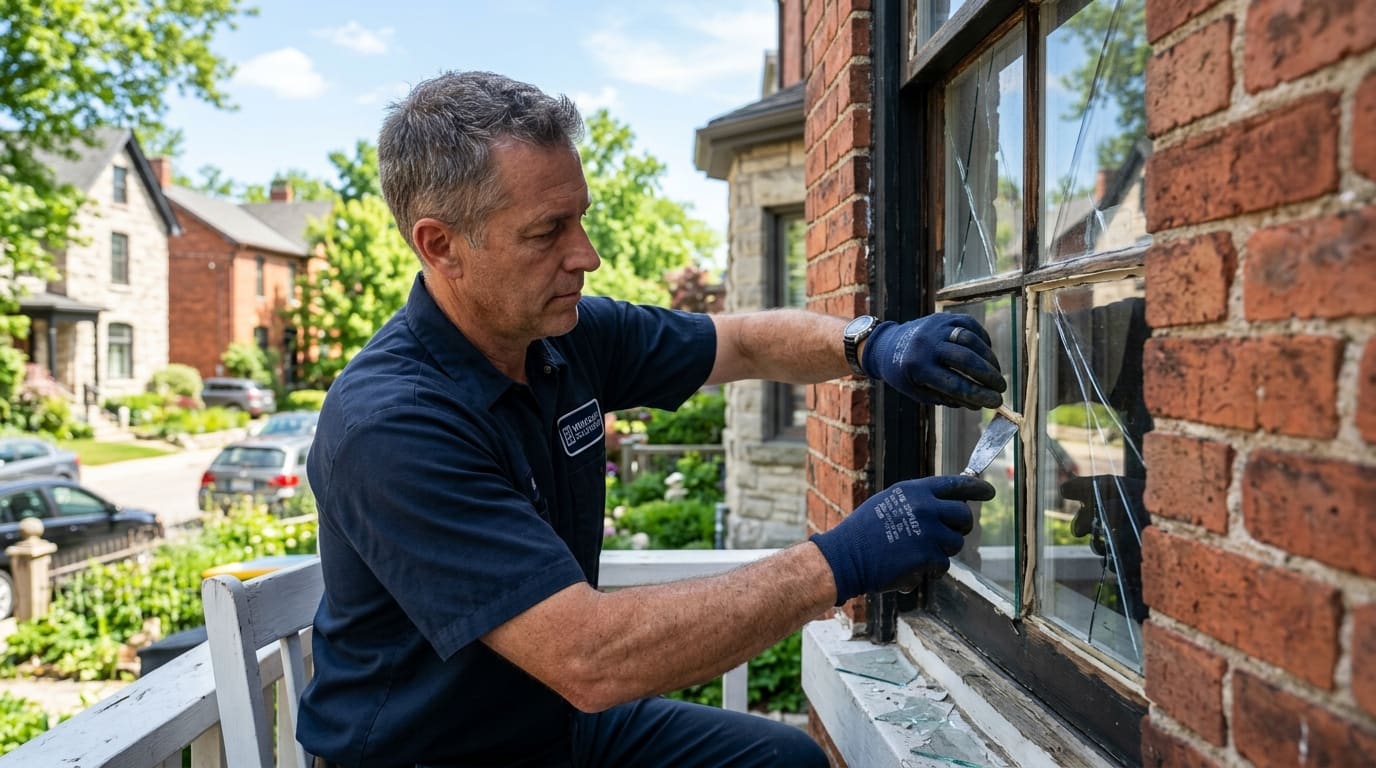
How to Tell If Your Window Glass Needs Repair or Replacement
8 min read
Stress Cracks in Windows: Causes, Prevention & Solutions for DMV Homeowners
7 min read
Foggy Windows: Why Double-Pane Seals Fail & What to Do About It
9 min read
Glass Replacement in Historic DMV Homes: Preservation Meets Performance
9 min readExplore More Resources
Helpful Guides
Common Problems
Related Pages
Our Services
24/7 Emergency
Board-Up & Glass
Licensed & Insured
DC, MD & VA
300+ Areas
DMV Coverage
Same-Day Service
When You Need It
Ready to Get Started?
Get a free estimate for any window or glass service across the DMV area.