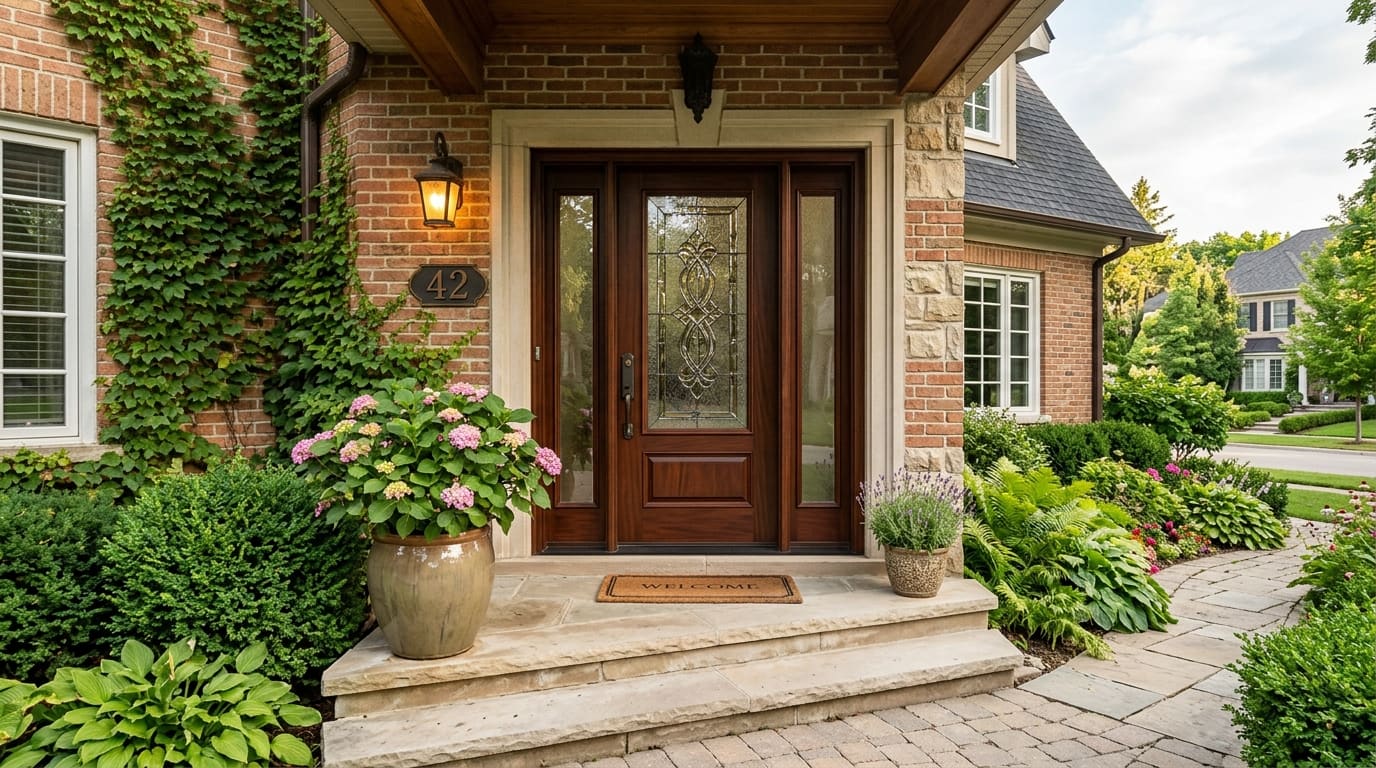
Glass for Mudrooms and Entryways: Safety, Style, and Durability for DMV Homes
The entryway is where your home faces its harshest daily demands. Glass near exterior doors gets the most abuse of any glass in the house. Getting the specification right matters more here than almost anywhere else.
Mike Reynolds
Lead Glass Technician & Owner
In This Article
Why Entryway Glass Is Different
Glass near entry doors — sidelights, door glass panels, transom windows, and any glazing within arms reach of entry hardware — operates in one of the most demanding zones in the house. It sees daily impact from bags, backpacks, and elbows. In homes with dogs, it sees paws and noses pressed against it constantly. In homes with kids, it sees footballs and stray fists during arguments about who gets to open the door first. The temperature swings it experiences are also extreme — on a January morning in Silver Spring when the outdoor temperature is 20°F, the inner surface of uninsulated sidelight glass might be 40°F while the room air behind it is 70°F.
Building codes recognize the hazard zone around doors. The International Residential Code (which DC, Maryland, and Virginia have all adopted) requires safety glazing for glass within 24 inches of a door edge and within 60 inches of the floor, for glass panels within the door leaf itself, and for glazing within the first 16 inches of walking surface adjacent to the door. In practice, this means virtually all sidelight glass, door glass panels, and entryway glazing at normal heights must be tempered or laminated safety glass. This is a code requirement, not an option.
Tempered vs. Laminated for Entryway Applications
Both tempered and laminated glass meet the safety glazing requirements for entryway locations, but they perform differently in ways that matter for this application.
Tempered glass, when it breaks, shatters into small rounded fragments — much less likely to cause serious lacerations than the large sharp shards of standard annealed glass. However, once tempered glass breaks, it breaks completely — the entire panel typically shatters at once. A tempered sidelight that fails leaves you with no glass at all and an unsecured entry opening until replacement can be done.
Laminated glass, when it breaks, holds together at the PVB interlayer. The glass is cracked, but the panel remains in place, maintaining the weatherseal and providing a security barrier until replacement can be arranged. For entry applications where security is a concern — urban neighborhoods in DC, Capitol Hill, Adams Morgan, Columbia Heights, or suburban areas where homeowners worry about opportunistic break-ins — laminated glass provides meaningful additional security even after breakage.
For most entryway applications, we recommend laminated safety glass over tempered, particularly for sidelights adjacent to door hardware where a break-and-reach attack (breaking the glass to reach in and turn the deadbolt) is a realistic concern. A laminated glass sidelight significantly delays this attack vector compared to tempered glass.
Decorative and Privacy Glass Options
Many entryways and mudrooms benefit from glass that provides light while limiting clear visibility from the exterior — a privacy consideration that is especially relevant for sidelights adjacent to front doors where street visibility is direct. The options include:
Frosted or acid-etched glass provides diffused light while eliminating through-view. The frosting can be applied to one surface of a standard glass lite or incorporated into laminated units. It is available in various levels of opacity and in custom patterns for decorative applications. Maintenance consideration: frosted surfaces show fingerprints and smudges more visibly than clear glass and require more frequent cleaning — relevant in a mudroom environment.
Textured glass — reeded, fluted, obscure patterns, hammered textures — provides varying degrees of privacy depending on the pattern depth. These are available in both safety glazing versions and as the outer lite of a laminated unit. Historic reproduction textures are available for period properties in Georgetown, Old Town Alexandria, and other historic districts where matching original glass character matters.
Decorative leaded glass or beveled glass inserts are common in DMV traditional and craftsman-style homes. These can be incorporated into a safety glazing system — the decorative panel set within a safety-glazed frame — for entries where both aesthetics and code compliance are required.
Mudroom-Specific Glass Considerations
Mudrooms — particularly in the larger Bethesda, McLean, and Great Falls homes where dedicated mudroom spaces are standard — often have floor-to-ceiling glass panels, glass-panel French doors into the main house, and fixed window openings. These spaces receive maximum abuse: wet boots tracked in, sports equipment, backpacks swung around by teenagers, dogs shaking off rain.
For mudroom glass adjacent to bench or locker areas, we typically recommend tempered glass at a minimum and upgrade to laminated for any glass panels below 48 inches where a falling backpack or equipment impact is realistic. The incremental cost of laminated over tempered is modest, and the retained-in-place failure behavior is meaningfully better in a space where replacement access may not be immediate.
Glass shelving in mudroom storage areas should be tempered — this is not a code requirement in all configurations but is a strong safety recommendation for any horizontal glass surface that will bear weight. Standard glass shelves that fail under load produce large shards; tempered glass shelves fail into small rounded fragments. The difference in injury severity is significant.
Entry Door Glass Security Considerations
For homeowners in higher-crime urban neighborhoods within DC, and for homes with isolated entryways in suburban areas, the security performance of entry glass is a legitimate design consideration. Options beyond standard laminated glass include:
Security laminated glass (also called safety film or security film applied to existing glass) — a thick PVB or polyester film applied to the interior of existing glass that significantly improves the glass's ability to resist penetration under repeated impact. This is a retrofit option for existing windows and sidelights rather than a replacement glass product.
Polycarbonate glazing panels — not glass, but a plastic glazing material that is extremely impact-resistant. Polycarbonate is used in bullet-resistant applications and is nearly impossible to break through by hand. It yellows over time with UV exposure, scratches more easily than glass, and has higher thermal expansion, but for high-security applications in commercial or transitional-neighborhood residential situations, it is worth discussing.
For entryway or mudroom glass in DC, Maryland, or Virginia, send us photos for a free assessment and quote. Call (703) 470-7867 to discuss your specific security, privacy, and safety requirements.
About the Author
Mike Reynolds
Lead Glass Technician & Owner
With over 15 years of experience in window and glass repair across the DC, Maryland, and Virginia area, Mike shares practical expertise to help homeowners and businesses make informed decisions about their glass repair and replacement needs.
Need Help With Your Glass?
Our experts are ready to help with any window or glass issue. Free estimates, same-day service available across DC, MD & VA.
Related Articles
Continue reading about guides
More Guides
View All
How to Tell If Your Window Glass Needs Repair or Replacement
8 min read
Stress Cracks in Windows: Causes, Prevention & Solutions for DMV Homeowners
7 min read
Foggy Windows: Why Double-Pane Seals Fail & What to Do About It
9 min read
Glass Replacement in Historic DMV Homes: Preservation Meets Performance
9 min readExplore More Resources
Helpful Guides
Common Problems
Our Services
24/7 Emergency
Board-Up & Glass
Licensed & Insured
DC, MD & VA
300+ Areas
DMV Coverage
Same-Day Service
When You Need It
Ready to Get Started?
Get a free estimate for any window or glass service across the DMV area.