Glass in Bathroom Remodels: What Contractors and Homeowners in the DMV Get Wrong
Bathroom glass is where I see the most callback work — frameless shower doors that leak, mirrors that develop black edge corrosion, windows that fog from the inside. Most of it is avoidable with the right specification upfront.
Mike Reynolds
Lead Glass Technician & Owner
In This Article
Safety Glazing in Bathrooms: Non-Negotiable
Before anything else: all glass in bathrooms must be safety glazing. This is not an opinion or a recommendation — it is a building code requirement in DC, Maryland, and Virginia, all of which follow the International Residential Code. The IRC requires safety glazing for any glazing within a wet area, within 60 inches of the floor in a bathroom, and within 60 inches of a bathtub, shower, or spa opening. In practice, this means every piece of glass in a typical bathroom — shower doors, shower enclosure panels, mirrors (with some exceptions), and windows within the zone — must be tempered or laminated safety glass.
The enforcement in residential renovation is inconsistent — some jurisdictions pull permits for bathroom remodels and inspect glass; others rely on contractor compliance. But the safety rationale is straightforward: standard annealed glass in a bathroom creates a laceration hazard that kills and seriously injures people every year. A slip in the shower that impacts the glass, a person falling against a mirror, a towel bar pulled out of the wall taking a person with it — any of these can drive a person into glass with enough force to cause a serious injury. Tempered glass, when it fails, breaks into small rounded fragments; annealed glass breaks into large sharp shards that are genuinely dangerous.
If you are doing a bathroom remodel and a contractor or supplier proposes standard (annealed) glass for any application in the bathroom, that is a red flag. Push back and request the tempered or laminated certification documentation for any glass installed in the bathroom.
Frameless Shower Glass: Getting It Right
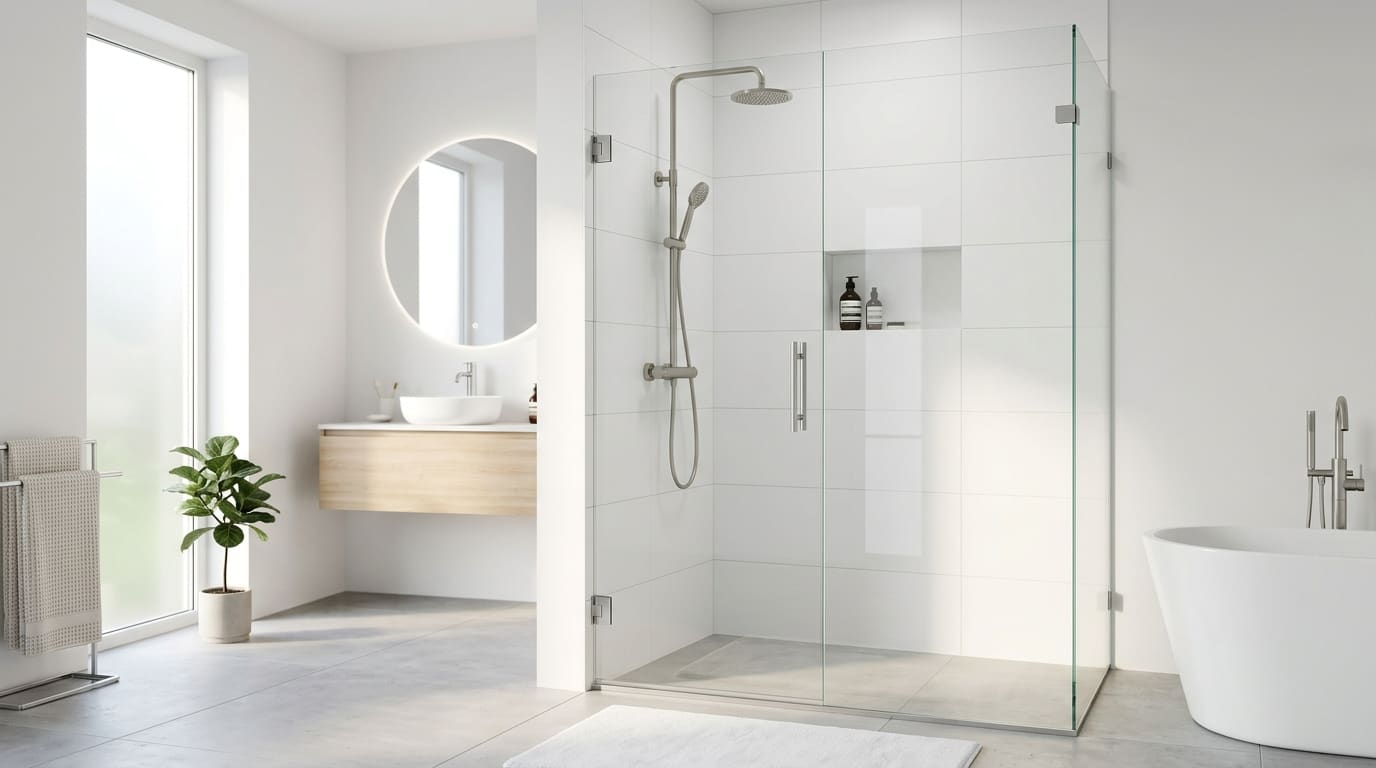
Frameless and semi-frameless glass shower enclosures are the dominant aesthetic choice in mid-to-high-end DMV bathroom remodels — in Bethesda colonials, McLean contemporaries, Falls Church ranches undergoing gut renovations, and Capitol Hill row houses being updated for the current market. They look clean, they photograph well for real estate listings, and when properly specified and installed, they function well. When improperly specified or installed, they leak, they flex, and they eventually fail.
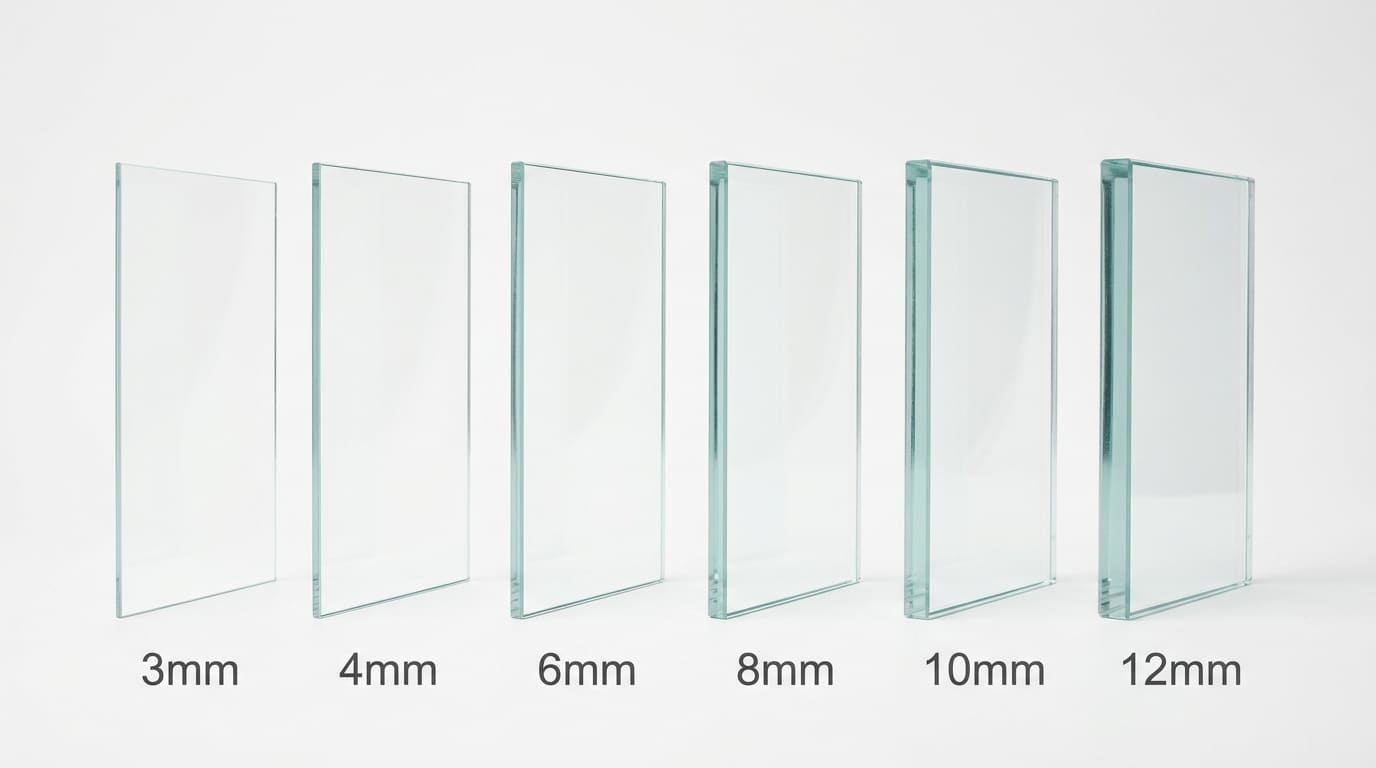
The glass specification for frameless shower enclosures is not trivial. The standard specification for a hinged frameless shower door is 3/8-inch (10mm) or 1/2-inch (12mm) tempered glass. Thinner glass — 1/4-inch (6mm) — is sometimes proposed in budget remodels as a cost-saving measure, but it is inadequate for the structural demands of a hinged panel. A 3/8-inch panel has significantly more rigidity than a 1/4-inch panel at the same size, and the hardware — the hinges, the header, the fixed panel clamps — is designed for 3/8-inch or thicker glass. Installing 1/4-inch glass in a frameless system designed for 3/8-inch produces excessive flex, hardware loosening, and eventually either glass breakage or seal failure at the sill.
Panel size also matters for glass thickness selection. For very large panels — fixed panel widths above 48 inches — 1/2-inch glass is typically appropriate over 3/8-inch. Discuss panel dimensions with the glass installer before finalizing the thickness specification; a 60-inch-wide fixed panel in 3/8-inch glass is at the edge of what the glass can handle for deflection under normal shower cleaning pressure.
Shower Door Hardware and Glass Compatibility
Frameless shower hardware — hinges, towel bar handles, U-channels, sill profiles — comes in a range of quality levels from builders-grade chrome-plated zinc to solid brushed brass and marine-grade stainless. In the DMV's humid bathroom environment, hardware quality directly affects longevity. Chrome-plated zinc hardware in a high-humidity bathroom can develop corrosion spots within 3-5 years, particularly in showers with hard water (common in the DMV given the regional water sources). Solid brass hardware with a PVD (physical vapor deposition) finish is significantly more durable and is worth the cost premium in a remodel intended to last 15-20 years.
Hardware must be specified for the glass thickness being used — 3/8-inch hinges are not interchangeable with 1/2-inch hinges, and U-channel profiles are dimensioned for specific thicknesses. The hardware set should be specified before the glass is ordered, and the glass thickness confirmed as compatible with the hardware before fabrication. A glass panel fabricated for 3/8-inch hardware cannot be retrofitted to 1/2-inch hardware without refabrication.
Mirror Installation in Bathrooms
Bathroom mirrors are a separate category from shower glass, with different failure modes and installation considerations. The most common mirror failure in DMV bathrooms is edge blackening — a progressive corrosion of the silver backing at the mirror edges that appears as dark spots or a spreading black border. This is caused by moisture penetrating the edge seal of the mirror backing and attacking the silver layer. High-humidity bathrooms without adequate ventilation accelerate this process; mirrors installed with the back directly against drywall in shower-adjacent locations are particularly vulnerable.
Preventing edge blackening requires moisture-resistant mirror glass (sometimes called copper-free or eco mirror, which uses an upgraded backing formulation that is more resistant to moisture intrusion), proper edge sealing at installation, and maintaining a gap between the mirror back and the wall surface for air circulation. Installing a bathroom mirror with a bead of regular white silicone around the entire perimeter — creating a hermetic seal against the wall — actually traps moisture behind the mirror and accelerates corrosion. The correct installation maintains air circulation behind the mirror while managing the visual gap.
For mirrors installed in steamy shower-adjacent locations — such as a mirror on the wall directly beside an open shower area — a heated mirror or demisting mirror (with a low-voltage heating pad bonded to the back of the glass that prevents fogging) is worth considering for high-end remodels where the immediate post-shower usability of the mirror matters.
Bathroom Windows and Condensation
Bathroom windows — in showers, above bathtubs, or at the sink location — face specific conditions that affect glass specification. Windows within shower enclosures or above tubs are in the safety glazing zone and must be tempered or laminated. For shower windows that will be regularly wetted by shower spray, the glass should be set in a waterproof frame system with no organic sealant that can deteriorate from repeated wetting.
Windows in bathrooms without mechanical ventilation experience extreme condensation cycles — warm humid shower air contacting a cold glass surface produces significant condensation every day. Standard IGU windows handle this without seal failure concerns, but single-pane windows in cold-climate bathrooms produce condensation that runs down the glass and into the frame, accelerating frame deterioration. Upgrading bathroom windows to double-pane IGU during a remodel is worthwhile for both comfort and window longevity, particularly in older DC row houses and Capitol Hill homes where single-pane windows are still common.
For bathroom glass specifications, shower door fabrication and installation, or mirror replacement anywhere in DC, Maryland, and Virginia, send photos for a free custom quote. Bathroom glass work has more variables than most homeowners expect, and getting the specification right upfront avoids the callback work I spend too much time on. Call (703) 470-7867 to discuss your bathroom project.
About the Author
Mike Reynolds
Lead Glass Technician & Owner
With over 15 years of experience in window and glass repair across the DC, Maryland, and Virginia area, Mike shares practical expertise to help homeowners and businesses make informed decisions about their glass repair and replacement needs.
Need Help With Your Glass?
Our experts are ready to help with any window or glass issue. Free estimates, same-day service available across DC, MD & VA.
Related Articles
Continue reading about guides
More Guides
View All
How to Tell If Your Window Glass Needs Repair or Replacement
8 min read
Stress Cracks in Windows: Causes, Prevention & Solutions for DMV Homeowners
7 min read
Foggy Windows: Why Double-Pane Seals Fail & What to Do About It
9 min read
Glass Replacement in Historic DMV Homes: Preservation Meets Performance
9 min readExplore More Resources
Helpful Guides
Common Problems
Related Pages
Our Services
24/7 Emergency
Board-Up & Glass
Licensed & Insured
DC, MD & VA
300+ Areas
DMV Coverage
Same-Day Service
When You Need It
Ready to Get Started?
Get a free estimate for any window or glass service across the DMV area.