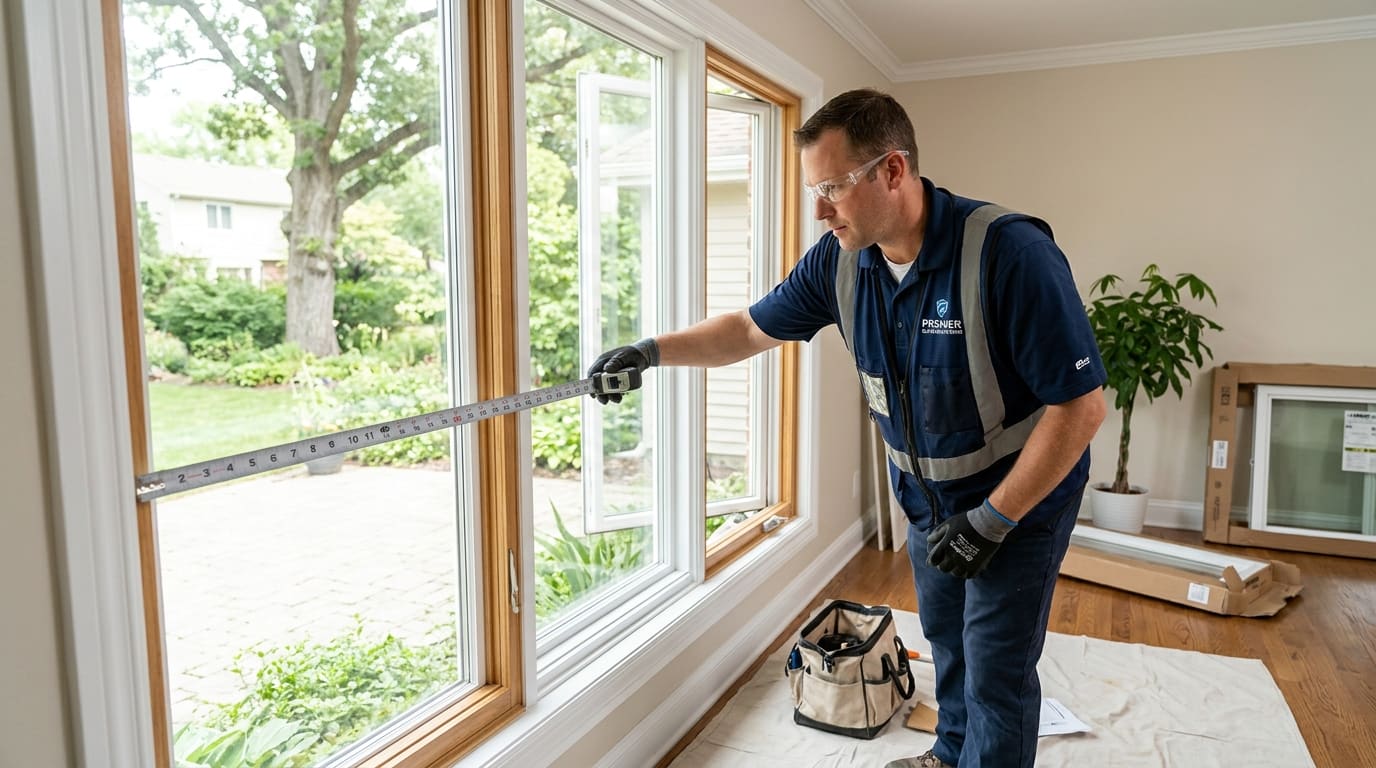
Replacing Glass in Aluminum Frame Windows: Challenges, Methods, and When to Upgrade
The DMV has a large stock of aluminum frame windows from the 1970s through 1990s — in commercial buildings, apartment complexes, and residences throughout the region. Replacing glass in these frames is more nuanced than vinyl or wood, and the thermal bridge limitation changes the cost-benefit calculation.
Mike Reynolds
Lead Glass Technician & Owner
In This Article
The Aluminum Window Legacy in the DMV
Walk through any DMV apartment complex, office building, or residential development built between 1965 and 1995, and you will find aluminum frame windows. At the time of their installation, aluminum frames offered advantages over wood that were compelling: they did not rot, did not need painting, did not swell or shrink with moisture changes, and were cheaper to manufacture and install at scale. The builders and developers who specified aluminum windows during this period were making rational cost-effectiveness decisions under the standards of the time.
The limitation that has become apparent over the decades is thermal bridging. Aluminum is an exceptional conductor of heat — roughly 1,000 times more conductive than wood and 10,000 times more conductive than still air. In a window frame, this means that aluminum bridges the temperature difference between the warm interior and the cold exterior without resistance. On a 25°F January morning with the heat on inside, an aluminum window frame can be literally at freezing temperature on the interior surface — causing condensation, frost formation, and radiant cold that makes the room uncomfortable for anyone seated near the window. No amount of glass upgrade addresses this fundamental limitation of the frame itself.
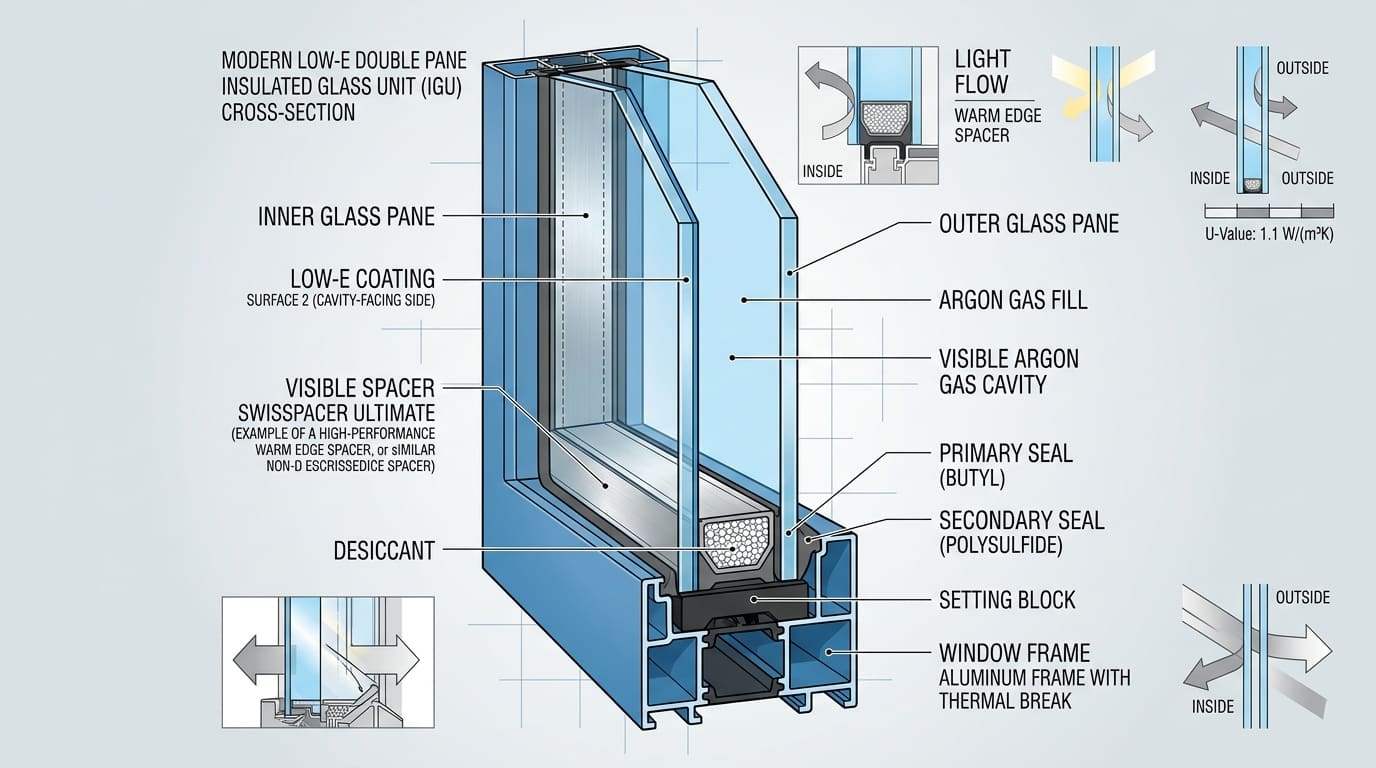
This creates the central tension in decisions about aluminum window glass replacement: you can replace the glass with excellent performing Low-E argon IGUs, but the performance improvement is partially offset by the continuing thermal bridge of the aluminum frame. Understanding where that leaves you — is the glass replacement still worth doing, or does the frame limitation make full window replacement the better investment? — requires understanding your specific window type.
Aluminum Windows With and Without Thermal Breaks
Not all aluminum windows are equally problematic thermally. Older aluminum windows from the pre-energy-crisis era (pre-1975 roughly) used solid aluminum extrusions with no thermal interruption — a single continuous piece of metal from the exterior to the interior surface. These are the worst performers thermally and the windows where the frame limitation most significantly undermines any glass upgrade.
Thermally broken aluminum windows, which became standard in better commercial construction from the late 1970s onward and gradually spread into residential applications through the 1980s, use a two-part frame design with a structural polyamide (nylon) or polyurethane thermal break separating the exterior aluminum from the interior aluminum. This break interrupts the conductive path through the frame, reducing frame conductance by 70 to 90 percent compared to solid aluminum. Windows with quality thermal breaks perform meaningfully better than old solid aluminum frames, and glass upgrades in thermally broken aluminum frames produce results much closer to what the same glass upgrade would achieve in a vinyl or wood frame.
Identifying whether your aluminum windows have thermal breaks requires looking at the frame cross-section. Thermally broken frames show a visible line or band — typically white or dark — running through the frame profile at approximately the mid-depth of the frame. Solid aluminum frames are uniform in color and texture throughout their cross-section. If you cannot see the frame cross-section directly, a simple test on a cold day helps: hold your hand against the interior surface of the frame on a cold morning. A thermally broken frame will feel significantly less cold than a solid aluminum frame in comparable temperature conditions.
Glazing Methods for Aluminum Frames
Aluminum window frames use different glazing retention systems than wood or vinyl frames, which affects how glass replacement proceeds. The main system types encountered in DMV aluminum windows are:
Snap-in glazing bead systems, used in most residential aluminum windows from the 1970s onward, retain the glass with aluminum or vinyl beads that snap into channels in the frame. Replacing glass in these systems involves snapping out the beads, removing the old glass, cleaning the frame channel, installing new setting blocks and glazing tape or compound, setting the new glass, and snapping the beads back into place. This is the most straightforward aluminum frame glass replacement and can accommodate standard double-pane IGU thicknesses in most cases.
Wet-glazed aluminum systems, more common in commercial construction, use a structural silicone or urethane sealant applied between the glass and the frame channel. Removing glass from a wet-glazed system requires cutting through the cured sealant — a more involved process than snap-in bead removal. Reinstallation requires applying new structural silicone to the correct specification, which must be allowed to cure fully before the window is exposed to wind loading.
The challenge in either system is glass thickness compatibility. Older aluminum frames were often designed around single-pane glass with a specific thickness. Converting to double-pane IGU requires either a frame that is designed to accept the greater IGU thickness, or a conversion adaptation — inserting a narrower-channel adapter into the existing frame — to accommodate the thicker glass unit. Not all aluminum frames can accept standard-thickness double-pane IGUs without modification.
The Cost-Benefit Decision: Glass Only vs Full Replacement
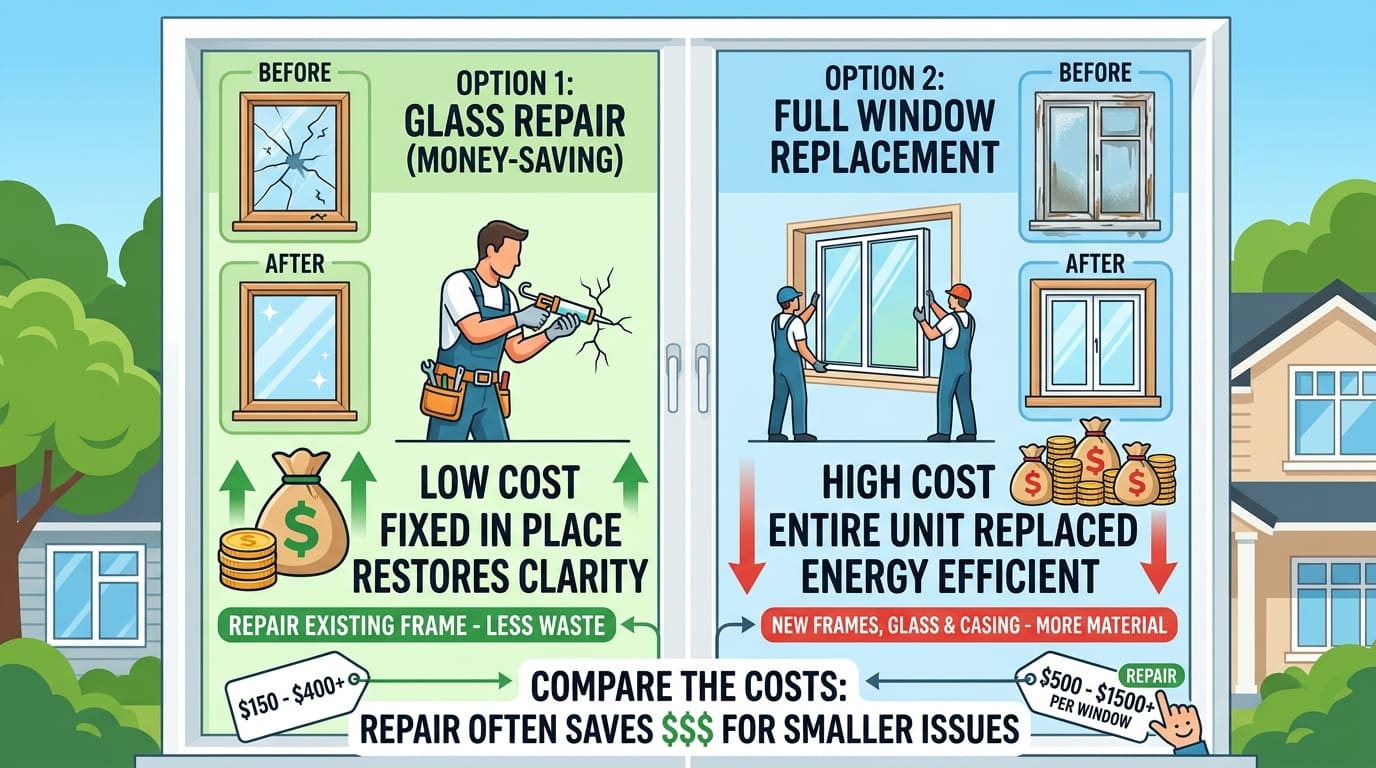
For aluminum windows with thermal breaks and frames in good structural condition, glass-only replacement with quality double-pane Low-E argon IGUs is usually the cost-effective choice. The thermal performance improvement of the glass is partially offset by the continuing frame conductance, but the glass upgrade still delivers meaningful improvement in both energy performance and interior comfort, particularly for rooms where radiant heat gain through the glass (in summer) or radiant cold from the glass surface (in winter) was a primary complaint.
For solid aluminum windows without thermal breaks, particularly older single-pane units, the calculation is less clear. The glass upgrade will improve performance compared to single pane, but the solid aluminum frame continues to be a significant thermal bridge. If the frames are otherwise in good condition — no corrosion, operating hardware functional, weatherstripping intact — glass-only upgrade may still be the practical choice given the lower cost. But if you are already planning to address the frame condition or if the windows will be disturbed by other renovation work, full window replacement with thermally broken aluminum, vinyl, or fiberglass frames is worth serious consideration.
For commercial aluminum storefront systems, glass-only replacement within the existing glazing system is almost always the right approach — the glazing systems are designed for glass replacement as routine maintenance, and full system replacement is a major construction project. At Virginia Glass Windows, we handle aluminum frame glass replacement for both residential and commercial applications throughout the DMV. Contact us at (703) 470-7867 to discuss your specific aluminum window situation and get a realistic assessment of glass-only vs full replacement options.
About the Author
Mike Reynolds
Lead Glass Technician & Owner
With over 15 years of experience in window and glass repair across the DC, Maryland, and Virginia area, Mike shares practical expertise to help homeowners and businesses make informed decisions about their glass repair and replacement needs.
Need Help With Your Glass?
Our experts are ready to help with any window or glass issue. Free estimates, same-day service available across DC, MD & VA.
Related Articles
Continue reading about glass repair
More Articles
View All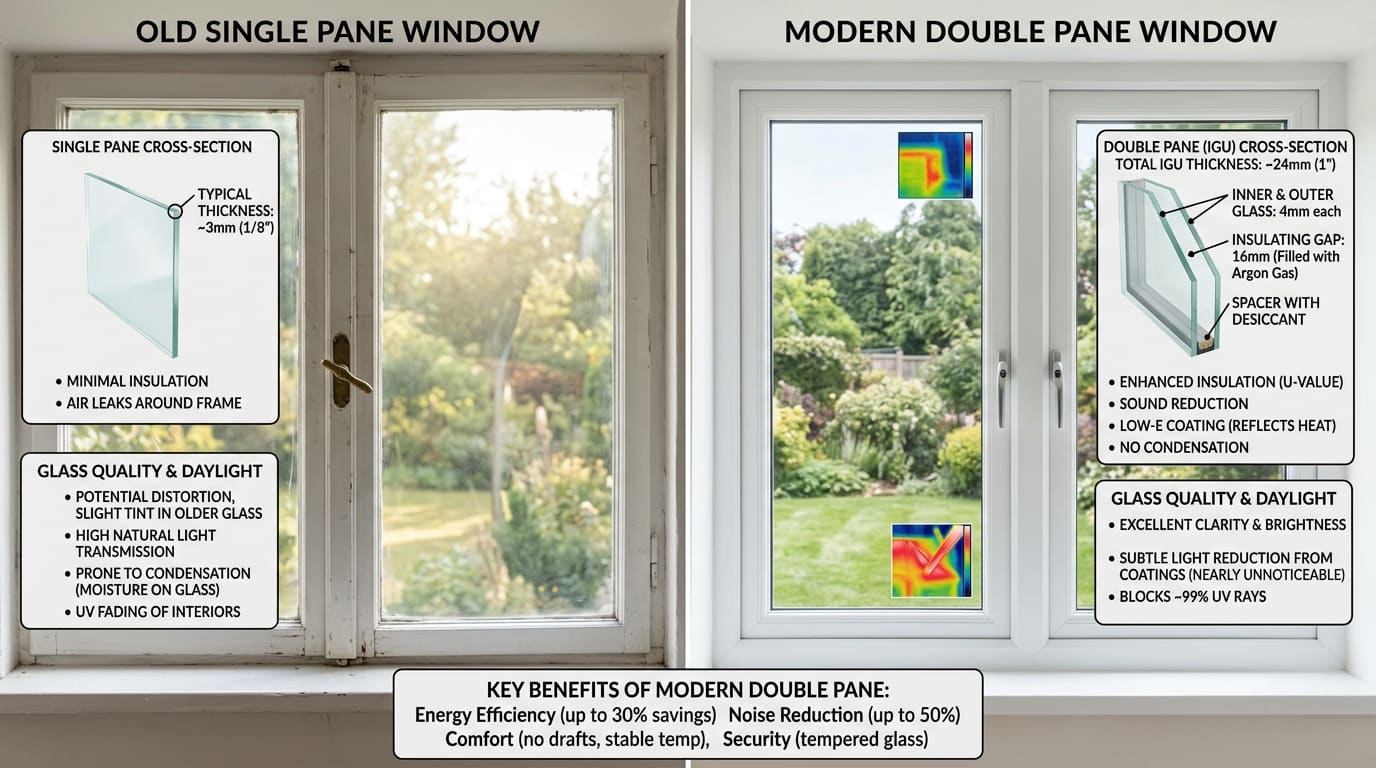
Basement Egress Window Glass Options: Codes, Safety, and Below-Grade Performance
8 min read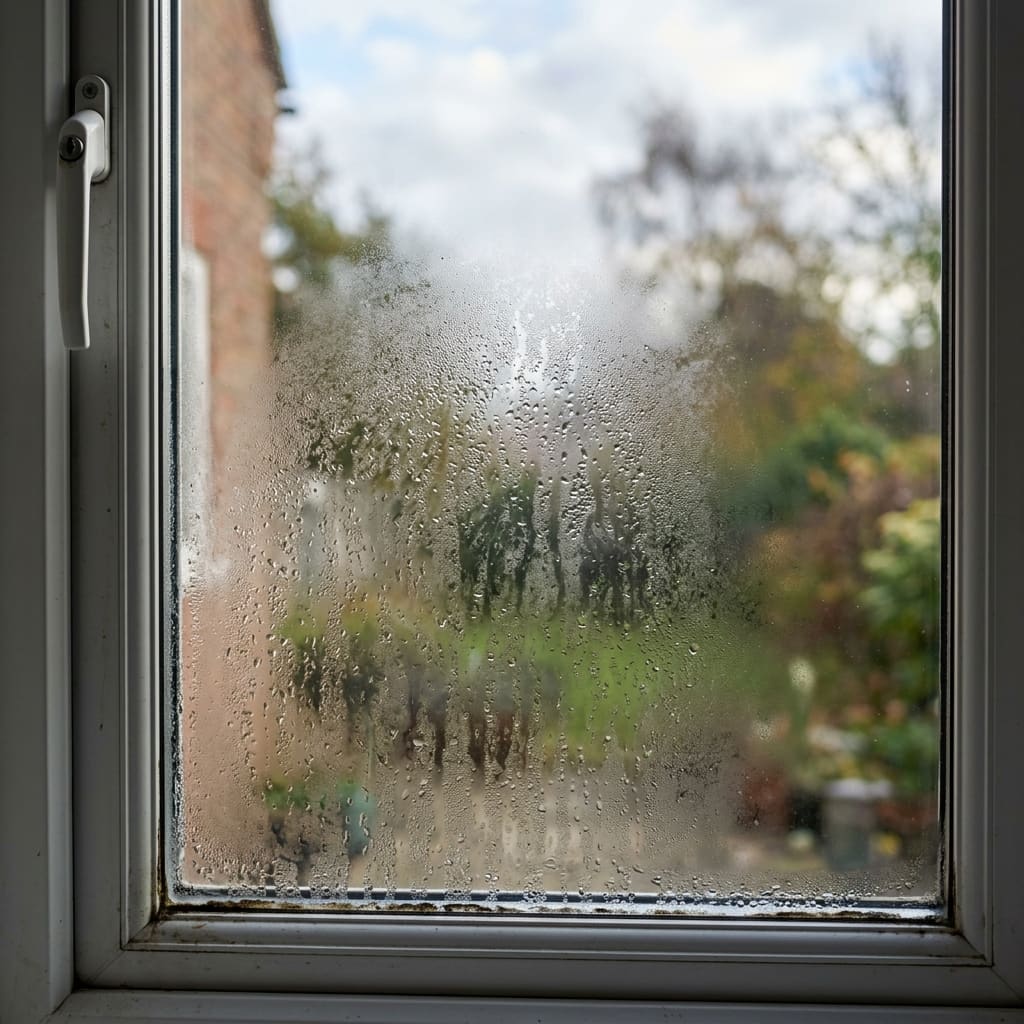
Condensation Between Window Panes: Why It Happens and What Actually Fixes It
9 min read
Cathedral Ceiling and Clerestory Window Glass: The Unique Challenges and Solutions
8 min read
7 Signs You Need Window Glass Replacement (Don't Ignore #3)
8 min readExplore More Resources
Helpful Guides
Common Problems
Related Pages
Our Services
24/7 Emergency
Board-Up & Glass
Licensed & Insured
DC, MD & VA
300+ Areas
DMV Coverage
Same-Day Service
When You Need It
Ready to Get Started?
Get a free estimate for any window or glass service across the DMV area.