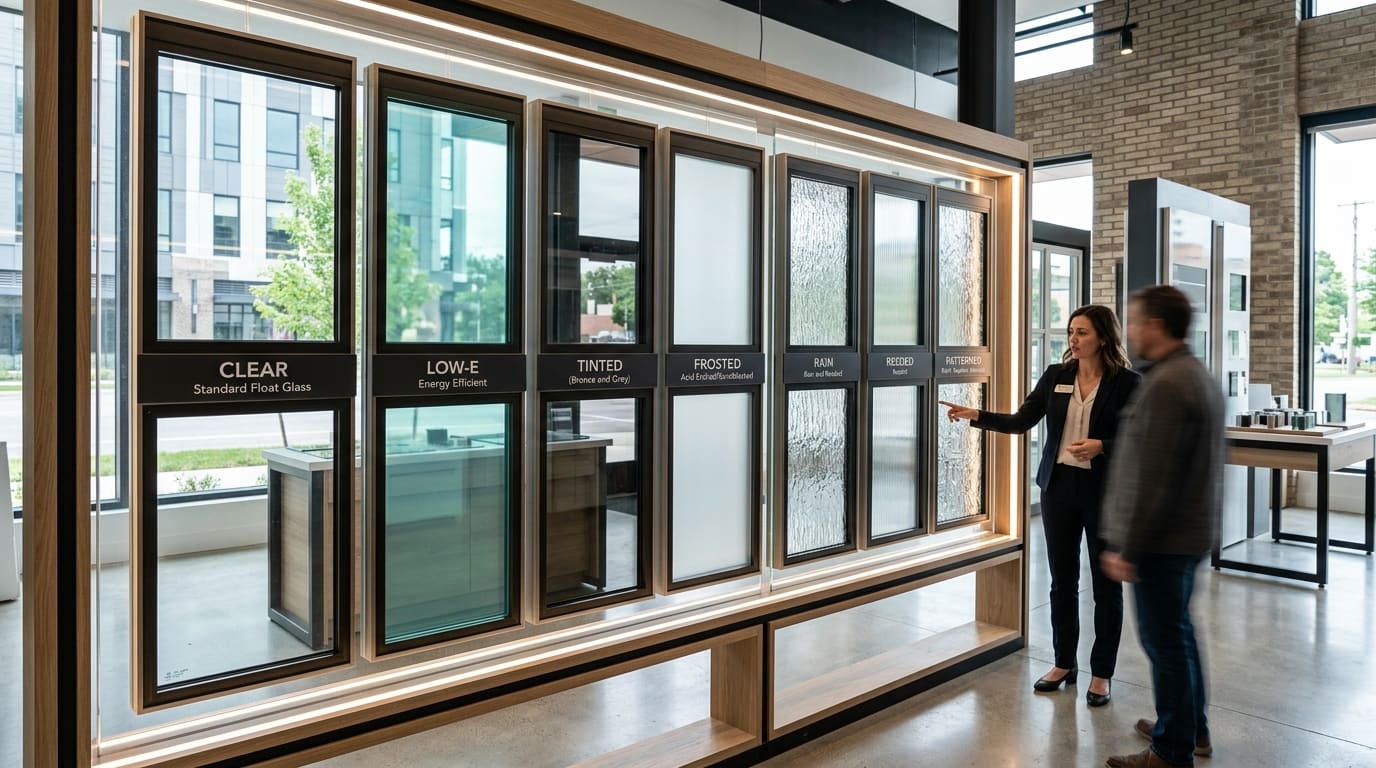
Smart Glass: Privacy on Demand for Homes & Offices
Smart glass transforms from transparent to opaque at the flick of a switch. Learn how PDLC, SPD, and electrochromic technologies work, where they shine in homes and offices, and what DMV installation looks like.
Mike Reynolds
Lead Glass Technician & Owner
In This Article
What Is Smart Glass and How Does It Work?
Smart glass — also called switchable glass, dynamic glass, or privacy glass — is any glass product that changes its light transmission properties in response to an electrical signal, heat, or light. Unlike traditional frosted or tinted glass that offers a fixed level of privacy or light control, smart glass lets you toggle between fully transparent and fully opaque (or any state in between) on demand. The core technology involves a thin film or coating sandwiched between two layers of glass that responds to voltage changes by altering its molecular alignment.
The result is glass that functions as both a window and a privacy barrier without the need for blinds, curtains, or shades. When powered, smart glass can switch states in milliseconds to a few minutes depending on the technology. It eliminates the visual clutter of window treatments, simplifies cleaning, and creates a sleek, modern aesthetic that works equally well in residential bathrooms and corporate boardrooms. For DMV homeowners and businesses looking for a high-end glass upgrade, smart glass represents the cutting edge of glazing technology.
Smart glass is not a single product — it encompasses several distinct technologies, each with different performance characteristics, switching speeds, and price points. Understanding these differences is essential to choosing the right product for your specific application.
The Three Main Smart Glass Technologies
PDLC (Polymer Dispersed Liquid Crystal) glass is the most widely installed smart glass technology for architectural applications. In its unpowered state, liquid crystal molecules in the interlayer are randomly oriented, scattering light and making the glass translucent (frosted in appearance). When voltage is applied, the crystals align uniformly, allowing light to pass through and making the glass transparent. PDLC switches almost instantly — typically in under one second — and consumes very little energy (about 5 watts per square meter). The primary limitation is that PDLC does not block heat or UV radiation in its opaque state; it provides visual privacy but not solar control.
SPD (Suspended Particle Device) glass contains a thin film with rod-shaped nanoparticles suspended in a liquid. When no voltage is applied, the particles are randomly oriented, absorbing light and making the glass dark blue or gray. Applying voltage aligns the particles, allowing light through and making the glass clear. SPD glass offers variable tinting — you can set it to any intermediate shade — and it blocks significant solar heat gain in its dark state. SPD is common in automotive sunroofs and some high-end architectural applications. It is generally more expensive than PDLC and draws slightly more power.
Electrochromic glass changes color through an electrochemical reaction when a low voltage is applied. A thin coating of metal oxide (typically tungsten oxide) on the glass surface accepts ions that darken the coating, reducing light transmission. Removing the voltage reverses the reaction. Electrochromic glass transitions slowly — taking 5 to 20 minutes to fully switch — but it requires power only during the transition, not to maintain its state. This makes it extremely energy-efficient for large facades. Major brands like SageGlass and View Inc. use electrochromic technology in commercial buildings throughout the DMV area.
Residential Smart Glass Applications
In DMV homes, smart glass is most popular for bathrooms and shower enclosures, where it replaces frosted glass partitions with panels that can switch between clear and private. Imagine a shower enclosure that is transparent when the bathroom is unoccupied — making the room feel larger and brighter — but switches to opaque the moment you step inside. Smart glass shower doors and partitions are increasingly requested in luxury bathroom renovations across Bethesda, McLean, and Georgetown.
Home offices are another growing application. An interior glass wall between your home office and the living space provides visual openness and natural light when you want it, then switches to private during video calls or focused work sessions. This is particularly popular in the DMV area where remote work has transformed how homeowners use their living spaces. Bedroom partitions, closet doors, and even skylights can also use smart glass to provide flexible privacy without the bulk of mechanical window treatments.
Interior room dividers in open-plan living areas benefit from smart glass as well. A glass partition between the kitchen and dining room or between a living room and study can remain transparent for everyday living and switch to opaque when hosting guests or when different family members need separate spaces. The technology integrates with home automation systems — you can control your smart glass with voice commands, smartphone apps, or automated schedules tied to time of day or occupancy sensors.
Commercial Smart Glass Applications
Conference rooms are the single largest commercial application for smart glass in the DMV area. Law firms, lobbying firms, government contractors, and tech companies throughout DC, Arlington, and Tysons Corner install PDLC glass walls in their meeting rooms to provide on-demand privacy for sensitive discussions. When not in use, the glass walls remain transparent, maintaining visual openness and allowing natural light to reach interior spaces. When a meeting begins, a wall switch or automated sensor switches the glass to opaque, providing instant visual privacy.
Retail storefronts use smart glass for dynamic displays and security. A jewelry store or gallery can make its storefront transparent during business hours to showcase merchandise and switch to opaque after hours for security and privacy. Medical offices and healthcare facilities in the DMV area use smart glass for patient privacy in examination rooms and treatment areas, eliminating the need for curtains that harbor bacteria. Financial institutions use it for private consultation areas that maintain an open, welcoming appearance when not in active use.
Executive offices with glass walls face a common dilemma: transparency signals openness and accessibility, but private conversations require visual separation. Smart glass solves this elegantly. The same technology works for interior office partitions, allowing an open-plan office to create instant private spaces for phone calls, performance reviews, or client meetings without permanent walls or the noise and visual clutter of blinds.
Costs and Return on Investment
Smart glass represents a premium investment compared to standard glazing. PDLC film applied to existing glass — a retrofit approach — typically starts in the range of several hundred dollars per square foot installed, while factory-manufactured smart glass panels (with the PDLC, SPD, or electrochromic layer built into the glass during manufacturing) command a higher premium. Electrochromic systems for large commercial facades carry the highest price point per square foot but offer the greatest energy savings over time.
The return on investment calculation for smart glass goes beyond the glass itself. In residential applications, smart glass eliminates the need for blinds, curtains, or motorized shades — which themselves can cost hundreds of dollars per window in premium homes. It also eliminates the maintenance and replacement costs of mechanical window treatments over the life of the home. In commercial applications, smart glass can reduce HVAC costs by 20 to 30 percent on sun-exposed facades, contribute to LEED certification credits, and enhance the perceived value of the workspace — a factor in attracting and retaining top talent in the competitive DMV market.
For DMV homeowners and businesses considering smart glass, we recommend starting with a focused application — a single conference room, a master bathroom enclosure, or a home office partition — to experience the technology before committing to a larger installation. This approach lets you evaluate the switching speed, opacity level, and visual quality in your specific environment.
DMV Smart Glass Installation With Virginia Glass Windows
Installing smart glass requires expertise beyond standard glazing work. The glass panels need electrical connections routed to a transformer and control system, the wiring must comply with local electrical codes, and the glass itself requires careful handling to avoid damaging the embedded electronics. Our technicians are trained in both the glazing and electrical aspects of smart glass installation, ensuring a clean, code-compliant result throughout Washington DC, Maryland, and Virginia.
Whether you are retrofitting existing glass with PDLC film, installing new smart glass panels in a renovation, or specifying switchable glass for new construction, Virginia Glass Windows provides consultation on the right technology for your application, professional measurement and ordering, expert installation with proper electrical integration, and warranty-backed service. Contact us at (703) 470-7867 for a free consultation on smart glass options for your home or office. We will help you evaluate the technologies, understand the costs, and determine the best solution for your privacy and light control needs.
About the Author
Mike Reynolds
Lead Glass Technician & Owner
With over 15 years of experience in window and glass repair across the DC, Maryland, and Virginia area, Mike shares practical expertise to help homeowners and businesses make informed decisions about their glass repair and replacement needs.
Need Help With Your Glass?
Our experts are ready to help with any window or glass issue. Free estimates, same-day service available across DC, MD & VA.
Related Articles
Continue reading about guides
More Guides
View All
How to Tell If Your Window Glass Needs Repair or Replacement
8 min read
Stress Cracks in Windows: Causes, Prevention & Solutions for DMV Homeowners
7 min read
Foggy Windows: Why Double-Pane Seals Fail & What to Do About It
9 min read
Glass Replacement in Historic DMV Homes: Preservation Meets Performance
9 min readExplore More Resources
Helpful Guides
Common Problems
Related Pages
Our Services
24/7 Emergency
Board-Up & Glass
Licensed & Insured
DC, MD & VA
300+ Areas
DMV Coverage
Same-Day Service
When You Need It
Ready to Get Started?
Get a free estimate for any window or glass service across the DMV area.